
Separating Business and Personal Money as a Tailor
By the ZeDaq.ai team · · 4 min read
On this page
- Why does mixing money cause problems?
- What do you need to separate the money?
- How do you pay yourself from the shop?
- How do you handle client deposits?
- How do you record payments without extra work?
- What counts as a business expense?
- What about clients who pay in other currencies or channels?
- What should you do about mistakes already made?
- What does a simple monthly check look like?
To separate business and personal money as a tailor, keep client payments in their own account and pay yourself a set amount on a set day. Everything the shop earns goes in, everything the shop spends comes out, and your household draws only your pay.
This guide gives you a simple routine. It is written for tailors and designers who take deposits on WhatsApp, pay for fabric from the same wallet as groceries, and can't tell how the shop is doing. It sits alongside the wider tools on the ZeDaq.ai page for tailors.
Why does mixing money cause problems?
When everything sits in one account, you can't see whether the shop is profitable. A busy month looks like a rich month, even when fabric and thread took most of it.
It also makes pricing harder. You can't set fair prices if you don't know what a garment truly costs you. The guide on how to raise your prices depends on knowing those costs.
Client deposits add another trap. A deposit is money for work you haven't done yet, and spending it on rent can leave you short when fabric must be bought.
What do you need to separate the money?
You need only three things:
- A separate account or wallet for the shop. A bank account, mobile money wallet or second wallet in a banking app all count.
- One rule for what goes in. Every client payment lands here, never in your personal account.
- One rule for what comes out. Fabric, notions, rent, transport for the shop and your own pay.
Rules for registering a business or opening a business account differ by country, so check with your bank and local authority.
How do you pay yourself from the shop?
- Choose a pay day, such as the first of the month or every Friday.
- Decide an amount you can pay in a typical month.
- Transfer it from the shop account to your personal account.
- Treat that transfer as your wage, and spend only from your personal account at home.
- Leave any extra in the shop account as a buffer.
Start with a modest amount. You can raise it as you see how the numbers behave.
How do you handle client deposits?
Keep deposits in the shop account and mark them as money for specific orders. When you buy fabric for that order, spend from the deposit. When you deliver, the balance completes the sale.
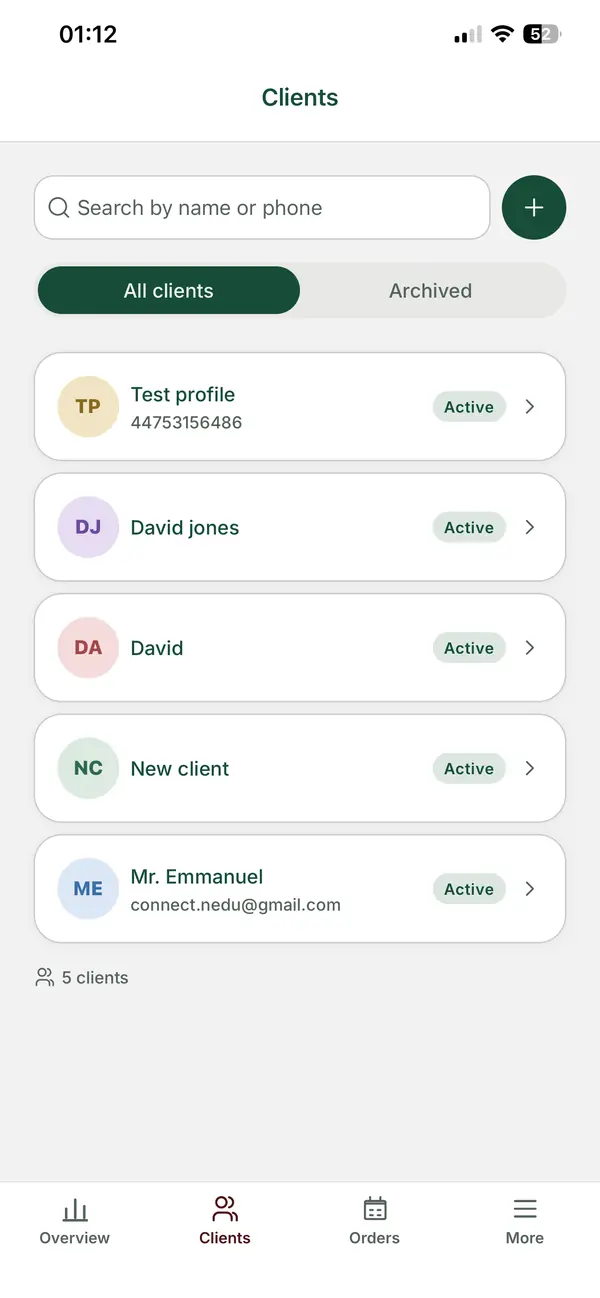
A list of open orders with the deposit, the balance and the delivery date helps you see what is already committed. ZeDaq.ai's tailor tools include orders and a delivery calendar, which suit this routine, and its invoicing supports multiple currencies including NGN, GBP and USD.
How do you record payments without extra work?
Write down each payment on the day it arrives, with the client's name, the amount and the order. A notebook works, but a shared list or an invoice record is easier to search later.
Free plan users get 5 invoices a month, enough to try the habit before you pay for anything. The notes on replacing WhatsApp chats and notebooks cover the move, and ZeDaq.ai compared with WhatsApp Business explains where each tool fits.
What counts as a business expense?
Write a short list of things the shop pays for, and keep to it:
- Fabric, lining, zips, buttons and thread
- Rent and electricity for the workshop
- Machines, repairs and tools
- Pay for apprentices or helpers
- Transport for deliveries and supply runs
- Subscriptions and software for the shop
Your own food, family costs and personal clothing are not on the list. When in doubt, ask if the shop would still have to pay it without you. If a cost is shared, such as a phone, agree a fair split and stick to it.
What about clients who pay in other currencies or channels?
If clients pay by bank transfer, mobile money or from abroad, send every payment to the shop account and note the channel. Tailors who take payments from overseas can read accepting payments as a tailor in South Africa for an example of how local options differ.
What should you do about mistakes already made?
Don't try to reconstruct the past. Pick a start date, open the shop account and follow the routine from that day. If you spent a deposit, note it as a debt to the shop and repay it when you can.
What does a simple monthly check look like?
- Add up the money that came in.
- Add up what you spent on the shop.
- Subtract to see what is left, before your pay.
- Check that your pay fits inside it.
Keep clients, orders and invoices in one place
FAQs
Do I need a registered business to open a separate account?
Rules differ by country and bank. Ask your bank which account types it offers for sole traders and small shops.
How much should I pay myself?
Pay what the shop can afford in a typical month, after fabric and rent. Start low and raise it as your records show stable income.
Where should I keep money for taxes?
Check your local tax authority's rules, since they differ by country. Setting aside a share of income in the shop account makes the bill easier to meet.
Can I use one phone for personal and shop WhatsApp?
You can, but a separate number or WhatsApp Business account keeps client chats away from family messages and makes records easier to find.
Try ZeDaq.ai free
Virtual try-on and Find my size for your store, plus client, order and invoicing tools for tailors, in one subscription.