
How to Raise Your Prices as a Tailor
By the ZeDaq.ai team · · 4 min read
On this page
- How do you know it is time to raise prices?
- How much should you raise them?
- When should you announce the change?
- What about orders you have already accepted?
- What should you say to clients?
- How do you handle clients who push back?
- What is a simple timeline for the change?
- Which tools help after the increase?
To raise your tailoring prices, work out your new rates, give clients advance notice, keep your promise on orders already accepted, and explain the change in one short, calm message. Most clients accept a fair increase when it is announced clearly and applies only to future work.
This guide is for tailors, seamstresses and fashion designers who feel underpaid but fear losing clients. If you track clients and orders in one place, the ZeDaq.ai tailor tools make it easier to see who is affected. A notebook works too.
How do you know it is time to raise prices?
Look for signs that your income no longer matches your effort.
- Your fabric, thread, rent or transport costs have gone up.
- You are fully booked but your profit feels thin.
- You have not changed your rates in a long time.
- New clients never question your price, which can mean it is too low.
Start by checking your numbers. Our guide to profit margin on tailored clothing shows how to see what each job really earns.
How much should you raise them?
There is no single right figure. Base it on your costs and your time, not on guesswork.
- List your monthly costs and the hours you can realistically sell.
- Work out the rate you need per hour to pay yourself.
- Compare it to your current prices on your most common jobs.
- Move toward the new rate in one step or in two smaller steps.
For the full method, read how to price tailoring work so you actually make a profit.
Raising everything by the same amount is simple. Raising only the jobs that pay least can be fairer, and it keeps your popular services easy to understand.
When should you announce the change?
Give clients notice. A few weeks is a common courtesy, but choose a period that suits how long your jobs take.
Pick a clear start date, such as the first day of a month. Avoid changing prices in the middle of a busy season without warning.
What about orders you have already accepted?
Honor the price you quoted. If a client paid a deposit or confirmed an order, finish it at the agreed price.
This protects your reputation. It also reduces arguments, since the new price only applies to jobs accepted after the start date.
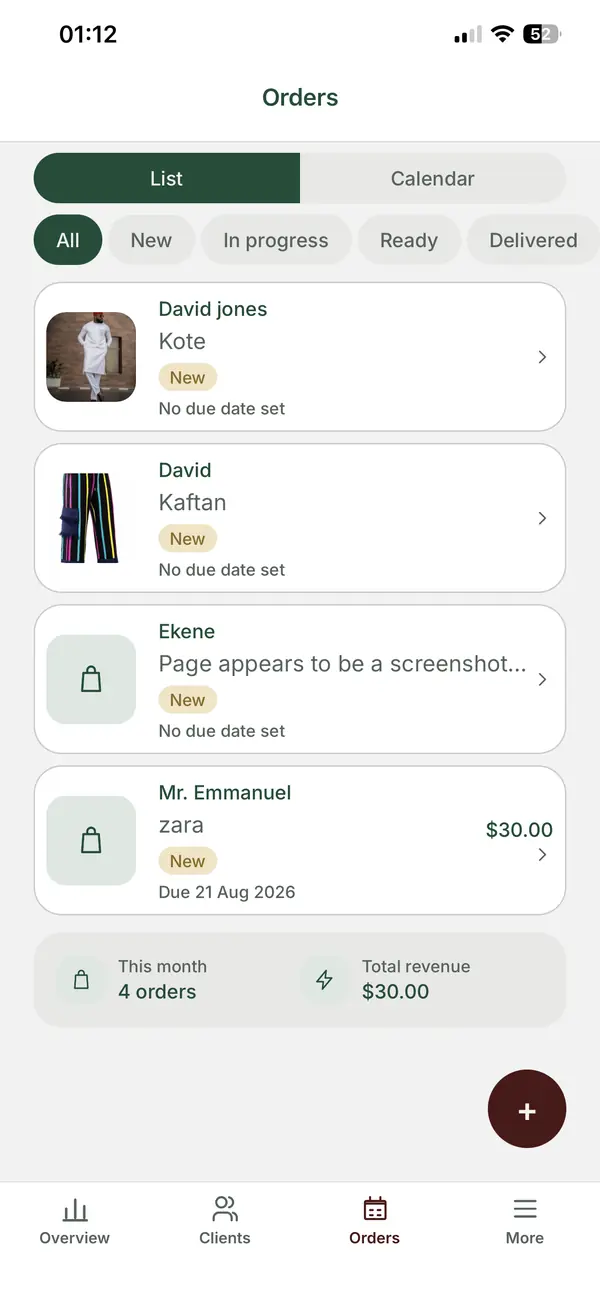
Write the date and price on every order so there is no dispute. Order records that include the date make this easy.
What should you say to clients?
Keep the message short, polite and specific. Here is a sample you can adapt.
Hello [Name], thank you for trusting me with your clothes. From [date], my prices will change as my costs have risen. For example, hem alterations will be [new price]. Any order you have already confirmed stays at the price I quoted. I am grateful for your support and happy to answer any questions.
Tips for the message:
- Say thank you first.
- Give one example of a new price, not a long list.
- State the start date and who it applies to.
- Do not apologize repeatedly or over-explain.
Send it through the channel clients already use. If you use WhatsApp for orders, see how it compares in ZeDaq.ai versus WhatsApp Business for tailors.
How do you handle clients who push back?
Stay friendly and consistent. You can acknowledge the concern without lowering your price.
- Explain the value: your skill, fit and reliability.
- Offer options, such as a simpler finish or a different fabric, to meet their budget.
- Do not give discounts to one person only, as others will hear and expect the same.
Some clients may leave. That is a normal outcome, and it frees time for clients who value your work.
What is a simple timeline for the change?
A short plan keeps you calm and organized.
- Decide the new prices and the start date.
- Update your price list, but do not publish it yet.
- Message your regular clients first, so they hear it from you.
- Post the new prices publicly on or just before the start date.
- Check open orders and make sure they are marked with the old price.
- After a month, review how many new bookings you received and how you feel about the workload.
Treat the first month as a test. If a particular job turns out to be overpriced or underpriced, adjust that one price rather than everything.
Which tools help after the increase?
Update your price list everywhere the client sees it: your page, your invoices and your quotes.
ZeDaq.ai supports tailors with a client CRM, orders and a delivery calendar, and invoicing in multiple currencies including NGN, GBP and USD. If you want local ideas, our article on tailor apps in Nigeria explains what to look for.
Keep clients, orders and invoices in one place
FAQs
How often should a tailor raise prices?
Review your prices at least once a year, and raise them when your costs or skills have grown. Small regular increases are easier for clients than one large jump.
Should I tell clients why prices are rising?
A short reason helps, such as higher material costs. You do not need to share your finances.
Can I raise prices for new clients only?
Yes. Many tailors apply the new rates to new clients first, then to regulars after a notice period.
Will I lose clients if I raise prices?
You might lose some, especially those who shop on price alone. Clear notice and fair treatment of open orders keeps most loyal clients.
Try ZeDaq.ai free
Virtual try-on and Find my size for your store, plus client, order and invoicing tools for tailors, in one subscription.

