Returns Fees: Will Shoppers Pay Them?
By the ZeDaq.ai team · · 4 min read
On this page
- Why are stores adding returns fees?
- How do shoppers react to a returns fee?
- What makes a fee feel fair?
- What alternatives to a fee should you test?
- Could shipping protection or insurance help?
- How do you decide which products get a fee?
- How do you test a fee without guessing?
- Can ZeDaq.ai help you need fewer fees?
Some shoppers will pay a returns fee, but mostly when it is small, stated before checkout and tied to something they value. Others will leave the cart, so the right answer depends on your products, your customers and how you explain the charge.
This guide is for store owners. It does not rely on a single industry statistic, because fee results differ widely between stores. Instead it gives you a way to test a fee safely. If fit is the main reason people send things back, start with AI size recommendation for fashion stores, since fewer fit mistakes means fewer fees to argue about.
Why are stores adding returns fees?
Every return costs money. You pay for shipping back, for inspection and repacking, and sometimes for stock that cannot be resold.
Fashion stores feel this most because shoppers can't try things on. Stores that offer free returns often pay for a pattern called bracketing, where one shopper orders two sizes and returns one. The article on why shoppers order two sizes explains it in detail.
A fee is one way to cover that cost. It is not the only way.
How do shoppers react to a returns fee?
Reactions split into three groups:
- Fee-tolerant shoppers accept a fee if it is clear and fair. They often care more about product quality and speed.
- Fee-averse shoppers compare you with a store that offers free returns, and may buy there instead.
- Serial returners are the group you may most want to discourage. A fee changes their behavior more than it changes anyone else's.
You will not know your own mix until you measure it. Compare checkout completion before and after a change, and watch return counts by product.
What makes a fee feel fair?
Shoppers react to surprise more than to the amount. These choices help:
- State it early. Put the fee on the product page and in the cart, not only in the policy.
- Explain what it covers. "Covers return postage" lands better than a flat charge with no reason.
- Offer a free option. Free exchanges, store credit or free returns on faulty items keep goodwill.
- Deduct it from the refund. Shoppers prefer this to paying a new charge up front.
- Keep wording plain. Avoid legal language in checkout messages.
For wording examples, see the guide on how to communicate return shipping fees.
What alternatives to a fee should you test?
A fee is blunt. Several options go after the cause instead:
- Reduce fit returns. Better size charts, fit notes and size recommendations remove the reason for many returns.
- Make exchanges cheaper than refunds. Offer a free size swap while charging for refunds.
- Use store credit. Offer store credit as an option, which keeps the money in your store.
- Fix the product page. Clear photos and honest descriptions prevent "not as expected" returns.
The product page checklist for fashion stores covers the page elements that matter most.
Could shipping protection or insurance help?
Some stores add an optional protection charge at checkout instead of a fee on every return. The shopper chooses whether to pay, and the store uses the money to cover lost or damaged parcels. Read about the options in shipping protection and returns insurance apps.
Check how any such add-on is described before you use it, so shoppers do not feel misled.
How do you decide which products get a fee?
Not every item carries the same return risk. A basic tee is cheap to restock, while a tailored coat or a dress with delicate beading is costly to process.
You could apply a fee only where handling costs are high. Alternatively, you could waive it for items shoppers rarely return. Keep your rules simple enough to explain in one sentence.
How do you test a fee without guessing?
Use a small, reversible experiment.
- Record your baseline for two to four weeks: return rate, checkout completion and average order value.
- Introduce the fee for one product group or one region only.
- Keep everything else the same, including shipping prices and promotions.
- Compare the same three numbers after a few weeks.
- Keep, change or remove the fee based on profit, not on return counts alone.
A fee that cuts returns but also cuts sales can lose money. Always compare total profit.
Can ZeDaq.ai help you need fewer fees?
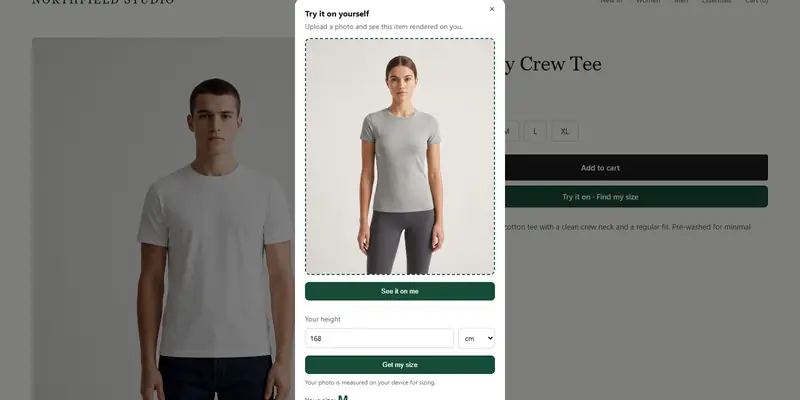
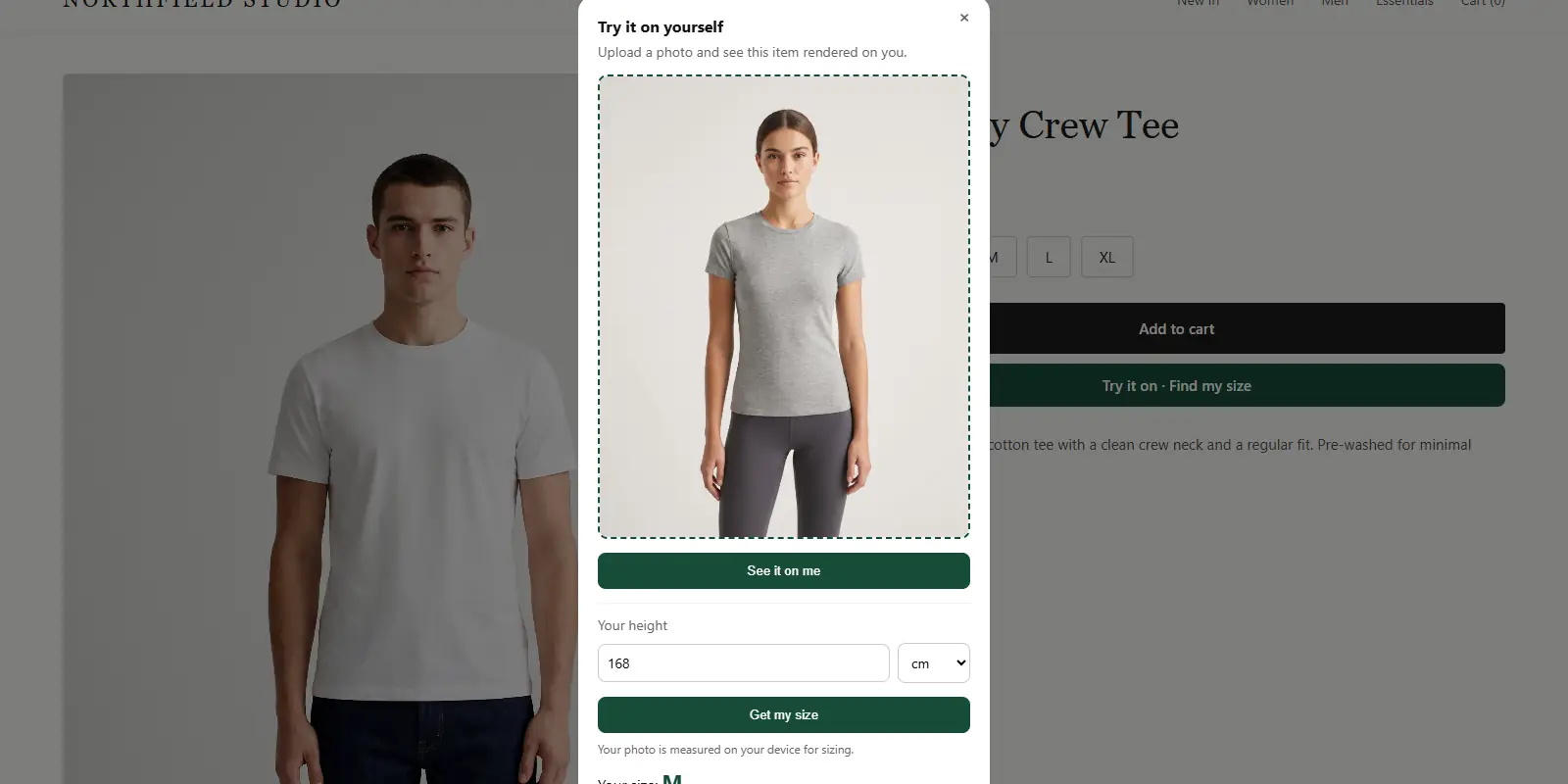
ZeDaq.ai gives shoppers a size recommendation from a short body scan, matched to your own size chart, and a way to see your garment on them. These tools address fit questions before the order. They don't promise a particular return rate.
You can start on the Free plan, and every paid plan has a 3-day free trial with no card required. See current plans and prices for details.
Start with the free plan
FAQs
Should returns fees apply to every order?
Not necessarily. Many stores exempt faulty items and exchanges, and charge only for refunds on change-of-mind returns.
Is it better to charge a fee or end free returns?
They are different tools. A fee lets shoppers choose, while ending free returns changes the offer for everyone. Test either one on a small group first.
Do returns fees upset loyal customers?
They can, if applied without warning. Consider waiving the fee for repeat customers or offering free exchanges.
Where should I state the fee?
State it on the product page, in the cart and in your returns policy. Shoppers should never discover it after paying.
Try ZeDaq.ai free
Virtual try-on and Find my size for your store, plus client, order and invoicing tools for tailors, in one subscription.