
Recording Posture, Preferences and Fit Notes
By the ZeDaq.ai team · · 4 min read
On this page
Record client fit notes by writing down three things beside the numbers: how the client stands (posture), how they like clothes to fit (preferences), and what you saw at each fitting. Numbers tell you the size of a body, and notes tell you how that body wears clothes.
This guide gives a simple structure you can use on paper or in software. If you want one place for client records, the ZeDaq.ai tailor tools include a client CRM and measurements captured through a link the client opens on their phone.
Why do fit notes matter as much as measurements?
Two clients with the same chest measurement can need different patterns. One stands straight, the other leans forward, and one wants a close fit while the other wants room.
Without notes, you rely on memory. That fails when a client returns after a year, or when an apprentice cuts the garment. A short written note turns each fitting into knowledge you keep.
What posture details should you record?
Posture changes how a garment hangs. Record what you see, using plain words, and avoid medical labels.
Useful observations include:
- Shoulders. Level, one higher, sloping or square.
- Back. Straight, rounded or with a pronounced curve.
- Stance. Upright, leaning forward or leaning back.
- Head position. Forward or neutral, which affects collars.
- Hips. Level or uneven.
- Legs. Anything that affects trouser hang.
Use the same words each time. Note "left shoulder lower" instead of "uneven", so the next fitting has something to check.
Do not diagnose. You are describing how clothes hang, not a medical condition. Ask politely before you write about someone's body, and keep notes private.
How do you record fit preferences?
Ask the client at the first consultation, and write the answer in their words.
Cover these topics:
- Overall fit. Close, regular or relaxed.
- Length. Where they like hems, sleeves and jackets to end.
- Comfort. Places that must not feel tight, such as arms or waist.
- Layering. Whether they wear it over other clothes.
- Style. Details they like or dislike, such as pockets or lining.
- Occasion. What the garment is for and how often it is worn.
Preferences change with seasons and events. Date every note so you know how current it is.
What should you note at each fitting?
A fitting is where you learn the most. Capture changes while they are fresh.
Write down:
- what you adjusted, such as "took in the waist at the side seams",
- what the client asked for and what you did about it,
- anything to carry to the next garment, such as "prefers sleeves slightly longer",
- the date and the order the note belongs to.
If a client is unhappy with a fit, the notes show what you agreed and what you did. Our guide on handling a client who says the outfit doesn't fit uses this record as the starting point.
A sample client fit card
Here is a layout you can copy. The values are only an example.
| Section | Example entry |
|---|---|
| Posture | Left shoulder slightly lower, upright stance |
| Fit preference | Close fit through the body, relaxed sleeves |
| Length | Jacket just below the hip, trousers with a small break |
| Comfort | Dislikes tightness at the upper arm |
| Past adjustments | Previous jacket: let out the sleeve at the biceps |
| Last updated | Date of the latest fitting |
Keep the card short enough to read in under a minute before a fitting.
Read it again at the end of the appointment. If the client changed their mind about anything, update the card before they leave, while the details are fresh.
How do you keep notes consistent?
Consistency is what makes notes usable. Use a fixed set of headings, short phrases and dates.
Pair the notes with good measurements. The tips in capturing accurate numbers from clients at home explain how to get the numbers right so your notes explain the rest.
Notes also help when you ask for repeat business. A client who sees that you remember their preferences is more likely to recommend you, and a client referral program works best when the experience is personal.
Should you keep notes on paper or in an app?
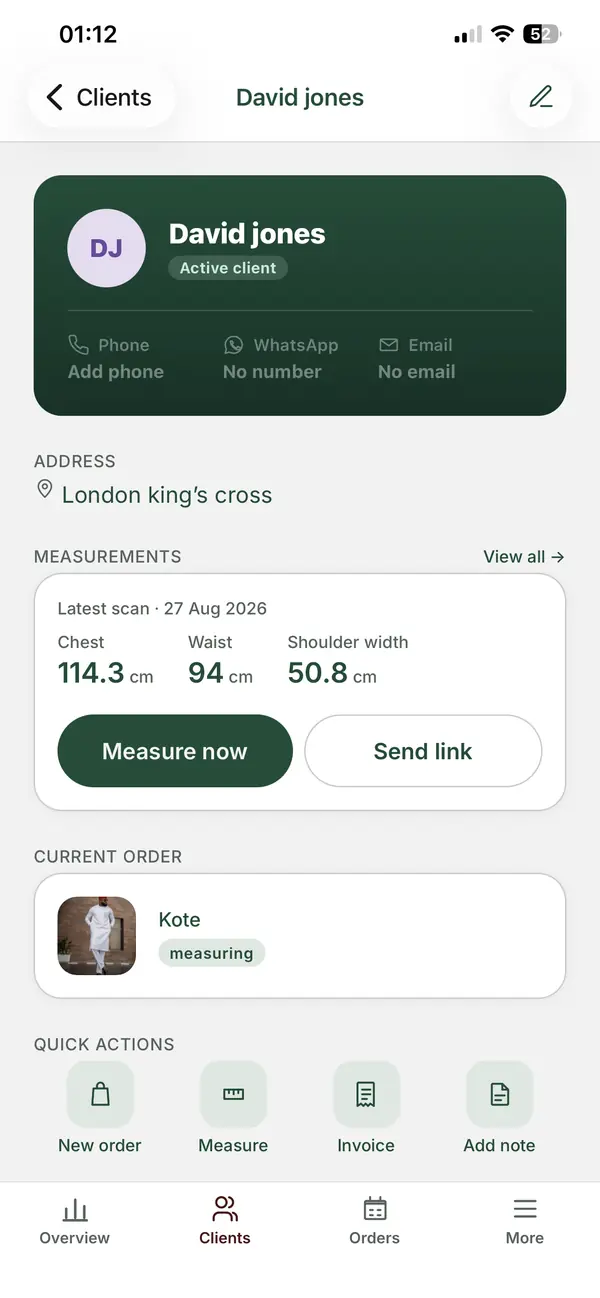
Paper works until you lose it or need it away from the shop. An app keeps notes with the client, searchable and on your phone. The ZeDaq Business mobile app for iOS and Android keeps client records on your phone, and ZeDaq.ai supports orders and a delivery calendar alongside them.
Whatever you use, protect it. Client notes are personal information, so share them only with the people who need them.
Keep client notes and measurements together
FAQs
Do I need to record posture for every client?
Record it when it affects how the garment fits. Many clients will need only a brief line, or none.
Can I show clients their notes?
Yes, and it can build trust. Write notes in neutral, respectful language so you are comfortable sharing them.
How long should I keep fit notes?
Keep them for as long as you serve the client. If your country has privacy rules for client data, check the official guidance for your area.
What if my notes disagree with new measurements?
Treat the newer fitting as more reliable, and update the card with the date. Keep the old note in case the change reverses.
Try ZeDaq.ai free
Virtual try-on and Find my size for your store, plus client, order and invoicing tools for tailors, in one subscription.

