
Client Referral Programs for Tailors
By the ZeDaq.ai team · · 4 min read
On this page
- Why do referrals work so well for tailors?
- What reward should you offer?
- When is the best moment to ask?
- How do you ask without sounding pushy?
- How do you track who referred whom?
- How do referrals connect to repeat business?
- What does a worked example look like?
- What mistakes should you avoid?
- How do you make a program feel professional?
A tailor referral program is a simple system where happy clients bring in new clients, and you thank them with a small reward. The most reliable version has four parts: a clear reward, a moment to ask, a way to track who referred whom, and a quick thank-you.
Word of mouth already brings most tailors their work. A program just makes it deliberate. If you manage clients, measurements and orders in one place, ZeDaq.ai for tailors gives you a client list to keep referral notes against.
Why do referrals work so well for tailors?
Clothing made for you is personal, so people ask friends where they had it made. A recommendation from a trusted friend comes with proof: they can see the garment.
Referred clients also arrive knowing your style and rough prices, which saves you explaining. That is the argument for asking, not leaving it to chance.
What reward should you offer?
Pick something that costs you little and the client values. Options:
- A discount on the next order for the referrer.
- A discount for the new client on their first order.
- A free small service, such as a hem adjustment.
- A thank-you gift, such as a handwritten card.
Avoid cash rewards at first. They complicate your accounts. Choose a reward you can afford at your normal margin.
When is the best moment to ask?
Ask when the client is happiest: at the final fitting or when they collect the finished piece. They are looking at the result in the mirror and are more likely to say yes.
Don't ask at the first meeting. Wait until you have delivered.
How do you ask without sounding pushy?
Keep it light and specific. For example:
I'm glad you love it. If a friend or colleague needs something made, send them my way. I'll take a little off your next order as a thank-you.
Hand over two or three printed cards or send a message they can forward.
How do you track who referred whom?
Track three things for each new client: how they found you, who referred them, and whether the reward is owed.
A simple method:
- Ask every new client "How did you hear about me?" at the first consultation.
- Write the referrer's name in that client's record.
- When the new client pays, mark the reward as due and tell the referrer.
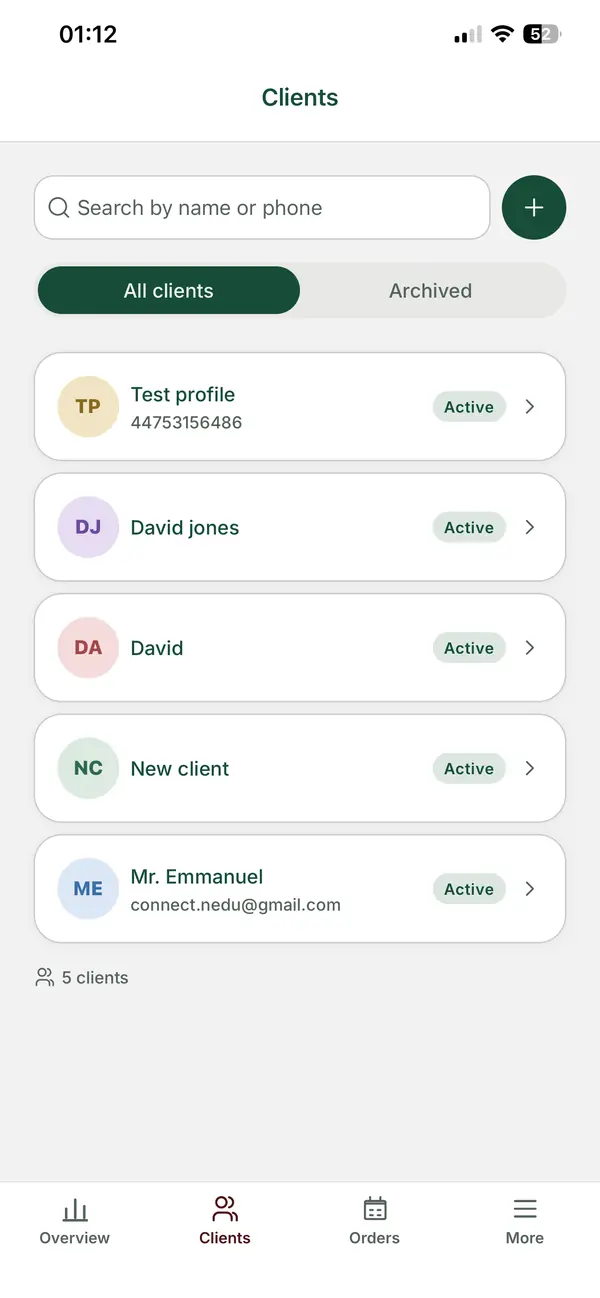
Notes get lost in chats, which is a common problem. The risks of chat-based tailoring show why a proper client record helps. ZeDaq.ai includes a client CRM for tailors, plus measurements through a link the client opens on their phone, orders and a delivery calendar.
How do referrals connect to repeat business?
A referrer who is thanked tends to return. The guide to getting repeat clients as a tailor covers follow-ups after delivery, which pair well with a referral ask.
Charging a fee for first meetings can change how new referrals feel. See whether tailors should charge consultation fees if you want to think that through. You could waive it for referred clients.
What does a worked example look like?
Imagine a tailor who makes suits and dresses. They set a simple rule: a referred client gets a free small alteration on their first order, and the referrer gets the same on their next order.
Here is how a single referral runs:
- Amina collects a finished dress and says she loves it.
- The tailor gives her a card and mentions the offer.
- Amina's friend books a fitting and says Amina sent her.
- The tailor writes "Referred by Amina" in the friend's record.
- When the friend pays, the tailor messages Amina that her thank-you is ready.
This is an invented example to show the steps. Adjust the reward to fit your margins.
What mistakes should you avoid?
- Rewards that are too large. They hurt your margin on custom work.
- No tracking. If you forget who referred whom, a client feels ignored.
- Delayed thank-yous. Send the message within a few days.
- Complicated rules. If you can't explain it in two lines, simplify.
How do you make a program feel professional?
- Give the program a name, such as "Bring a friend".
- Put the offer on your invoice or order slip.
- Tell clients when a reward is applied.
- Keep the rules to two lines.
If you use spreadsheets today, compare that against a dedicated tool in ZeDaq.ai vs Excel for tailors.
Keep clients, measurements and referrals in one place
FAQs
Should I run a referral program if I only have a few clients?
Yes. A small client list is easy to track by hand, and each referral matters more.
Should the reward go to the referrer, the new client, or both?
Both work. Many tailors reward the referrer after the new client pays, and give the new client a small welcome offer.
How long should a referral offer last?
Keep it open-ended or review it each season. A short deadline can create pressure, but it also means more admin.
How do I thank a referrer who doesn't want a discount?
A short message or a handwritten card works. What matters is that they hear from you.
Try ZeDaq.ai free
Virtual try-on and Find my size for your store, plus client, order and invoicing tools for tailors, in one subscription.

