Prepaid Return Labels vs Customer-Arranged Returns
By the ZeDaq.ai team · · 7 min read
On this page
- What are prepaid return labels?
- What are customer-arranged returns?
- How do the two options compare?
- Which option suits which kind of store?
- How do you work out what a return really costs?
- How should you decide between them?
- What should your policy wording say?
- What does a hybrid policy look like in practice?
- What should you watch for with abuse?
- What do customers expect to see?
- What about exchanges?
- What about holidays and longer windows?
- How do you test your policy before launch?
- What should you tell customers about timing?
- How do you choose a carrier and drop-off option?
- How can you reduce the number of labels you pay for?
Prepaid return labels make returning easy for the customer, but you pay the postage on every return. Customer-arranged returns cost you less per return, but they add friction that can put shoppers off buying.
The right choice depends on your margins, your average order value and how often items come back for fit reasons. Fit is a common driver, so AI size recommendation for fashion stores is a useful companion read. This guide compares both options and gives a way to decide.
What are prepaid return labels?
You provide the customer with a shipping label that is already paid for. They print it or show a code, then drop the parcel at a carrier location.
You can include the label in the box, or email it after the customer files a request. The second option lets you check the request first.
The cost sits with you. You may recover it by charging a flat return fee or deducting it from the refund.
What are customer-arranged returns?
The customer chooses a carrier, pays for postage and sends the item back to your address. They then share the tracking number with you.
This costs you nothing in postage. The downside is that customers must work out the cost and process themselves, and some will skip buying because of it.
How do the two options compare?
| Prepaid labels | Customer-arranged | |
|---|---|---|
| Cost to you per return | Postage plus handling | Handling only |
| Customer effort | Low | Higher |
| Tracking | Built in | Customer must share it |
| Risk of lost parcels | Lower, you choose the carrier | Higher, harder to verify |
| Effect on buying | Can reassure shoppers | Can make them hesitate |
| Best for | Higher-priced items | Low margins, bulky items |
Carrier rates and rules differ by country and change often, so read your carrier's own pricing before you set a policy.
Which option suits which kind of store?
A small brand with thin margins may find prepaid labels too expensive for every order. A hybrid can work:
- Free prepaid label for defects or wrong items, since the error is yours.
- Customer-arranged, or a deducted fee, for change-of-mind and size returns.
- Prepaid labels for exchanges, to keep the sale.
This ties into a wider question. See whether returns should be free or paid for the policy side.
How do you work out what a return really costs?
Add up outbound shipping, return postage, handling time, repackaging and any unsellable stock. The full picture is in the true cost of a clothing return.
Use a quick worked example. Suppose an item sells for $60, return postage is $8 and handling takes $3. Each return then costs $11 before you count any lost stock. Replace these with your own numbers.
If a prepaid label costs more than your margin on the order, free labels are not sustainable for that product.
How should you decide between them?
Work through these questions in order.
- What is your average order value? Higher values leave more room to absorb postage.
- What is your margin after shipping? If it is thin, free labels will hurt.
- Why do items come back? Fit returns can often be reduced. Defects cannot.
- Who are your customers? Shoppers buying a first time may need extra reassurance.
- How many returns do you handle? Few returns make prepaid labels easy to afford.
Run the numbers for one month, then compare. Adjust once you have real return counts, not before.
What should your policy wording say?
Be direct, and put the postage rule first. Here are two sample lines you can adapt.
- Prepaid: "We email a prepaid label once we approve your return. A flat fee is deducted from your refund."
- Customer-arranged: "Please post items back at your cost and send us the tracking number. We refund once the parcel arrives."
State the return window, the condition required for items and the refund timing. A short, clear policy gets fewer questions than a long one.
What does a hybrid policy look like in practice?
Many stores mix the two models by reason. This table shows one way to do it. Adjust it for your margins.
| Return reason | Label type | Who pays |
|---|---|---|
| Faulty or damaged | Prepaid | Store |
| Wrong item sent | Prepaid | Store |
| Exchange for another size | Prepaid | Store |
| Does not fit, refund wanted | Customer-arranged or prepaid with fee | Customer |
| Changed my mind | Customer-arranged | Customer |
The rule behind the table is simple. If the store made the mistake, the store pays. If the customer's choice caused the return, the customer shares the cost.
Explain the rule at the start of your policy page, then list the table. Customers see the logic and are less likely to argue.
What should you watch for with abuse?
A free label can invite habits such as buying several sizes and returning most of them. You can limit this without making returns hard.
- Track returns per customer, and look at repeat patterns.
- Set a fee or customer-arranged option for frequent returners.
- Require items to be unworn and with tags.
- Inspect returns before refunding.
Keep the tone friendly. Most customers return items for ordinary reasons, and a harsh policy hurts them too.
What do customers expect to see?
Make the returns policy easy to find from the product page and the checkout page, so shoppers see it before they pay.
A clear policy builds trust even when returns are not free. Hidden costs do the opposite. Mention any return fee before payment.
What about exchanges?
Treat exchanges differently from refunds. If a customer needs a different size, a prepaid label for the exchange can be worth the postage, because you keep the sale.
Some stores send the replacement size first, then ask for the original. Others wait for the return. The first option is faster for the customer, and the second is safer for you. Choose based on item value.
What about holidays and longer windows?
Extended return windows and prepaid labels together can get expensive in peak season. Decide ahead which items get which treatment. The guide on holiday returns with extended windows covers how to plan that.
How do you test your policy before launch?
Send a pretend return through your own process. It takes less than an hour and finds problems early.
- Order an item from your own store.
- Start a return, and note each step.
- Print or open the label, and drop the parcel at a carrier location.
- Track the parcel back to your door.
- Process the refund, and check the customer emails along the way.
Fix anything confusing, and then ask a friend to repeat the test without your help.
What should you tell customers about timing?
Set expectations at each stage, so fewer customers write to ask where their refund is. Say how long you take to approve a request, how soon the label arrives, and when the refund follows after the parcel is received.
Send a confirmation when the parcel is scanned on its way back, and another when you issue the refund. These short messages replace many support emails. If you use customer-arranged returns, ask for the tracking number early and tell customers to keep their proof of postage until the refund arrives.
How do you choose a carrier and drop-off option?
Whichever model you pick, the carrier choice matters. Compare these points on each carrier's own website:
- Drop-off locations near your customers.
- Whether you can generate a label that uses a code instead of printing.
- Tracking updates you can see.
- Pricing for the parcel sizes you ship.
- Insurance or loss rules.
Test with a few real parcels before you set a policy. Sending one yourself shows you the customer's experience.
How can you reduce the number of labels you pay for?
The cheapest return is the one that never happens. Fit problems are a common reason clothing comes back, so help shoppers choose the right size first.
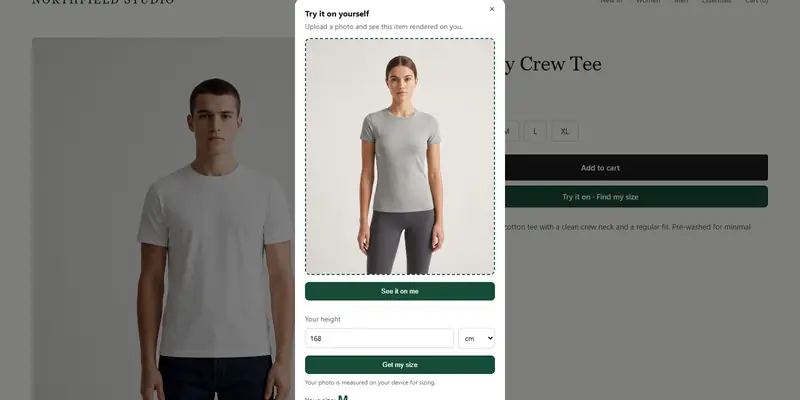
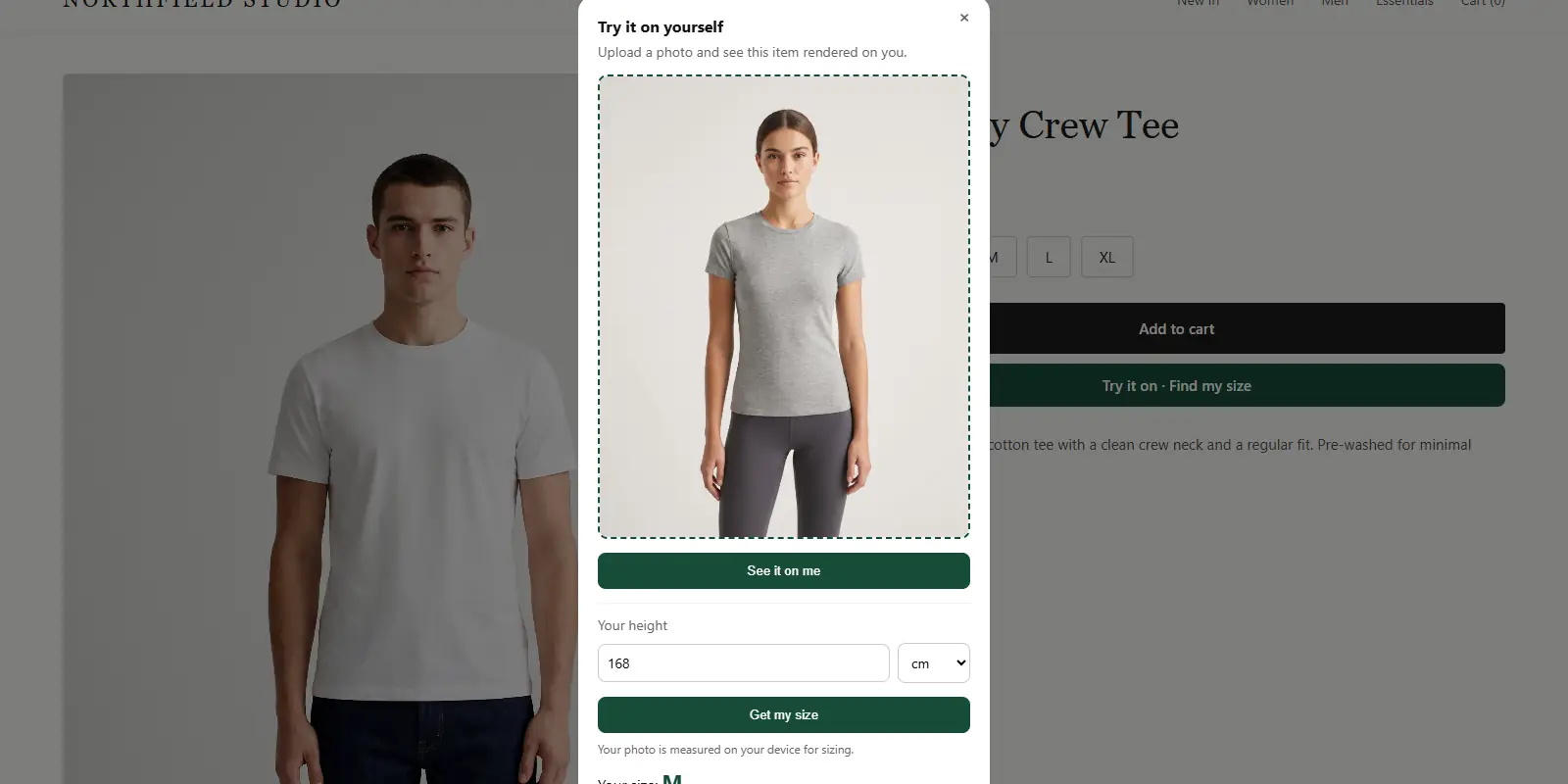
ZeDaq.ai offers AI virtual try-on and a size recommendation from a 30-second body scan, matched to your own size chart. For background on try-on and returns, read how virtual try-on relates to clothing returns. The Free plan includes 3 try-ons and 3 measurements a month, so you can test it first.
Help shoppers choose the right size first
FAQs
Should I charge for a prepaid return label?
You can. Many stores deduct a flat fee from the refund. State the fee clearly before checkout.
Do prepaid labels increase returns?
They can make returning easier, which may raise the number of requests. Test the change and compare your return counts.
Who is responsible for a parcel lost on the way back?
Under a customer-arranged return, the customer usually needs proof of postage. Prepaid labels have tracking, which makes lost parcels easier to resolve.
Can I offer both options?
Yes. Offer a prepaid label for defects and a paid or customer-arranged option for change-of-mind returns.
Try ZeDaq.ai free
Virtual try-on and Find my size for your store, plus client, order and invoicing tools for tailors, in one subscription.