Free or Paid Returns: Which Should a Clothing Brand Offer?
By the ZeDaq.ai team · · 7 min read
On this page
- What are the main return policy options?
- What do free returns really cost you?
- How do you work out your return cost per order?
- What do paid returns cost you in sales?
- Which situations favor free returns?
- Which situations favor paid returns?
- What middle options can you try?
- How can you reduce the cost, whatever you choose?
- How do you test a new return policy?
- How should you word your returns policy?
A clothing brand should offer free returns when its margin can absorb the cost and trust is the main barrier to buying, and should charge for returns when return costs are eating its profit. Many brands land in the middle: free exchanges, paid refunds, or free returns only for some customers.
There is no single right answer, because the answer depends on your margin, your average order and why items come back. This guide is for store owners who want to decide with numbers from their own store. It also shows how better sizing information can help, as covered in AI size recommendation for fashion stores.
What are the main return policy options?
Most clothing brands choose from this list:
| Policy | What the customer pays | Typical strength | Typical weakness |
|---|---|---|---|
| Free returns for all | Nothing | Builds confidence and lowers the fear of buying | Highest cost for you |
| Paid returns (flat fee) | A set fee | Simple to explain and covers costs | Can put shoppers off |
| Label cost deducted from refund | The actual shipping cost | Fair and transparent | Customers may feel penalized |
| Free exchanges, paid refunds | Nothing for an exchange | Keeps the sale and the customer | Needs stock for the swap |
| Free for defects, paid for the rest | Nothing for faulty items | Protects against abuse | Needs clear definitions |
| Free for members or repeat buyers | Nothing for those groups | Rewards loyal customers | Adds rules to manage |
| Store credit refund only | Nothing | Keeps money in your business | Can annoy customers who want cash |
Choose the row that matches your goals, then write it in plain words.
What do free returns really cost you?
A return is more than shipping. When a parcel comes back, you pay for several things:
- Outbound shipping you will not get back.
- Return shipping, if you pay the label.
- Handling, such as checking, cleaning, repackaging and restocking.
- Lost resale value, if the item can't be sold at full price again.
- Payment fees, which many processors keep even on refunds. Check your processor's terms.
- Support time spent on emails and updates.
For a deeper breakdown, read the true cost of a clothing return. Use your own figures, not averages.
How do you work out your return cost per order?
Put your numbers into a simple formula. Use letters first, then fill them in from your own records:
- L = return label cost
- H = handling cost per returned parcel
- V = value lost if the item can't be resold at full price
- O = original shipping you paid and will not recover
Cost of one return = L + H + V + O.
Then compare it to your profit on a sale:
- P = profit from one order before any return
- R = share of orders that come back, as a fraction
Estimated profit after returns = P − (R × cost of one return).
Try it with last quarter's data. If the result is thin or negative, free returns may be too costly in their current form. If you want to set a sensible goal for R, use the guide to setting a realistic returns target.
What do paid returns cost you in sales?
Charging for returns protects margin, but shoppers notice. A visible fee can make some shoppers abandon the cart, especially for first-time buyers who don't know your brand yet.
Fashion is a special case. People often can't know the fit until they try it on, so they price in the risk of sending something back. A fee on top of that risk can feel like a penalty for a problem the shopper didn't cause.
The effect on sales is something you must test in your own store, because brands differ in price, audience and reputation. Don't copy another store's policy and assume it will work for yours.
Which situations favor free returns?
Free returns tend to fit when:
- Your brand is new and shoppers need reassurance.
- Your average order is high, so one return is a small share of profit.
- Fit is hard to judge from a photo, such as tailored or fitted pieces.
- Your margin is healthy after shipping and handling.
- Competitors in your niche offer them, so a fee would stand out.
Which situations favor paid returns?
Paid returns tend to fit when:
- Your margin is thin, so every return hurts.
- Your average order is low, so shipping costs a large part of the price.
- You see bracketing, where shoppers buy several sizes and return most of them. Read about why shoppers order two sizes.
- Your products are hard to resell, such as swimwear or custom items.
- You ship internationally, where return labels are costly.
What middle options can you try?
You don't have to choose between "free for everyone" and "paid for everyone". These hybrids are common:
Free exchanges, paid refunds
The customer gets a new size at no charge but pays if they want their money back. This keeps the sale in your business and rewards shoppers who just need a different size.
Free returns to a drop-off or store
If you have a physical shop or a pickup point, returns there can be free. This is cheaper than a prepaid label for many brands.
Fee waived for store credit
Offer free returns if the customer takes store credit, and a fee if they want a refund. Be clear and fair about this, and check that it complies with consumer law where you sell.
Free above a basket size
Waive the fee when the order passes a threshold you set. Choose the threshold from your own cost data.
Free for loyal customers
Give repeat buyers free returns as a perk. It costs you less than offering it to everyone, and it encourages a second order.
How can you reduce the cost, whatever you choose?
The cheapest return is the one that doesn't happen. Fit and expectation problems cause many returns in fashion, so focus on them first:
- Write a clear size chart that uses body measurements. Our guide to writing size guides that work covers it.
- Add fit notes such as "runs small" or "relaxed fit".
- Show the garment accurately, with true colors and on different bodies.
- Ask for a return reason and review the answers each month.
- Offer a size recommendation so shoppers pick a size with more confidence.
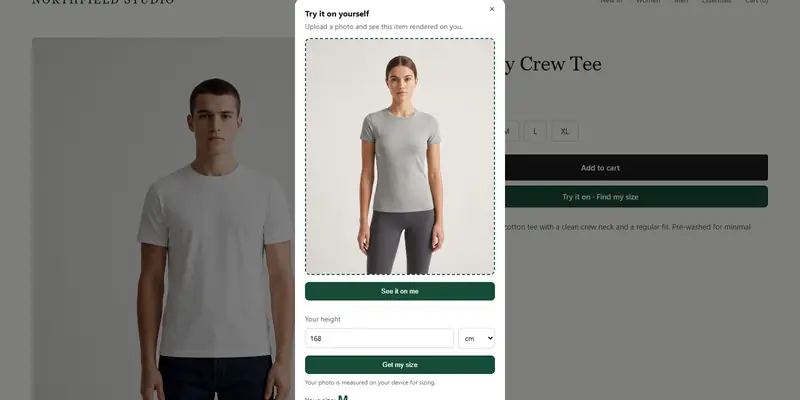
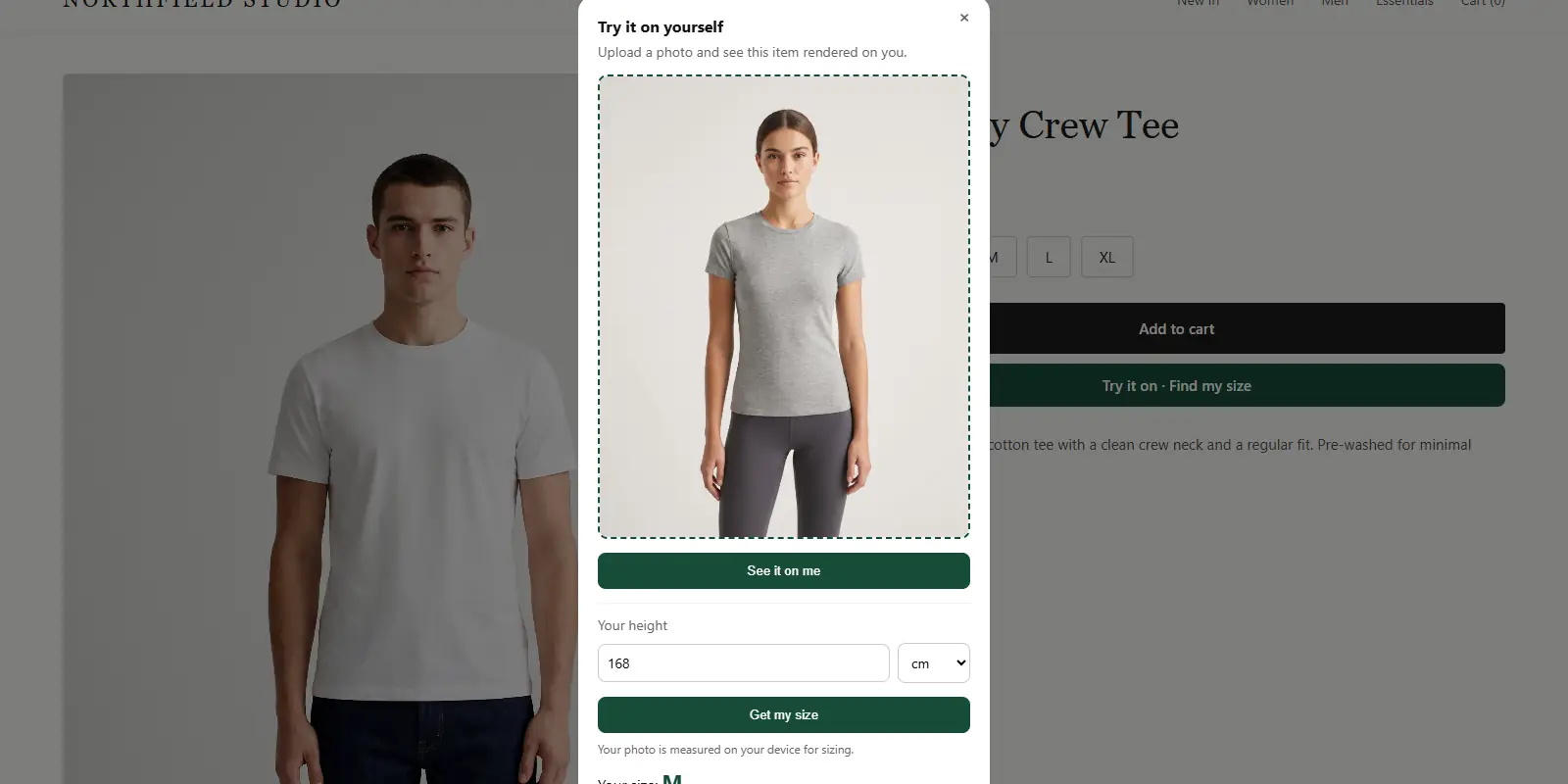
ZeDaq.ai provides a size recommendation from a 30-second body scan, one photo plus height, matched to your own size chart. It can also show the garment on the shopper from one uploaded photo. These tools help shoppers decide. They are not a promise of fewer returns, so measure the effect on your own store. For a general view, see how virtual try-on relates to clothing returns.
How do you test a new return policy?
Don't change your policy overnight and hope. Use a clear process:
- Record your baseline. Note your current return rate, return cost and conversion rate.
- Change one thing. For example, start charging a label fee, or start offering free exchanges.
- Run it long enough. Include a normal sales period, not only a sale or a holiday.
- Compare like with like. Use the same products and the same season where possible.
- Check support messages. Complaints are early signals of friction.
- Decide and document. Keep the policy that gives you the best profit and reputation together.
Write the policy on a clear page and link it from the product page and the checkout. Surprise fees at the end of a purchase damage trust.
How should you word your returns policy?
Plain words build trust. Include:
- How many days the customer has, stated in your own policy.
- Who pays for the label.
- What condition the item must be in.
- How refunds are paid and how long they take.
- How to start a return, step by step.
Check your local consumer rules before you publish, since they can set minimum rights for customers. This is general guidance, not legal advice.
Help shoppers pick the right size first
FAQs
Are free returns always better for sales?
Not always. They can help trust, but they also raise your costs. Test the effect in your own store before you decide.
Can I charge for returns and still keep customers?
Yes, many brands do, especially when the fee is clear, fair and shown before checkout. Free exchanges can soften the effect.
Should I offer free returns on sale items?
That depends on your margin on those items. Some brands limit free returns on discounted products. If you do, state it clearly.
What is the simplest policy to start with?
Free exchanges and paid refunds is a simple middle option. Review your costs after a few months and adjust.
Try ZeDaq.ai free
Virtual try-on and Find my size for your store, plus client, order and invoicing tools for tailors, in one subscription.