
Outsourcing Embroidery and Beading: Managing Timelines
By the ZeDaq.ai team · · 5 min read
On this page
- When does it make sense to outsource embellishment?
- How do you write a brief a vendor can follow?
- How do you build a realistic timeline?
- What checkpoints should you set?
- How do you protect the garment and the payment?
- How do you track several pieces at once?
- What do you do when the vendor is running late?
- How do you tell the client?
To outsource embroidery and beading without missing deadlines, agree the finish date in writing, break the job into checkpoints, and add buffer days before your client's date. Hand embellishment is slow and hard to rush, so most late deliveries come from a missing brief, not from the vendor's speed.
This guide is for tailors and designers who send pieces to outside embroiderers or bead workers. It sits alongside the wider software for tailors and designers that keeps orders and dates in one place. Below is a method you can use on your next order.
When does it make sense to outsource embellishment?
Outsource when the work needs a skill, a machine or a volume you don't have in your own shop. Common cases:
- Heavy hand beading on bridal or event wear
- Machine embroidery on several matching pieces
- Specialist work such as zardozi or stone setting
- A rush of orders in the same season
Keep the work in house if it is your signature, because quality control is easier. Outsource where your time is better spent on cutting, fitting and clients.
How do you write a brief a vendor can follow?
A clear brief prevents most disputes. Put it in writing, in a chat or a document, and include:
- The garment. Describe the piece, the panels to be embellished and the fabric.
- The design. Add a sketch, photos and a placement diagram with measurements.
- Materials. Say who supplies beads, thread, sequins and backing, and the colors.
- The quantity. State how many pieces and how many panels.
- The deadline. Give the date you need it back, not just "soon".
- The price and payment terms. Include the deposit and balance.
- Quality standard. Attach a finished sample if you have one.
Ask the vendor to repeat the brief back in their own words. If they can't, the brief isn't clear yet.
How do you build a realistic timeline?
Work backward from your client's date.
- Start with the date the client needs the garment.
- Subtract time for the final fitting and any alterations.
- Subtract time for finishing and pressing after embellishment.
- Subtract the transport time to and from the vendor.
- Subtract the vendor's working time, as quoted by them.
- Subtract a buffer for delays.
The date you reach is the latest day to hand the piece to the vendor. If that date has already passed, tell the client now or change the scope.
Ask each vendor how long a similar piece took last time, and use that figure. Don't use a number you guessed. If you manage the whole workflow, order tracking for tailors explains how due dates and calendars fit together.
What checkpoints should you set?
Don't wait until the end to see the work. Break the job into stages with a photo or visit at each.
- Start: the vendor confirms materials and begins.
- Sample panel: a small area is done, and you approve the look.
- Halfway: photos show the progress against the plan.
- Finished: you inspect the piece before payment of the balance.
The sample panel is the most valuable checkpoint. A mistake found early costs one panel. A mistake found at the end costs the whole garment.
How do you protect the garment and the payment?
Embellishment is added to a finished or cut piece, so you are sending something valuable.
- Photograph the piece before it leaves, front, back and any marks.
- Write a handover note listing what was sent.
- Ask the vendor to sign or confirm it by message.
- Pay a deposit for materials and keep the balance for delivery.
- Agree who is responsible if the piece is damaged or lost.
These steps also help if you need to show what you sent. Our guide to managing tailors in a Nigerian production workshop has more on handoffs and quality checks.
How do you track several pieces at once?
A table makes it easy. Keep one row for each piece out of your shop.
| Field | Example |
|---|---|
| Client and order | Name and order number |
| Piece | Bodice, sleeves, veil |
| Vendor | Name and phone |
| Date sent | Day handed over |
| Date promised | Day due back |
| Checkpoint status | Sample approved, halfway, done |
| Payment | Deposit paid, balance due |
Review it every morning. Anything due within two days gets a call.
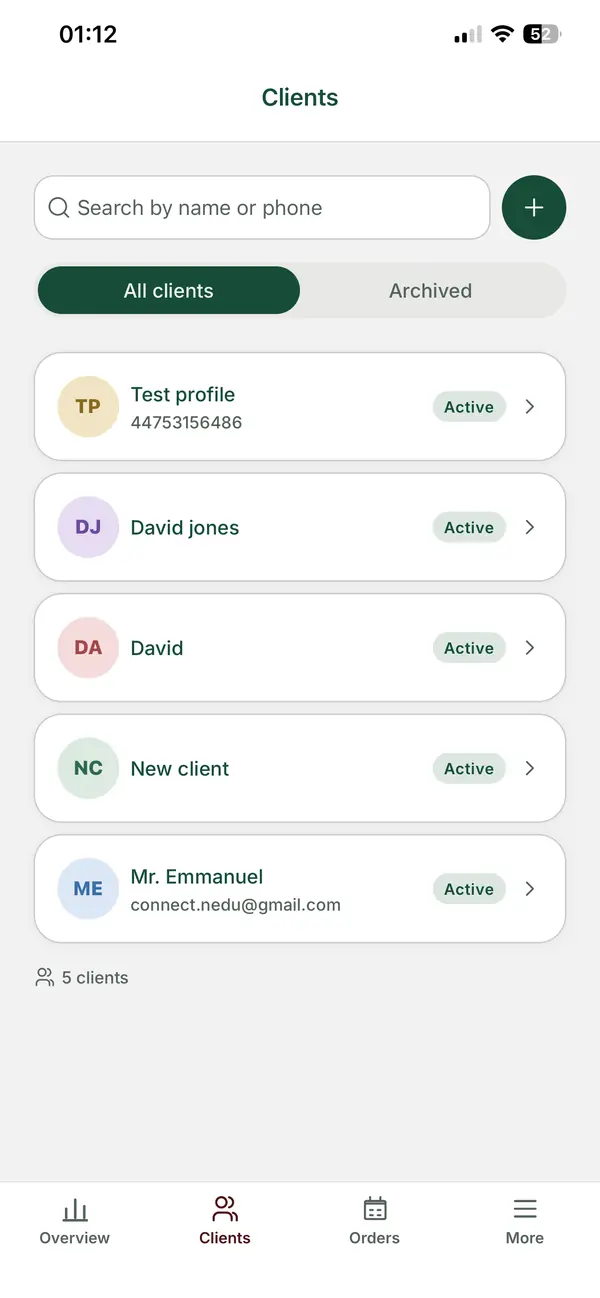
The ZeDaq Business app, for iOS and Android, includes orders and a delivery calendar, along with client records, so you can see all your due dates and which clients are waiting. Measurements come through a link the client opens on their phone.
What do you do when the vendor is running late?
Act on the first sign of delay, not on the due date.
- Ask for a photo of the current state.
- Ask for a new date, and why.
- Work out whether you can still meet the client's date.
- If not, tell the client early with a new date and an option, such as a simpler finish.
- Note the cause so you can adjust future timelines.
For repeated delays, find another vendor. A backup name on your list saves you at the busiest time.
How do you tell the client?
Give the date and the reason in one short message. Clients accept honest news. Say what you are doing about it, and what they can choose.
For more ways to choose software that supports this, see best software for tailors and fashion designers. For working with staff in your own shop, dressmaker software for clients, fittings and orders is a useful companion.
Keep orders, due dates and clients in one app
FAQs
How far ahead should I send embellishment work out?
Work backward from your client's date and add a buffer. Ask the vendor how long a similar piece took last time.
Should I pay the vendor in full upfront?
Most tailors pay a deposit for materials and the balance on delivery. Agree the terms in writing before work starts.
Who should buy the beads and thread?
Either can, but decide in the brief. If you supply them, count them out and record the amount.
How do I check quality before the piece is finished?
Ask for a sample panel at the start and photos at the halfway point. Inspect the finished piece before you pay the balance.
Try ZeDaq.ai free
Virtual try-on and Find my size for your store, plus client, order and invoicing tools for tailors, in one subscription.

