Logistics Partners for African Fashion Exports
By the ZeDaq.ai team · · 6 min read
On this page
- What types of logistics partner can an African fashion brand use?
- How do you choose between them?
- What questions should you ask every logistics partner?
- What paperwork should you expect?
- How do returns change the maths?
- How do you pack for export?
- How do you review a partner after the first shipments?
- How do you tell customers about shipping?
African fashion export logistics usually comes down to three kinds of partner: an international courier for single parcels, a freight forwarder for larger shipments, and a consolidator or fulfillment partner when you ship many small orders to the same market. The right one depends on your order size, your customers' expectations and how much customs paperwork you want to handle yourself.
This guide helps brand owners compare those options without hype. It extends our wider look at virtual try-on and sizing for African fashion brands, because shipping and fit are the two costs that decide whether an export order is worth it. We do not rank carriers here. Prices, routes and rules change, so get written quotes and read each provider's own pages before you commit.
What types of logistics partner can an African fashion brand use?
International couriers
Couriers collect a parcel, move it across borders and deliver it to the door. They suit small and medium orders, samples and direct-to-consumer sales. Most offer online booking and tracking, but services and coverage differ by country, so check the route you actually need on the courier's own site.
Freight forwarders
A forwarder arranges transport for larger shipments, such as a wholesale order to a boutique. They can book air or sea space and often help with export and import documents. They tend to suit pallets and cartons more than single parcels.
Consolidators and fulfillment partners
A consolidator groups many parcels bound for one destination and ships them together. A fulfillment partner can also store your stock near your customers. Both can suit brands with steady orders in one market, such as the UK or US diaspora.
Local post offices
National postal services can be a simple option for light parcels. Compare the service level, tracking and insurance they offer for your route.
How do you choose between them?
Match the partner to the order, not the other way around. This table gives a starting point.
| Your situation | Likely fit | Ask first |
|---|---|---|
| A few direct orders a week | Courier | Does the service cover duties and taxes for the customer? |
| A wholesale order to a boutique | Freight forwarder | Who prepares the export and import documents? |
| Steady orders to one overseas market | Consolidator or fulfillment partner | How are returns handled? |
| Occasional light parcels | Postal service | What tracking and insurance are included? |
Start with a small test shipment on the route you plan to use. Compare the quote with what you actually paid and how long the parcel took.
What questions should you ask every logistics partner?
Put these in writing and keep the replies.
- Which countries and routes do you serve from my location?
- What is the full price, including fuel, remote-area and handling charges?
- Who pays import duties and taxes: me or the customer?
- What documents do I need to prepare, and can you help?
- How does tracking work, and where do I see it?
- What happens if a parcel is lost or damaged, and what does insurance cover?
- How are returns or refused deliveries handled?
- How are fabrics, leather or beaded items handled, if there are limits?
- How do I contact a person if something goes wrong?
What paperwork should you expect?
Rules differ by country, and they change. For authoritative answers, check the customs authority of the destination and of your own country, and ask your partner to confirm.
In general, expect to describe what is in the parcel, its value and its origin. Clear product descriptions help customs officers and your customer. Our guide to describing African fabrics online shows plain-language wording you can reuse in your listings. This article is general information, not legal or tax advice.
Who pays duties and taxes?
Some services collect duties from the buyer on delivery, and some let you pay in advance. Neither is better in every case. Surprise charges can make a customer refuse a parcel, so tell shoppers before checkout what to expect, and see pricing African fashion for international buyers for how to show total cost.
How do returns change the maths?
Returns are the part many exporters underestimate. A parcel that comes back across a border costs you twice, and some customers will not bother to return it at all.
Cut avoidable returns first:
- Publish clear body-measurement size charts. Do not rely on labels alone.
- Photograph on a real body. Show length, drape and volume.
- Add a fit note. Say if a piece runs small or is cut for a looser fit.
- Offer a size recommendation. A sizing tool helps overseas shoppers who cannot visit a fitting.
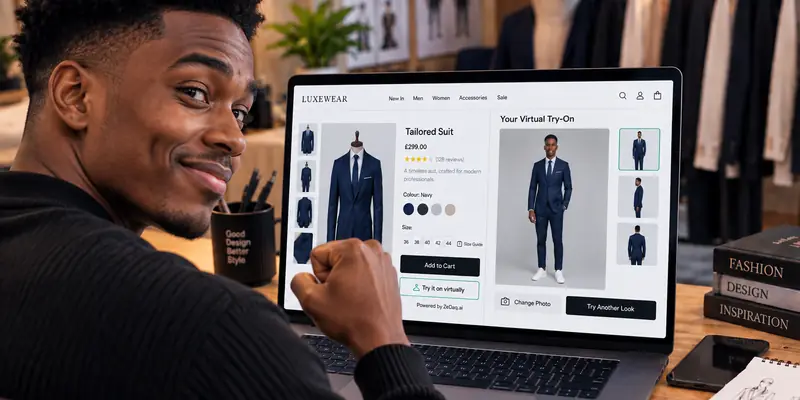
ZeDaq.ai is a Shopify app that offers "Try it on" and a "Find my size" scan matched to your own size chart. Prices are in US dollars, and every paid plan has a 3-day free trial with no card required. If you ship wholesale, see African fashion wholesale to boutiques.
How do you pack for export?
Good packing protects margin. Use these habits:
- Fold or roll each piece in a clean bag so dust and moisture stay out.
- Use strong outer packaging that suits the carrier's handling.
- Put the order number, a contact email and a return label inside.
- Photograph each parcel before sealing, to help with any damage claim.
- Keep beaded or structured pieces from being crushed by padding them well.
How do you review a partner after the first shipments?
Keep a simple log for each parcel: the quote, the final cost, the delivery time, any customer complaint and whether there was damage. After a few shipments, compare partners on that record, not on their brochures. Drop the ones that surprise you with extra charges, and keep the ones that answer questions quickly.
How do you tell customers about shipping?
Put shipping details where shoppers decide, not only in a footer.
- Show delivery countries and typical timing on the product page.
- Say whether duties are included in the price.
- Send a tracking link as soon as the parcel leaves.
- Post updates on social channels where your customers follow you. See Instagram strategy for African fashion brands for ideas.
If you also sell on your own store, see how to add virtual try-on to Shopify for the fit side of the same problem.
Cut the guesswork on size before you ship
FAQs
Should a small African fashion brand use a courier or a freight forwarder?
For single parcels and small orders, a courier is usually simpler. For large wholesale shipments, a freight forwarder is a better match. Get quotes for both on your real routes.
Who pays import duties on an export order?
It depends on the service and on how you set up the order. Ask your partner, and tell the customer before checkout.
How do I find the customs rules for a country?
Check that country's customs authority website, and ask your logistics partner to confirm. Rules change, so check each time.
Can I reduce returns on international orders?
Clear size charts, honest photos and fit notes help. A sizing tool lets overseas shoppers pick a size from your own chart.
Try ZeDaq.ai free
Virtual try-on and Find my size for your store, plus client, order and invoicing tools for tailors, in one subscription.