
Late Payment Fees for Tailoring Clients
By the ZeDaq.ai team · · 4 min read
On this page
To charge a late payment fee to a tailoring client, agree the fee in writing before you start the work, state the due date clearly on every invoice, and keep the amount reasonable. A fee the client never agreed to is hard to collect and can damage the relationship. Rules also differ by country and by whether the client is a business or an individual.
This is general information, not legal or tax advice. This guide is for tailors and designers, and the ZeDaq.ai tools for tailors include invoicing and order tracking that help you keep due dates visible.
Can a tailor legally charge a late payment fee?
It depends on where you work and who the client is. In many places you can charge a fee if it is part of the agreement, but laws on consumer contracts, interest and fees vary. Check the official guidance for your own country before you set a policy.
As one example, the UK government explains that its late payment rules cover business-to-business and public-authority payments. That page does not cover consumers. It also says that if no payment date is agreed, a payment is late 30 days after the customer receives the invoice or after delivery of the goods or service, whichever is later. For business deals, an agreed period should usually be within 60 days, and longer terms must be fair to both sides.
A private client buying a dress from you is usually a consumer, so those rules would not apply in the same way. Look up the equivalent page from your own government or regulator.
What are your options besides a flat fee?
- A reasonable late fee. A fixed amount added after the due date.
- Interest on the overdue balance. Only where your local rules and agreement allow it.
- A deposit. Collect part of the price before you start, so the risk is smaller.
- Holding the finished garment. Say in your terms that collection happens after full payment.
For many small tailors, a clear deposit and balance rule works better than late fees. See the guide to setting deposit rules clients accept.
How do you write a late payment policy?
Keep it short and put it where clients see it before they commit.
- State the due date, such as "balance due on collection" or "within seven days of invoice."
- State the fee or interest in plain words, with the exact amount or method.
- Say when the fee starts, for example "after the due date has passed."
- Say what happens to the garment if payment is not made.
- Ask the client to confirm, by signature or a clear written reply.
A tailoring contract is the natural home for these terms. The guide to a tailoring contract template lists what to include.
What does sample wording look like?
Adapt this to your situation, and add the agreed amount in writing. Have it checked if you are unsure:
"The balance is due on collection. If it is not paid within the agreed number of days after the due date, a late fee of the amount we agreed may be added. The finished garment is released once the full balance is paid."
Use the exact figure you have agreed with the client, and do not change it after the fact.
How do you remind clients without damaging the relationship?
Most late payments are forgetfulness rather than refusal. A polite reminder fixes many of them before any fee applies.
- Send a friendly message the day the payment becomes due.
- Include the invoice, the amount and how to pay.
- Follow up a few days later with the same details.
- Mention the late fee only if the client agreed to it, and only after a reminder.
The guide to handling difficult tailoring clients has tips for tougher cases, and asking clients for reviews works best once payment is settled.
How do group orders change the picture?
With weddings and aso ebi orders, one person often pays for several outfits. Decide who is responsible for the full balance before you start, and write it down. The guide to managing wedding and aso ebi group orders covers how to track many people on one order.
How can invoices help?
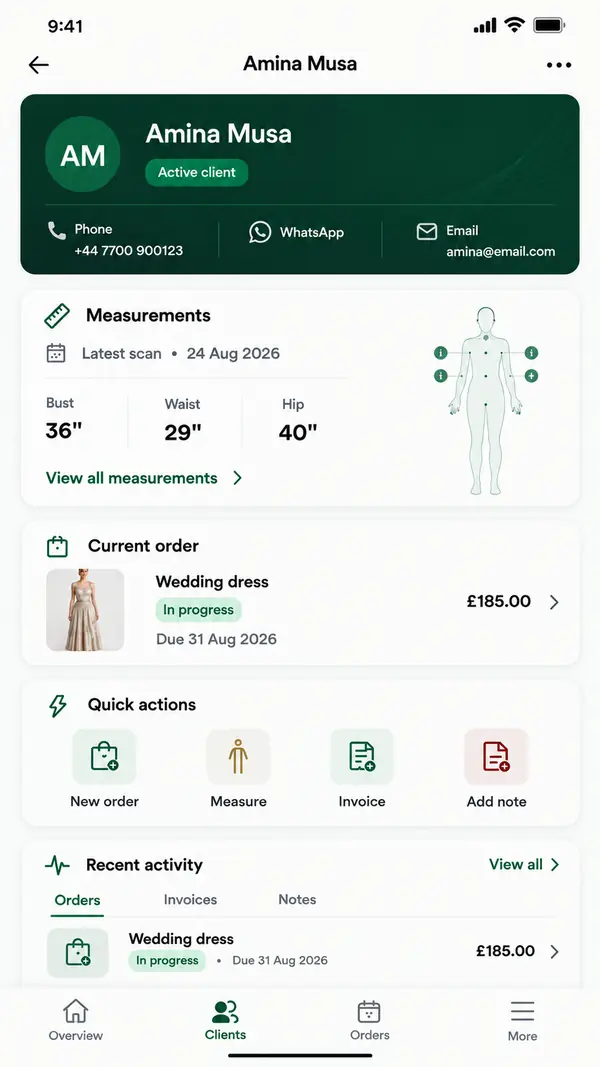
Clear invoices reduce disputes. ZeDaq.ai's tailor tools include invoicing in several currencies, including NGN, GBP and USD, plus orders and a delivery calendar so you can see what is due. Put the due date and your payment terms on each invoice.
Keep invoices, deposits and due dates in one place
FAQs
Can I add a late fee after the client has already ordered?
It is risky. Fees agreed before the work starts are far easier to enforce than terms added later.
Should I charge interest or a flat fee?
Either can work where local rules allow it. A flat fee is simpler to explain to individual clients.
What if the client never collects the garment?
Write a collection deadline into your terms and tell the client what happens afterward. Check your local rules about unclaimed goods before you act.
Do late fees apply to deposits?
Treat the deposit as the first payment and say when it is due. Many tailors do not start work until it is paid.
Try ZeDaq.ai free
Virtual try-on and Find my size for your store, plus client, order and invoicing tools for tailors, in one subscription.

