Kitenge Fashion Online: Selling East African Prints
By the ZeDaq.ai team · · 4 min read
On this page
- How should you photograph kitenge prints?
- How do you describe kitenge fabric honestly?
- How do you handle sizing for kitenge dresses?
- Where can you sell kitenge online?
- How should you price and ship internationally?
- What can you learn from other regional prints?
- How do you build a kitenge brand people remember?
To sell kitenge dresses online, show the print in true color, describe the fabric and cut plainly, and publish body measurements for every size. Printed cotton cloth sold as kitenge is popular across East Africa, and buyers far from you need extra detail to order with confidence.
This guide is for brand owners and designers. It covers photos, descriptions, sizing and shipping, and it builds on the wider guide to virtual try-on for African fashion brands.
How should you photograph kitenge prints?
Bold prints are the reason people buy, so the photo has to be accurate. A shopper who receives a duller or brighter color than expected will ask for a refund.
- Shoot in daylight. Window light shows true color better than indoor bulbs.
- Add a flat close-up. Show the print repeat and the texture of the cloth.
- Show the garment in motion. A walking shot shows how a skirt moves.
- Show the back and the seams. Pattern placement at the seams is part of the quality.
- Note screen differences. A short line saying colors may vary slightly by screen is fair.
More ideas are in the guide to photos for African print clothing.
How do you describe kitenge fabric honestly?
Names for printed cloth differ by region, and shoppers abroad may know it as Ankara or wax print. Use the local name you trust, and add a plain-language line so search and buyers both understand.
A good description answers these points:
- Fiber and feel, such as cotton and medium weight.
- Whether the garment is lined.
- Whether the print is the same on both sides or only on the front.
- How to wash it, and whether it may fade.
- Whether pattern placement varies between pieces.
For cloth terms that travel well, see describing African fabrics online.
How do you handle sizing for kitenge dresses?
Fit is the main reason clothing is returned, and made-to-measure or small-batch styles make it harder. Give shoppers body measurements in centimeters and inches rather than labels alone.
Make a size chart from body measurements
List bust, waist and hips for each size, and say how a dress is meant to fit: close, relaxed or flowing. If your pieces are cut to order, say how long it takes and how the shopper sends their measurements.
Offer a way to check fit
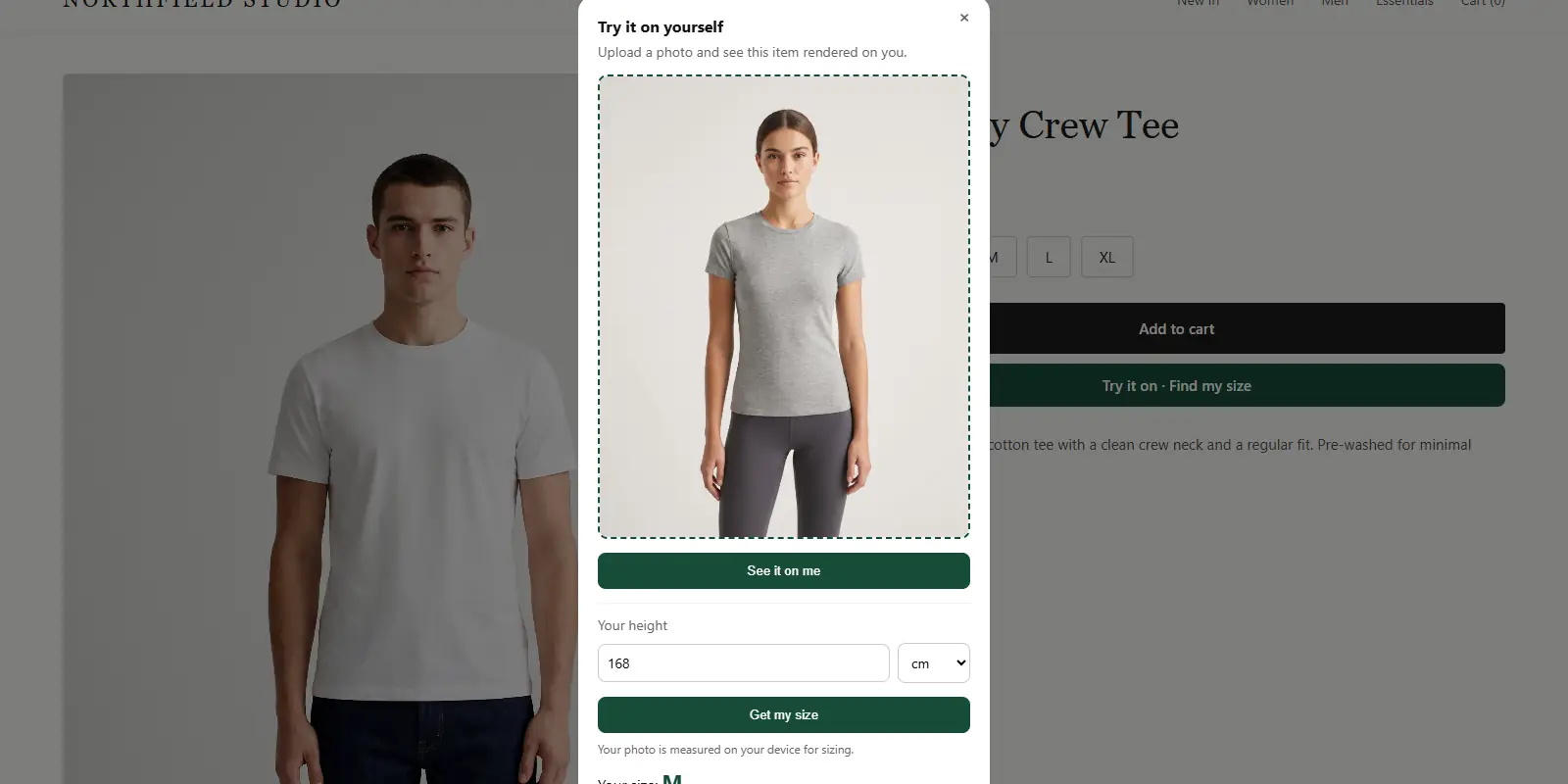
A shopper can see the garment on their own body using one photo with ZeDaq.ai, and can scan for a size matched to your own size chart. Your chart stays the source of truth, because the recommendation uses your labels. Details on how it works for African brands are in size recommendation for African fashion brands.
Try the demo with your own photo
Try it on yourself
Live renderUpload a photo, pick a piece, see it rendered on you.
Pick something to try on
Where can you sell kitenge online?
You have three main options, and many brands use more than one:
- Your own online store. You control branding, pricing and customer data. A Shopify store for an African fashion brand is a common choice.
- Social platforms. Good for discovery and quick chats, but harder to manage orders at volume.
- Marketplaces. They bring traffic but charge fees and limit your branding.
Whatever you pick, keep the same product names, measurements and photos everywhere.
How should you price and ship internationally?
Show prices in the currency your buyers use, and say clearly who pays duties and delivery. Surprise costs at the door cause refusals.
For pricing ideas aimed at overseas buyers, see pricing African fashion for international buyers. Check your carrier and destination country for current rules, since they change.
What can you learn from other regional prints?
Each region has its own cloth, names and buyers. Brands selling South African shweshwe face similar questions about naming, photography and fit, as covered in selling shweshwe dresses online. West African flowing garments raise sizing questions of their own, which is the focus of selling boubou dresses online.
Reading across these guides helps you spot habits worth copying, such as clear care notes and honest fit descriptions. It also shows where your own market differs, so you can write for your buyers rather than copy another region.
How do you build a kitenge brand people remember?
Tell the story behind the prints and the people who make them. Name your tailors and printers if they agree, and credit designers properly. Shoppers value this, and it separates a brand from a reseller.
For brands that want a wider starting point, the Shopify setup guide for try-on shows how to add these tools to a store.
Let shoppers see kitenge pieces on themselves
FAQs
What is kitenge?
Kitenge is a printed cloth used for clothing across East Africa. Similar printed cloths go by other names elsewhere, such as Ankara or chitenge.
Is kitenge the same as Ankara?
They are closely related and often used for the same kind of printed cotton. Names vary by country and seller, so describe the fabric in detail.
Do I need a size chart for made-to-order dresses?
Yes. Shoppers still need to know which measurements to send and how the fit is meant to feel.
How do I stop color complaints?
Use daylight photos, show a close-up of the print, and add a short note about screen differences.
Try ZeDaq.ai free
Virtual try-on and Find my size for your store, plus client, order and invoicing tools for tailors, in one subscription.

