Size Recommendation for African Fashion Brands
By the ZeDaq.ai team · · 6 min read
On this page
- Why do African fashion brands need their own size charts?
- How does a size finder read your charts?
- How do you turn tailoring measurements into fixed sizes?
- How do you size for diaspora shoppers?
- What about custom and made-to-measure orders?
- How do modest and occasion pieces change the sizing?
- How do you add it to your store?
Size recommendation for African fashion brands works best when the tool matches each shopper's measurements to your brand's own size chart, with a separate chart for each silhouette you sell. A fitted Ankara dress, a flowing kaftan and a structured agbada fit the body in different ways, so one generic chart can't size them all.
This guide shows how to build those charts, how to serve shoppers in Lagos, London and Houston from the same store, and where a body-scan size finder fits. If you also want shoppers to see your prints on themselves, read about virtual try-on for African fashion brands.
Why do African fashion brands need their own size charts?
Many African fashion brands started as tailoring businesses, where every piece was cut to the client. When you move into ready-to-wear, you have to turn that experience into fixed sizes.
Your sizes are probably not the same as a high-street chart. You may cut for curvier hips, a longer torso or a looser drape than a Western mass-market brand. That is a strength, but only if your chart says so.
A shopper who orders "medium" based on another brand's chart may get the wrong fit. A size finder that reads your own chart avoids that, because it recommends your labels, not someone else's.
Try the shopper side of Find my size
Try it on yourself
Live renderUpload a photo, pick a piece, see it rendered on you.
Pick something to try on
How does a size finder read your charts?
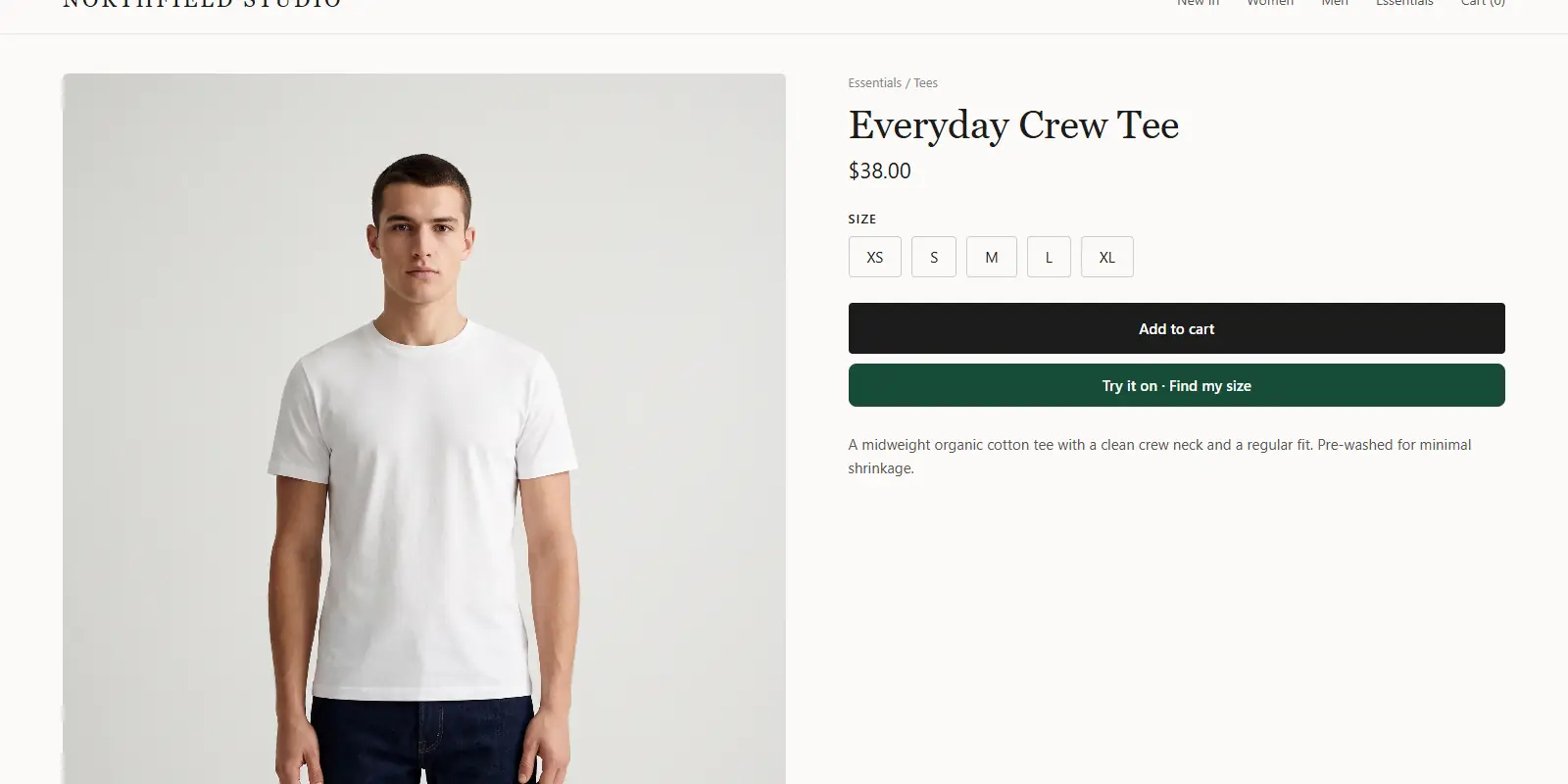
ZeDaq.ai's "Find my size" asks the shopper for one full-length photo and their height. The photo is measured on the shopper's own device. The measurements are then matched to the size chart you entered for that garment type.
You can add one chart per garment type: tops, outerwear, dresses and bottoms. If a shopper falls between two sizes, the tool recommends the larger one. If you haven't added a chart yet, it falls back to a generic UK, US, EU or AU chart.
Here is one way to map common African fashion pieces to those types:
| Piece | Garment type | Measurements to put in your chart |
|---|---|---|
| Ankara or Adire top, buba | Tops | Chest |
| Fitted Ankara or Kente dress | Dresses | Chest, waist, hips |
| Kaftan, boubou, maxi gown | Dresses | Chest, waist, hips |
| Agbada, outer robe | Outerwear | Chest |
| Senator suit jacket | Outerwear | Chest |
| Sokoto trousers, wrap skirts | Bottoms | Waist, hips |
Example mapping only. Group your own products by how they fit, not by name.
How do you turn tailoring measurements into fixed sizes?
If you have years of client measurements, you already have the data for a good chart. Here is a simple method.
Step 1: Pull measurements from your best-selling style
Choose one style that sells well and fits most of your clients. Gather the body measurements of the clients who wore it.
Step 2: Group them into size bands
Sort the clients by chest, waist and hips. Look for natural groups, then set a size for each one.
Step 3: Make ranges meet
Each size should end where the next begins. A gap between sizes leaves some shoppers without a match.
Step 4: Write a fit note per style
Say how the piece is cut: "relaxed through the hips," "fitted bodice, flared skirt" or "roomy, size down for a closer fit."
Step 5: Test before you publish
Run a few of your team through the size finder and compare the result with what you would cut for them in person.
Our guide to selling Ankara fashion online has more on writing fit notes for print fabrics.
How do you size for diaspora shoppers?
Many African fashion brands sell to shoppers abroad. A buyer in the UK or US may be used to UK, US or EU labels, and may not know how your sizes compare.
A few habits help:
- Show both units. Give measurements in centimeters and inches. ZeDaq.ai lets you enter a chart in either.
- Translate your labels. If you use your own labels, add a line comparing each label with a UK or US size, but only after you have checked it on real bodies.
- Explain the cut. A shopper used to slim Western fits may not expect a generous drape. Say so on the page.
- Answer delivery worries. Long shipping makes a wrong size costly to fix, so shoppers want more certainty before they order.
A size finder that uses the shopper's own body measurements helps here, because the shopper doesn't need to know your label system at all. They see your size, chosen for their body.
What about custom and made-to-measure orders?
Some shoppers will always want a piece made to their measurements. That is often a core part of an African fashion business.
You can run both side by side. Ready-to-wear items use your size charts and "Find my size." For custom orders, ZeDaq.ai's tailor tools let you send a measurement link the client opens on their phone, then track the order and delivery date in the same account.
Invoices can be sent in multiple currencies, including NGN, GBP and USD, which suits brands that sell from Nigeria to buyers in the UK and US.
How do modest and occasion pieces change the sizing?
Many African fashion pieces are long, layered or made for occasions such as weddings. These styles fit differently from everyday clothing.
- Long gowns often need hips and length as much as chest.
- Layered outfits need room for the layer underneath.
- Occasion wear is bought close to an event, so the shopper has little time for an exchange.
For loose and covered silhouettes, our guide to sizing for modest fashion stores goes into more detail. Brands that also sell fitted pieces, such as stretch sets, can borrow ideas from activewear size recommendation, where snug fit matters most.
How do you add it to your store?
On Shopify, install the ZeDaq.ai app and switch on its app embed in the Theme Editor. On WooCommerce, Wix, Squarespace or a custom site, paste this script tag into your product template:
<script src="https://www.zedaq.ai/widget/zedaq.js" data-key="…" defer>
The key is locked to your store's domain, so it can't be reused on another site. Then add your size charts in the dashboard and test "Find my size" on your own phone.
Size your collection with your own charts
FAQs
Can I use my own size labels instead of S, M and L?
Yes. The size finder recommends the labels from your own chart, so shoppers see the sizes you actually sell.
What if a shopper is between two of my sizes?
The tool recommends the larger size. For most African fashion pieces, a little extra room is easier to wear or alter than a tight fit.
Do I need separate charts for dresses and kaftans?
You get one dresses chart. If your kaftans fit much looser than your fitted dresses, add a fit note to the kaftans, such as "roomy, size down for a closer fit."
Is there a free way to test it?
Yes. The Free plan includes 3 try-ons and 3 measurements a month. Paid plans start at $14 a month, with a 3-day free trial.
Try ZeDaq.ai free
Virtual try-on and Find my size for your store, plus client, order and invoicing tools for tailors, in one subscription.

