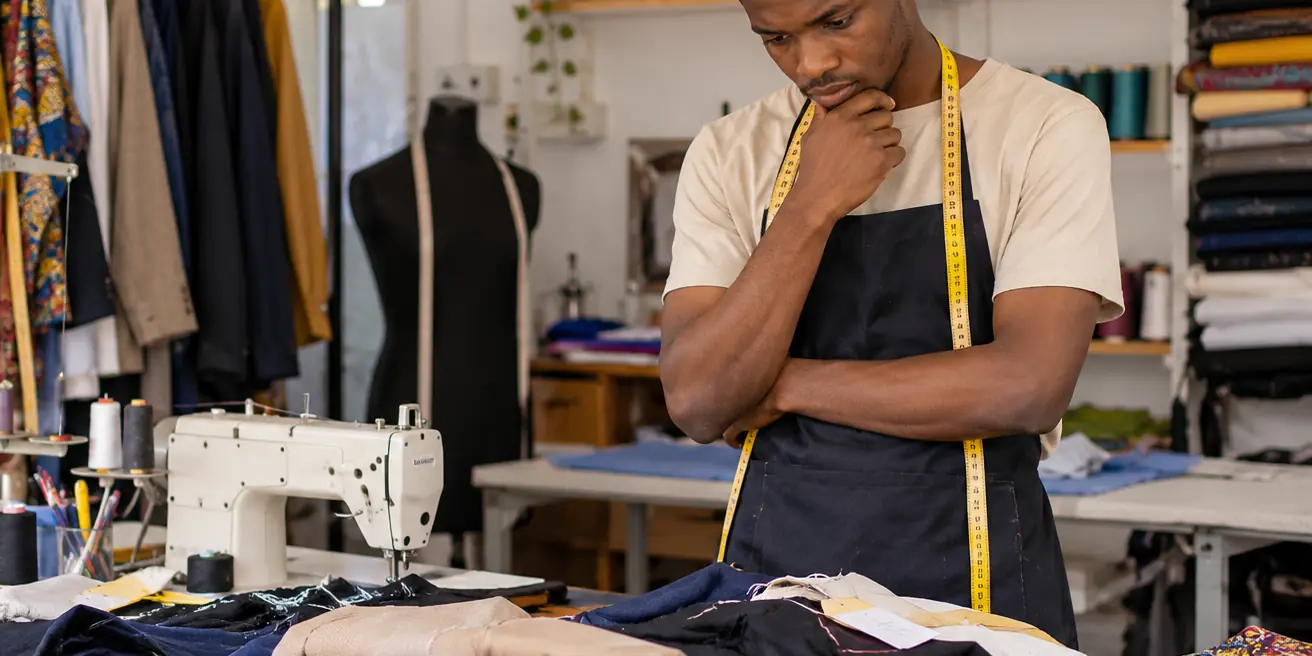
How to Start a Tailoring Business in South Africa
By the ZeDaq.ai team · · 4 min read
On this page
To start a tailoring business in South Africa, choose your legal structure, register for tax with the South African Revenue Service (SARS), and set up a simple way to track clients, measurements and payments. Most solo tailors begin as sole proprietors, which keeps the paperwork light.
This guide covers the first steps for a sewing business or tailor shop, from Johannesburg to Cape Town and beyond. The ZeDaq.ai tailor tools are one option for the record-keeping side. This is general information, not legal or tax advice.
Which business structure should a tailor choose?
Your structure decides how you register and how you are taxed. SARS lists sole proprietorships and partnerships as businesses that are not legal entities. A sole proprietor is taxed in an individual capacity, and each partner is taxed on their share.
Companies are legal entities. They register with the Companies and Intellectual Property Commission (CIPC) and also register for corporate income tax.
For a first workshop, a sole proprietorship is the simplest. Move to a company later if you take on partners, large contracts or outside investment, and ask an accountant first.
How do you register with SARS?
Register with SARS so your income is on record and you can file returns. Do it before you take your first paid order, or as soon as you start trading.
Use SARS eFiling or visit a branch, and keep your ID and proof of address ready. SARS runs a contact centre for questions at the number on its small business page.
If you hire staff, you will also have employer duties. Ask SARS or an accountant which registrations you need.
Do you need to register for VAT?
Only if your turnover is high enough, or if you choose to. According to the SARS VAT page, the compulsory registration threshold rose from R1 million to R2.3 million from 1 April 2026. The voluntary threshold rose from R50 000 to R120 000. The standard rate is 15%.
Most new tailoring businesses sit below the compulsory limit. If you do register, you charge VAT on sales and can claim VAT on business purchases. Keep every invoice.
What is turnover tax and could it suit you?
Turnover tax is a simplified tax system for micro businesses. SARS describes it as covering businesses with a qualifying annual turnover of R2.3 million or less, including sole proprietors.
It can save on bookkeeping because you pay on turnover instead of working out profit. SARS also publishes a quick test to see if you qualify, so use it before you decide. An accountant can say whether it beats normal income tax for your costs.
What do you need to open a tailor shop?
Start with the work you can do well, then buy equipment to match. A home studio can be enough for alterations and made-to-measure orders.
A basic setup includes:
- A reliable sewing machine and, if you can, an overlocker
- A cutting table, shears, tape measure and pattern paper
- An iron and pressing surface
- A fitting space with a mirror and good light
- Storage for fabric and finished orders
Check with your local municipality about zoning and any permits for running a business from your premises. Rules differ by municipality, so this guide doesn't list them.
How do you set up clients, measurements and orders?
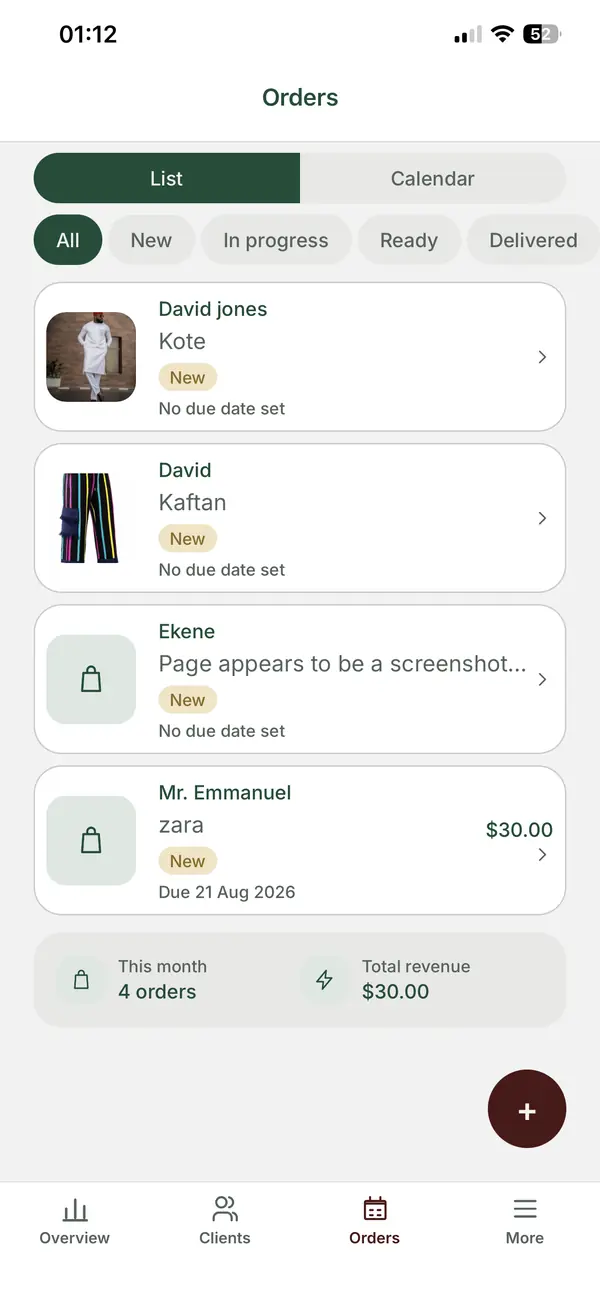
Good records are what turn a sewing hobby into a business. For every client, record contact details, measurements, the order, the delivery date and what has been paid.
ZeDaq.ai's tailor tools cover that workflow:
- A client list
- Measurements through a link the client opens on their phone
- Orders and a delivery calendar
- Invoicing in multiple currencies, including NGN, GBP and USD
- The ZeDaq Business mobile app for iOS and Android
The Free plan includes 3 measurements and 5 invoices a month, so you can try it with real clients. Other markets handle the setup differently. Our guides for starting in Kenya and starting in the UK show how.
How do you move from spreadsheets to a system?
Many tailors start in a notebook or Excel. That works until clients repeat, orders overlap and measurements go missing.
Move when you notice missed delivery dates or retyped measurements. The comparison of ZeDaq.ai and Excel explains what you gain and what you give up.
Keep every client and measurement in one place
FAQs
Do I need to register a company to be a tailor in South Africa?
No. SARS treats sole proprietorships as businesses that are not legal entities, so you can trade in your own name. Ask an accountant if a company suits your plans better.
Can I start a tailoring business from home?
Yes, many people do. Check your municipality's rules on running a business from a residence first.
Do I have to charge VAT?
Only if you register, and registration is compulsory only above the SARS threshold. See the VAT section above and confirm the current figures on the SARS site.
How do I keep track of deposits?
Record the deposit against the order the day you receive it. An invoice with a balance due makes collection simple.
Try ZeDaq.ai free
Virtual try-on and Find my size for your store, plus client, order and invoicing tools for tailors, in one subscription.

