How to Start a Tailoring Business in Nigeria
By the ZeDaq.ai team · · 5 min read
On this page
To start a tailoring business in Nigeria, build solid sewing skills, choose a niche such as native wear or bridal, register your business name with the Corporate Affairs Commission, and set up a workspace with reliable machines and power. Then keep proper records of clients, measurements, orders and payments from your very first job.
The steps below follow that order. When you're ready to organize clients and orders, our tools for tailors and fashion designers show how measurements, deliveries and invoices can live in one place.
This is general information, not legal or tax advice.
What skills do you need before you start?
Clients pay for clean finishing and a good fit. Before you open, make sure you can do these well:
- Take accurate measurements for both men's and women's wear.
- Cut from measurements or patterns without wasting fabric.
- Finish neatly. Hems, linings, zips and buttonholes show quality.
- Handle common local styles, such as agbada, buba and sokoto, kaftans, iro and buba, and fitted gowns.
- Price a job so it covers your time, materials and overheads.
Many tailors learn through apprenticeship with an established fashion house. Others take short courses. Either way, sew for friends and family first and ask for honest feedback.
Which niche should you choose?
A clear niche makes marketing easier and helps you charge fairly. Common choices in Nigeria include:
| Niche | Who buys | What to plan for |
|---|---|---|
| Native wear for men | Office workers, events, weddings | Agbada and kaftan finishing, embroidery |
| Women's occasion wear | Owambe guests, aso ebi groups | Fast turnaround for group orders |
| Bridal | Brides and bridal trains | Several fittings, careful scheduling |
| Corporate and school uniforms | Schools, firms, churches | Bulk cutting, consistent sizing |
| Alterations and repairs | Everyone | Quick jobs, steady daily income |
You can serve more than one group later. Starting focused helps people remember what you're known for.
How do you register a tailoring business in Nigeria?
Registering gives your business a legal name, makes it easier to open a business bank account and builds trust with corporate clients.
- Choose a name and check it's available. The Corporate Affairs Commission offers a public search through its online registry.
- Register a business name or a company. The CAC website lists business name registration and company registration as separate services. A business name suits most solo tailors. A company may suit you if you plan to take on partners or large contracts.
- Open a business bank account in the registered name.
- Sort out tax. The Nigeria Revenue Service describes itself as the official tax authority of Nigeria. Ask it, or your state's internal revenue service, which registrations and filings apply to you.
- Check local rules. Your local government may require a permit or levy for a shop. Ask at your local government office before you sign a lease.
Fees and forms change, so confirm the current requirements on the official sites before you pay anyone.
What support is available for new tailors?
The Small and Medium Enterprises Development Agency of Nigeria (SMEDAN) lists free SMEDAN ID registration, entrepreneurship training and several business programs on its website. One of those programs, GCSS, is listed for garment and textile businesses.
Check the SMEDAN site for current programs and eligibility. Programs open and close, so look again every few months.
What equipment and workspace do you need?
Start with what you need for your niche, then add more as orders grow.
Core equipment:
- A straight-stitch sewing machine, industrial if you expect volume
- An overlock (serger) machine for neat seams
- Cutting table, fabric shears, measuring tape and chalk
- Iron and ironing board
- A full-length mirror and a private fitting space
Power: Plan for outages. Many tailors use a generator, a solar setup or an inverter so deadlines aren't missed.
Workspace: A small shop near a market or busy street brings walk-in clients. Working from home costs less but relies more on referrals and social media.
How do you find your first clients?
Your first clients usually come from people who already know you. Build from there:
- Sew for yourself and wear it. People ask who made it.
- Post finished work on WhatsApp Status and Instagram with clear photos.
- Offer group rates for aso ebi orders, which bring many clients at once.
- Ask for referrals after every happy delivery.
- Deliver on time. Missed dates are the fastest way to lose repeat clients.
How should you manage measurements, orders and payments?
Good records stop disputes and lost jobs. For each client, keep:
- Name and phone number
- Measurements, with the date they were taken
- Each order: style, fabric, price, deposit paid and delivery date
- Balance due and payment received
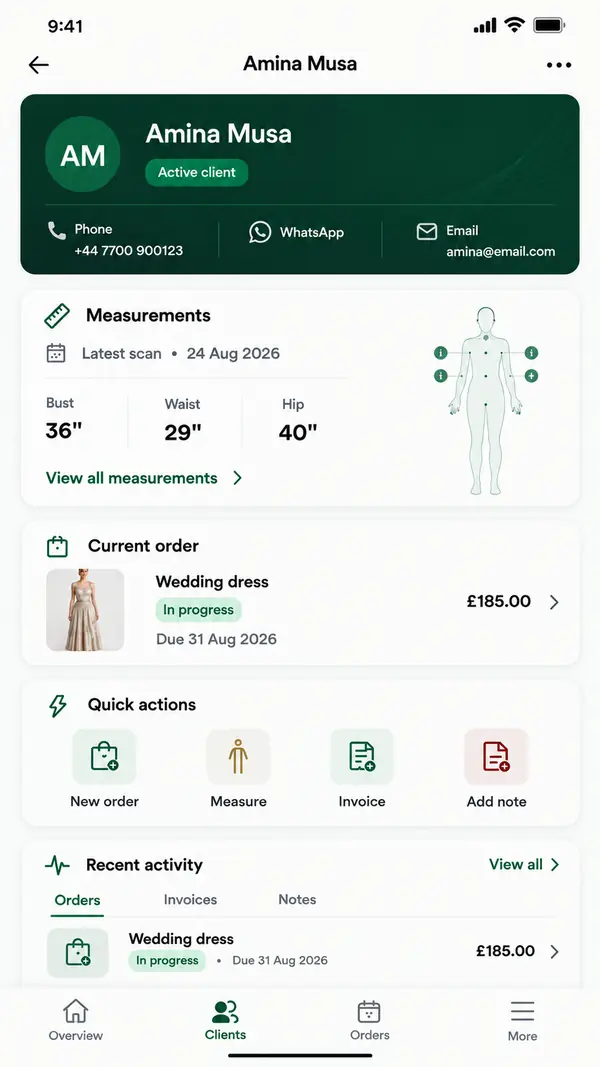
A notebook works at the start, but it is easy to lose and hard to search. ZeDaq.ai's tailor tools include a client CRM, measurements through a link the client opens on their phone, orders with a delivery calendar, and invoicing in multiple currencies including NGN, GBP and USD. The ZeDaq Business app runs on iOS and Android.
The Free plan includes 3 measurements and 5 invoices a month. Paid plans start with Micro at $14 a month, each with a 3-day free trial. Compare options in our guide to choosing software for tailors and designers.
Starting elsewhere? See how the steps differ when you start a tailoring business in Ghana or open a tailoring business in the UK.
Run clients, measurements and invoices in one place
FAQs
Do I need to register my tailoring business in Nigeria?
Registering with the CAC gives you a legal business name and makes banking and contracts easier. Check the CAC website for current requirements.
Can I start a tailoring business from home?
Yes. Many tailors start at home to save on rent. Check with your local government whether any permit applies.
How should I take deposits?
Many tailors ask for a deposit before cutting fabric. Record every deposit and balance against the order so nothing is forgotten.
Can clients abroad order from me?
Yes. Collect measurements remotely and invoice in their currency. Agree on shipping and delivery dates before you start.
Try ZeDaq.ai free
Virtual try-on and Find my size for your store, plus client, order and invoicing tools for tailors, in one subscription.

