How to Start a Tailoring Business in Ghana
By the ZeDaq.ai team · · 5 min read
On this page
- What skills do you need before you open?
- Which niche should you choose?
- How do you register a tailoring business in Ghana?
- How do you get a tax number and handle taxes?
- What do you need in your workspace?
- How should you price your work?
- How do you find your first clients?
- How do you keep measurements and orders organized?
To start a tailoring business in Ghana, build reliable sewing skills, choose a niche, register your business and get a tax number, set up a workspace, and keep clear records of every client. The order matters less than finishing each step before your first big order arrives.
This guide covers what to decide and what to check with official bodies. Once clients start coming, tailor tools for measurements, orders and invoices can replace the notebook and the chat history.
This is general information, not legal or tax advice. Rules and fees change, so confirm each step with the official body named below.
What skills do you need before you open?
Clients in Accra, Kumasi and beyond pay for fit and finishing. Before you open, make sure you can do these well:
- Take accurate measurements for men's and women's wear, and write them down the same way every time.
- Cut from measurements or patterns without wasting fabric.
- Finish neatly. Seams, linings, zips and hems are what clients notice first.
- Work with local fabrics. Wax print, kente and plain cotton all sew differently, so practice on each before you quote a price.
- Price a job so it covers your time, materials and overheads.
Many tailors learn through apprenticeship with an established seamstress or master tailor. Sew for friends and family first, and ask for honest feedback on fit.
Which niche should you choose?
A clear niche makes marketing easier and helps you charge fairly. These are common choices:
| Niche | Who buys | What to plan for |
|---|---|---|
| Everyday wear | Office workers, students | Fast turnaround, simple styles |
| Occasion wear | Wedding guests, church and family events | Fittings and firm delivery dates |
| Bridal and groom | Couples and wedding parties | Several fittings, careful scheduling |
| Uniforms | Schools, firms, clinics | Bulk cutting and consistent sizing |
| Alterations | Anyone with a garment that is nearly right | Quick jobs and repeat customers |
You can mix niches later. At the start, pick one so people know what to call you for.
How do you register a tailoring business in Ghana?
Start by deciding whether you will trade under your own name or form a company. Then contact the official bodies to confirm the correct registration for your case.
A good first step is to contact the Registrar-General's Department, whose website lists contact details, and ask which registration fits a tailoring shop.
This guide doesn't list fees, forms or processing times, because they change and the official sources should be your reference. Ask for the current requirements in writing, and keep copies of everything you submit.
How do you get a tax number and handle taxes?
Tax registration is handled by the Ghana Revenue Authority (GRA). According to its website, you need a TIN or Ghana Card PIN, plus a contact number registered with the GRA, to use its Taxpayers' Portal or app.
The GRA also describes a tax stamp for small-scale informal-sector businesses, given as evidence of paying tax. Ask a GRA office whether it applies to a tailoring shop like yours.
Keep a simple record of money in and out from the first day. It makes any tax conversation much easier. A step-by-step switch away from spreadsheets is covered in ZeDaq.ai vs Excel for tailors.
What do you need in your workspace?
You can start small, but the basics must be reliable:
- A sturdy sewing machine and a spare set of needles and bobbins.
- An overlocker or serging option, or a plan to finish raw edges by hand.
- A cutting table large enough for the fabric you buy.
- An iron and pressing surface. Pressing is the difference between homemade and professional.
- Backup power or a plan for outages. Missed deadlines cost you trust.
- A mirror and a quiet corner for fittings.
Work from home first if you need to keep costs down. Move to a shop when the number of clients makes it hard to fit them in.
How should you price your work?
Price from your costs, not from what the tailor down the road charges. Add up fabric handling, thread and notions, your time, rent, power and a margin for mistakes. Then compare with local prices in your area.
Ask for a deposit before you cut. A deposit protects you from clients who disappear after you buy fabric. Write the balance and the delivery date on the order so both sides agree.
How do you find your first clients?
Start with people who already know your work. Photograph finished pieces with the client's permission and post them on the channels your customers use, such as WhatsApp status and Instagram.
Ask happy clients to recommend you, and offer to fix small issues for free in the first week. Recommendations from people who have worn your work are worth more than any advert.
Keep a client list from day one: names, contact details, measurements, past orders and birthdays. Over time it becomes your most valuable asset.
How do you keep measurements and orders organized?
Paper books get lost, and chat histories bury important numbers. Pick one system early and use it for every client.
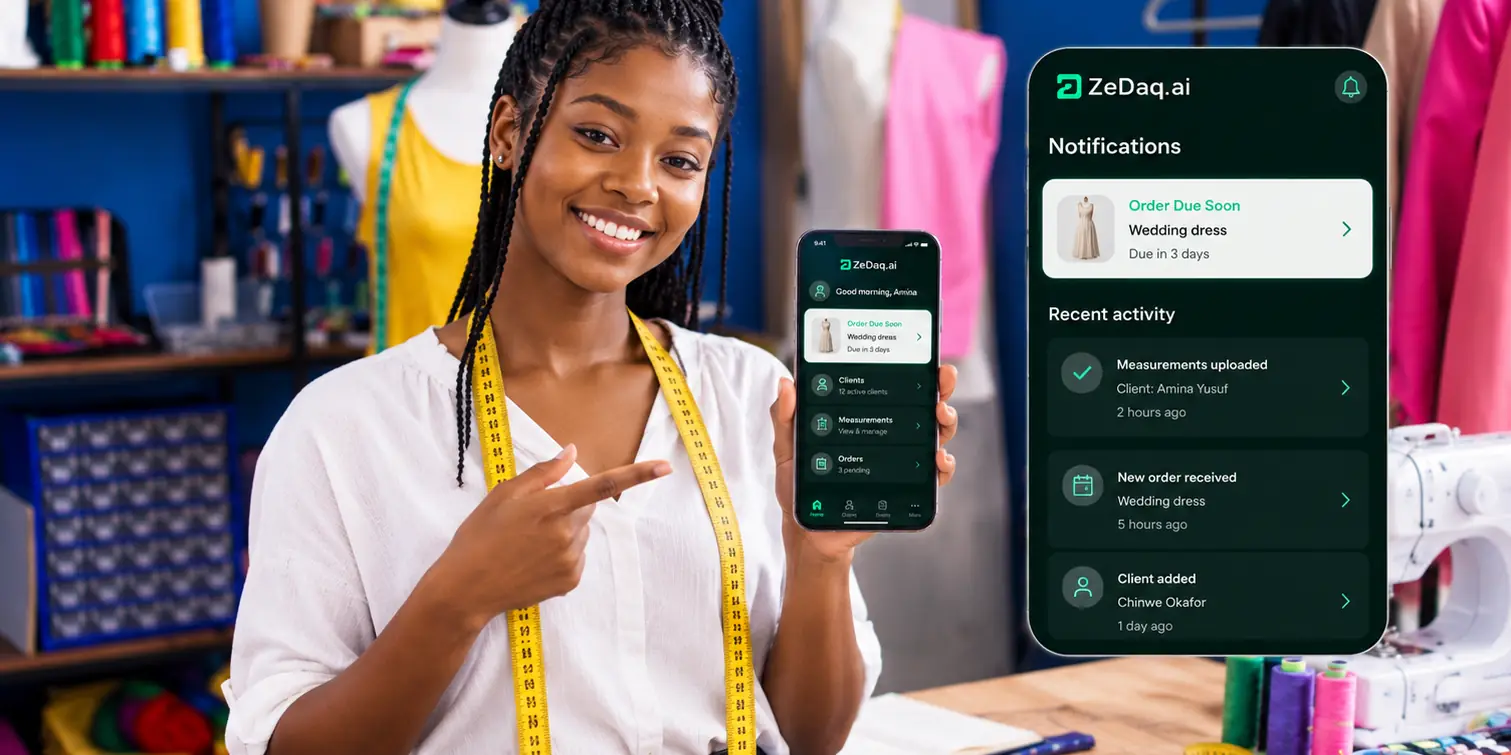
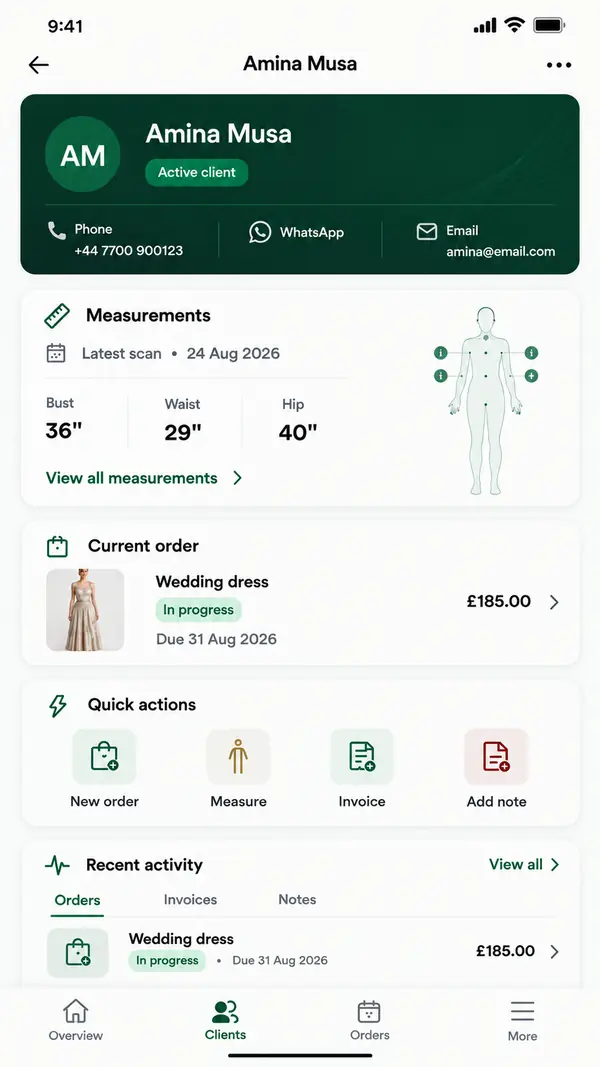
ZeDaq.ai offers a client CRM, measurements through a link the client opens on their phone, orders with a delivery calendar, and invoicing in multiple currencies, including NGN, GBP and USD. There is also the ZeDaq Business app for iOS and Android. The Free plan covers 3 measurements and 5 invoices a month, so you can test it with real clients.
If clients are abroad, a measurement link means they can send numbers without a visit.
Tailors in other markets face similar steps. Compare this guide with how to start a tailoring business in Nigeria or in the US.
Keep clients, measurements and invoices in one place
FAQs
Do you need a shop to start a tailoring business in Ghana?
No. Many tailors start from home or a shared space and move to a shop later. Check the official bodies for any permits that apply to your location.
How much money do you need to start?
It depends on your machine, fabric stock and rent. Add up your own list of equipment and three months of running costs rather than relying on a general figure.
Should you take deposits?
Yes. A deposit covers fabric and shows the client is serious. Write the deposit, balance and delivery date on the order.
Can you offer alterations as well as new garments?
Yes. Alterations are quick, bring repeat customers and are a good way to meet clients who later order new pieces.
Can you take measurements from clients who live far away?
Yes. Send them a measurement link they open on their phone, and ask them to follow the instructions carefully. Confirm unusual numbers with a quick call.
Try ZeDaq.ai free
Virtual try-on and Find my size for your store, plus client, order and invoicing tools for tailors, in one subscription.

