
How to Price School Uniform Contracts
By the ZeDaq.ai team · · 4 min read
On this page
To price a school uniform contract, work out the full cost of each item, add your labor and fitting time, apply a margin, then quote a per-unit price with quantity breaks. Write the terms down so a change in student numbers does not erase your profit.
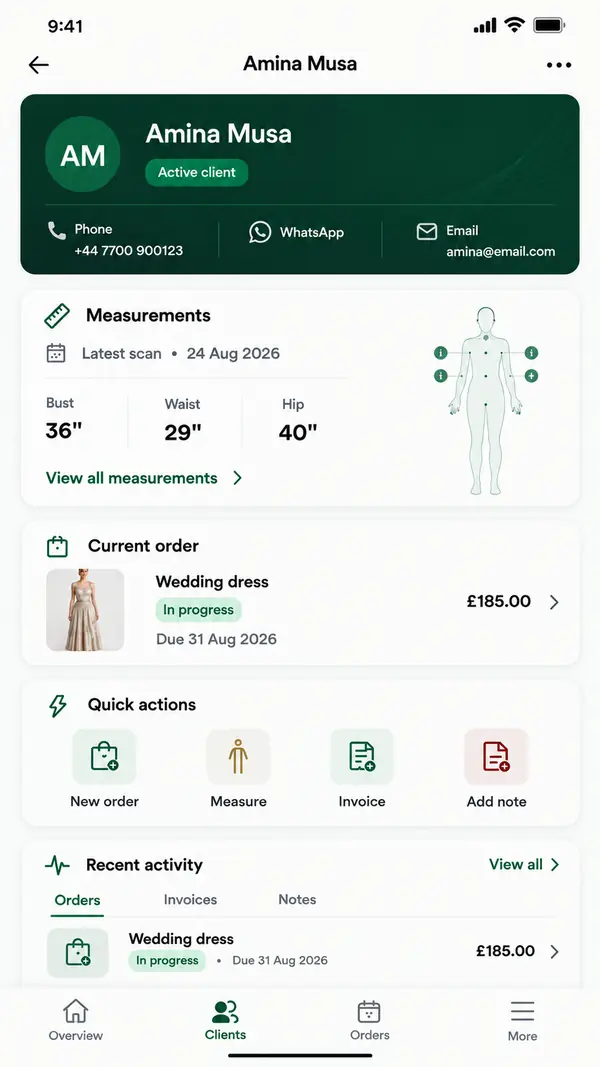
This guide gives a method and a worked example you can adapt. If you run a tailoring business, a client and order system for tailors helps you keep sizes and deadlines for many students in one place.
What goes into the cost of one uniform item?
Start with one item, such as a shirt. Add up every cost before you think about profit:
- Fabric and trims, including buttons, zips, lining and labels.
- Cutting and sewing labor, based on the minutes the item takes.
- Pressing, finishing and packing.
- Embroidery or badge work, if the school wants a crest.
- Waste. Allow for fabric lost in cutting and for the odd mistake.
- Overheads, such as rent, power and machine upkeep, shared across items.
If you do not yet track your time per garment, the guide on pricing tailoring work for profit covers how to measure it.
How do you build a per-unit price?
Use the same steps for every item on the school's list.
- Total the material cost for one item.
- Add labor: minutes taken multiplied by your hourly rate.
- Add your share of overheads.
- Add a margin that covers risk and a fair profit.
- Round to a clean price the school can compare easily.
Worked example
This example uses invented numbers to show the method. Replace them with your own costs.
| Line | Amount per shirt |
|---|---|
| Fabric and trims | $4.00 |
| Labor (35 minutes at $12 an hour) | $7.00 |
| Overheads share | $1.50 |
| Subtotal | $12.50 |
| Margin on the subtotal (25 percent) | $3.13 |
| Quoted unit price | $15.63 |
Example numbers only. Your costs and local rates will differ.
How should quantity breaks work?
Schools buy in volume, so expect to be asked for a discount. A quantity break rewards a larger order because your setup work is shared across more pieces.
Offer a short ladder, such as one price up to a set number and a lower price above it. Keep the lowest price above your cost subtotal. Setup tasks like pattern grading and cutting layouts take the same time whether you make ten pieces or a hundred.
What do you need to include in the quote?
A clear quote prevents disputes later. Include:
- An item list with sizes needed, price per unit and total.
- Fabric or quality description, so the school knows what it is buying.
- A deadline, with the fitting date and delivery date.
- A rule for late size changes and extra pieces.
- Payment terms, such as a deposit before cutting and the balance on delivery.
- Reorder terms for next year's new students.
Make the deposit non-negotiable for custom work. You buy fabric before you are paid, so the deposit protects your cash.
How do you handle sizes for many students?
Sizing is where uniform contracts lose money. Pupils grow, so a school often wants room in each garment.
Measure on a fitting day or collect measurements through parents. Group students by size to cut in batches. For repeat contracts, keep each student's size on record. Hem and sleeve fixes after fitting are priced like any other job, as explained in how to price alterations.
What if the school asks for a lower price?
Offer changes to the scope, not a lower margin. You can simplify trims, reduce embroidery, or set a longer delivery window. Each choice cuts a real cost.
If the school compares you to a mass supplier, point to what you offer: fitted garments, local repairs and fast replacements. Promise these only if you can deliver them.
For handling many client messages along the way, the comparison of ZeDaq.ai and WhatsApp for tailors explains where chat helps and where a system does. For a similar job, see pricing corporate uniform orders.
How do you plan cash flow on a big contract?
A school contract ties up money before it pays. You buy cloth, pay helpers and run machines for weeks before the final invoice.
Plan the timeline backward from the delivery date. List when you must buy fabric, when cutting starts and when fittings happen. Then match your deposit and stage payments to those dates, so you are never funding the whole job from your own pocket.
If the school pays slowly, say so in your terms and set a clear due date on each invoice.
Keep student sizes and deadlines in one place
FAQs
Should I quote per unit or as a total?
Give both. The per-unit price lets the school compare, and the total shows the full commitment.
How much deposit should I ask for?
Enough to cover your fabric and trims before you start cutting. Set a figure that matches your own material costs.
How do I price a late addition of students?
Add a clause in the quote. Late additions can cost more because they need extra cutting and fabric that may no longer be available.
Can I reuse the same quote next year?
You can reuse the structure. Recheck fabric prices and your labor rate each year before sending it.
Try ZeDaq.ai free
Virtual try-on and Find my size for your store, plus client, order and invoicing tools for tailors, in one subscription.

