How to Price Corporate Uniform Orders
By the ZeDaq.ai team · · 4 min read
On this page
- How is a corporate order different from a retail order?
- How do you build the price step by step?
- How do you plan sizes for staff?
- What should a corporate quote include?
- What about workwear tenders?
- How do you keep a large order organized?
- How do you handle payment terms with a company?
- What should you do when a buyer pushes back on price?
To price corporate uniform orders, cost one garment in full, add setup and branding, spread the one-off work across the quantity, and quote a per-unit price with clear terms. Company buyers compare quotes line by line, so a transparent breakdown helps you win and protects your margin.
This guide gives a method and a worked example for tailors and small workshops. A tailor business tool for orders and clients helps you track staff sizes and delivery dates across a large order.
How is a corporate order different from a retail order?
Corporate buyers order many pieces at once, often in several sizes, and expect consistency. They may also ask for formal quotes, invoices and a payment schedule.
That changes your pricing in three ways:
- Setup cost is shared. Patterns, samples and cutting plans are done once.
- Variety adds time. More sizes and styles mean more handling.
- Payment terms matter. A company may pay weeks after delivery.
The guide to pricing school uniform contracts uses a similar method for a different buyer.
How do you build the price step by step?
- Cost one garment. Add fabric, trims, labor, finishing and a share of overheads.
- Add branding. Embroidery, printing or labels have their own cost per piece.
- Add one-off costs. Sample making, pattern work and travel for a fitting day.
- Spread one-off costs across the quantity. Divide by the number of pieces.
- Add a margin. Cover risk, waste and a fair profit.
- Round and check. Compare against what the buyer says they have paid before.
Worked example
These numbers are invented to show the method. Use your own costs.
| Line | Amount |
|---|---|
| Fabric and trims per polo | $5.00 |
| Labor per polo | $6.00 |
| Embroidered logo per polo | $2.00 |
| One-off sample and pattern work | $120 total |
| One-off cost spread over 60 polos | $2.00 each |
| Subtotal per polo | $15.00 |
| Margin of 20 percent | $3.00 |
| Quoted unit price | $18.00 |
Example numbers only. Your costs and rates will differ.
How do you plan sizes for staff?
Collect sizes early. Staff come in many shapes, and guessing leads to remakes.
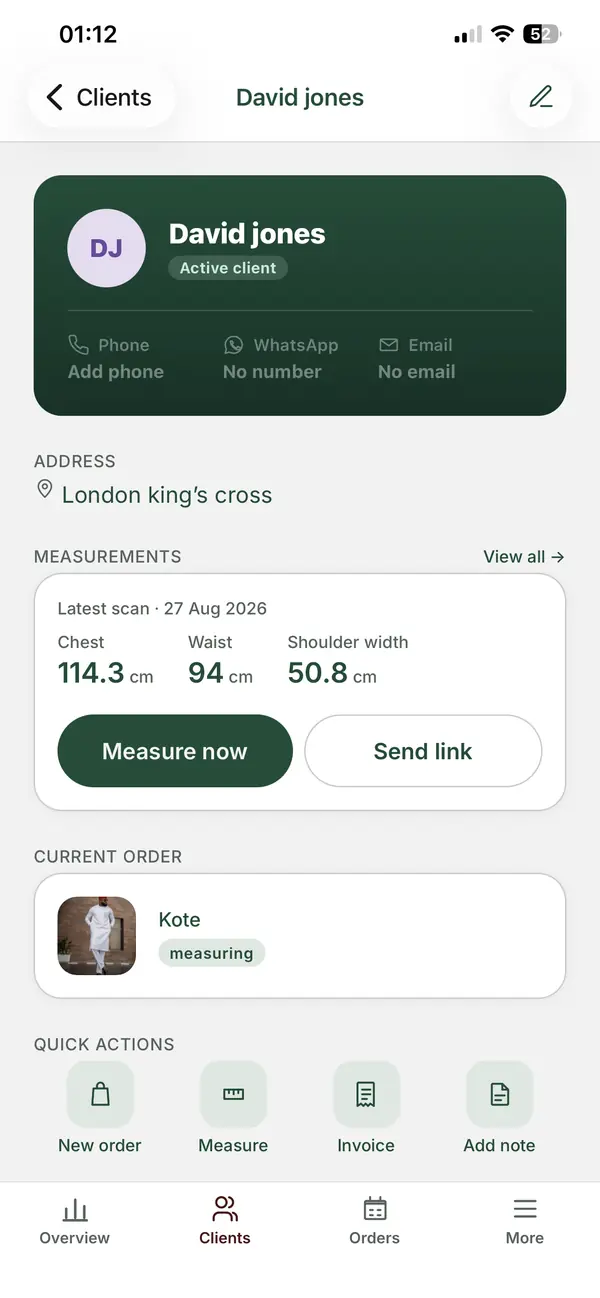
Options include a fitting day at the workplace, or sending each person a link to submit their measurements on a phone. ZeDaq.ai tailor tools include measurements through a link the client opens on their phone, which suits staff in several locations. For good numbers, share the tips in measurement capture tips.
What should a corporate quote include?
- A list of items, sizes and quantities.
- Unit price and total.
- Fabric and branding description, with a sample if possible.
- Delivery date and fitting schedule.
- Deposit and balance terms.
- A rule for new hires and replacements after the order.
- Validity date, so material price changes do not hurt you.
Ask for a purchase order or written acceptance before you cut any cloth.
What about workwear tenders?
Tenders often set the price ceiling and ask for formal documents. Read the rules carefully and price against your real costs. If the ceiling is below your cost subtotal, walk away rather than winning a loss.
If you win, track each stage. Missed deadlines on a tender can have contract consequences, so build a buffer in your plan.
How do you keep a large order organized?
Use one list that shows each person, their sizes, the item, status and delivery date. Update it when fittings or remakes happen.
You can also keep an eye on job sizes and mix. An order for agbada follows different rules, so see how to price agbada orders for an example of premium garment pricing.
How do you handle payment terms with a company?
Companies pay through accounts departments, so the process is slower and more formal than a retail sale. Plan for it.
- Take a deposit. Ask for part of the total before you buy cloth.
- Invoice clearly. Include the purchase order number, item list and due date.
- Set a due date. State how many days the company has to pay.
- Agree late fees in advance. Only include them if you will really apply them.
- Keep records. Save the quote, the acceptance and every change request.
If your clients pay in different currencies, ZeDaq.ai invoicing supports several, including NGN, GBP and USD. Send a clear invoice as soon as you deliver.
What should you do when a buyer pushes back on price?
Start by asking what they are comparing you with. A lower quote may use cheaper cloth, fewer sizes or no fitting.
Offer options rather than a lower margin: a simpler fabric, fewer trims, or a longer delivery time. Each option reduces a real cost. If the buyer still wants a lower price on the same specification, it is fine to decline.
Manage staff sizes and orders in one place
FAQs
Should I charge for samples?
Often yes, or credit the fee against the order. A sample uses real materials and time.
How do I price replacements for new staff?
Quote a higher unit price for small reorders, since setup work is not shared across a large quantity.
Can I give a discount for large orders?
Yes, but keep it above your cost subtotal. Tie discounts to order size.
What if the company changes the logo midway?
Put a change clause in your quote so extra work is billed.
Try ZeDaq.ai free
Virtual try-on and Find my size for your store, plus client, order and invoicing tools for tailors, in one subscription.

