
How to Price Rush Orders
By the ZeDaq.ai team · · 4 min read
On this page
To price rush orders, start with your normal price and add a surcharge that grows as the deadline gets shorter. The surcharge pays for the work you push back, the overtime you put in and the risk of getting it wrong in a hurry.
Rush work can be profitable, or it can quietly wreck your week. The difference is a clear rule you apply to everyone. This guide gives you one, along with the wording for clients. If you want one system for orders and deadlines, see our tools for tailors and designers.
Why charge extra for rush orders at all?
A rush order costs you more than the sewing time. It forces trade-offs.
- Displaced work. Putting one job first pushes other clients back.
- Overtime and tiredness. Extra hours cost you energy and sometimes extra help.
- Higher risk. There is less room for fittings and corrections.
- Fewer chances to say yes to other work. Your capacity is limited.
A surcharge is not a penalty on the client. It is payment for the capacity you give up. Explain it in those terms, and apply it the same way to every client so nobody feels singled out.
How do you structure a rush fee?
Pick one method and use it consistently.
| Method | How it works | Good for |
|---|---|---|
| Percentage of the base price | Add a share of the normal price | Simple, scales with job size |
| Flat fee per tier | A fixed extra for each deadline tier | Small, quick jobs |
| Hourly overtime rate | Charge extra hours at a higher rate | Jobs where hours are easy to count |
| Priority slot fee | A fee for jumping the queue | Busy seasons |
The table lists structures, not market prices. Choose the amounts from your own costs.
A percentage is the easiest to explain, because the surcharge grows with the job. For a flat fee, set it high enough to cover the disruption, since a small job still blocks your day.
How do you set the tiers?
Tiers tell clients what each level of urgency costs. Define them by how much slack you lose, not by days alone.
- Standard. Your normal lead time, no surcharge.
- Priority. A shorter lead time that moves the job up the queue. A moderate surcharge.
- Express. A very short lead time that needs evening or weekend work. A higher surcharge.
- Emergency. Same-day or next-day work that may mean turning other jobs away. The highest surcharge, accepted only if you can do it.
Write the tiers down in your own terms, with the number of days you can really deliver. Decide in advance what you will refuse, because declining is also a pricing tool.
What is a worked example?
Take a client who needs a standard-price garment in a shortened timeframe.
- Work out your normal price, B, using your usual method. If you need help with that, see how to price tailoring work for profit.
- Choose the tier. Say the client needs the Express tier.
- Apply your Express rate, r, as a share of B.
- The rush price is B plus (B × r).
- Add any extra costs, such as faster delivery of fabric.
Use your own numbers for B and r. Then show the client both lines: the normal price and the rush fee.
What rules protect you on rush jobs?
Rush jobs fail when terms are vague. Agree these before you start.
- Take the deposit before cutting. Many tailors ask for a larger deposit on rush jobs.
- Confirm the deadline in writing. Include the date and time for collection.
- Limit changes. Say that design changes after cutting can extend the date.
- Check fabric and trims first. Delays in materials are not your fault, but they are your problem.
- Set a cap on rush jobs per week. Too many rush orders at once will break your schedule.
These rules suit many types of work. For specialist garments, see how pricing differs for agbada orders and for group jobs like aso ebi orders.
How do you keep track of rush orders?
A rush order needs visibility. If it lives in a chat thread, it will get lost.
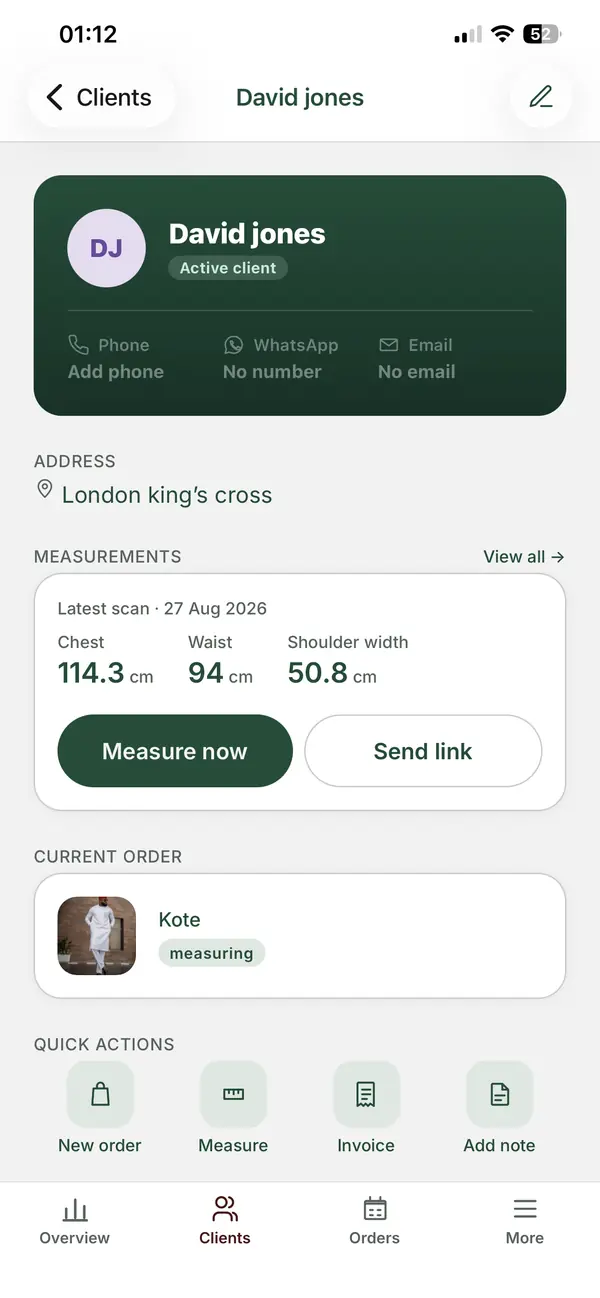
The ZeDaq Business app includes orders and a delivery calendar, which help you see when a rush job will collide with others. It also has invoicing in multiple currencies, including NGN, GBP and USD, so you can bill clients who live abroad. The wider comparison is in the best software for tailors and fashion designers in 2026.
Track rush orders on one delivery calendar
FAQs
How much should I charge for a rush order?
It depends on your costs and how much the rush disrupts your schedule. Use a percentage or tier that you apply to everyone.
Should I charge a rush fee on alterations?
Yes, if the job displaces other work. Keep the rule the same for every client.
Can I say no to a rush order?
Yes. If you can't deliver without harming other clients' orders, declining is reasonable.
How do I explain the fee to a client?
Say it pays for moving their job ahead of others and for extra hours. Show it as a separate line on the quote.
Try ZeDaq.ai free
Virtual try-on and Find my size for your store, plus client, order and invoicing tools for tailors, in one subscription.