How to Price Aso Ebi Orders
By the ZeDaq.ai team · · 4 min read
On this page
- What should you cost before you quote?
- How do you work out a per-person price?
- Who supplies the fabric?
- Should plus sizes and special styles cost more?
- How do you handle deposits and payment timing?
- What should go in your written quote?
- How do you keep prices fair for big batches?
- How can ZeDaq.ai help with group orders?
Price aso ebi orders by costing one finished outfit first, then multiplying across the group and adding a buffer for fittings, fixes and late changes. Aso ebi is the matching fabric a family or friend group wears to a celebration, so you are really pricing a batch of similar outfits for people with different bodies.
This guide gives you a per-person method you can reuse. If you already run group orders, the guide to managing aso ebi group orders covers the organizing side, and the tailor tools overview shows how to keep each person's details in one place.
What should you cost before you quote?
Cost one outfit completely before you think about the group. Missing a small item here gets multiplied by every person on the list.
- Sewing time: cutting, sewing, fitting and finishing for the agreed style.
- Materials: lining, interfacing, thread, zips and buttons.
- Extras: head tie (gele), wrapper, sash or beading if they are part of the set.
- Admin time: collecting measurements, chasing payments and answering messages.
Admin time is the one most tailors forget. With a group of twenty, it can be a real part of the job.
How do you work out a per-person price?
Use a simple formula, then adjust for style and size.
- Estimate hours for one outfit and multiply by your hourly rate.
- Add materials for one outfit.
- Add extras such as a head tie.
- Add an admin share for one person.
- Add a buffer for fixes and late changes.
The result is your per-person price. Here is a worked example with made-up numbers in your own currency, only to show the steps.
| Line | Example |
|---|---|
| Sewing: 4 hours at 10 per hour | 40 |
| Materials | 8 |
| Extras (head tie) | 6 |
| Admin share | 4 |
| Buffer | 7 |
| Per person | 65 |
Replace every figure with your own. The point is the structure, not the amounts.
Who supplies the fabric?
Decide this before quoting, because it changes the price more than anything else. There are two common setups:
- Organizer buys the fabric. You quote sewing and extras only. Ask the organizer to send the fabric in time for cutting.
- You source the fabric. You quote a price that includes fabric, and you hold the risk if the price changes.
If you source the fabric, check how much extra to buy. Different sizes use different yardage, and a pattern match can need more cloth.
Should plus sizes and special styles cost more?
Charge for the work and material, not for the person. A larger size can need more fabric, and a fitted or heavily detailed style can need more time.
Say this in your price list in neutral words, such as "price depends on fabric used and style details", so nobody feels singled out. Use your own measurement records to show the yardage a style needs.
How do you handle deposits and payment timing?
Group orders go wrong when one person pays late and the whole timeline slips. Set rules before you cut the first piece.
- Ask for a deposit from each person, not only from the organizer.
- Put the final payment due before the pickup date.
- Write the cut-off date for measurements and changes.
- Say what happens if someone misses it, such as a rush fee.
Send these rules in writing. If clients pay in different currencies, ZeDaq.ai invoicing supports multiple currencies, including NGN, GBP and USD. The pricing approach for another cultural order is in our guide to pricing agbada orders.
What should go in your written quote?
A clear quote prevents most disputes later. Send one message to the organizer with these items:
- The style, fabric and number of outfits.
- The per-person price and what it includes.
- The deposit amount and the final payment date.
- The deadline for measurements and the last day for changes.
- The pickup or delivery date.
Ask the organizer to confirm in writing. If anyone asks for a different style later, quote that person separately instead of changing the group price.
How do you keep prices fair for big batches?
Larger batches let you work in an assembly line, which can save time per piece. You can pass some of that on, but don't discount before you have checked your own hours. The guide to pricing corporate uniform orders uses the same batch thinking for business clients.
How can ZeDaq.ai help with group orders?
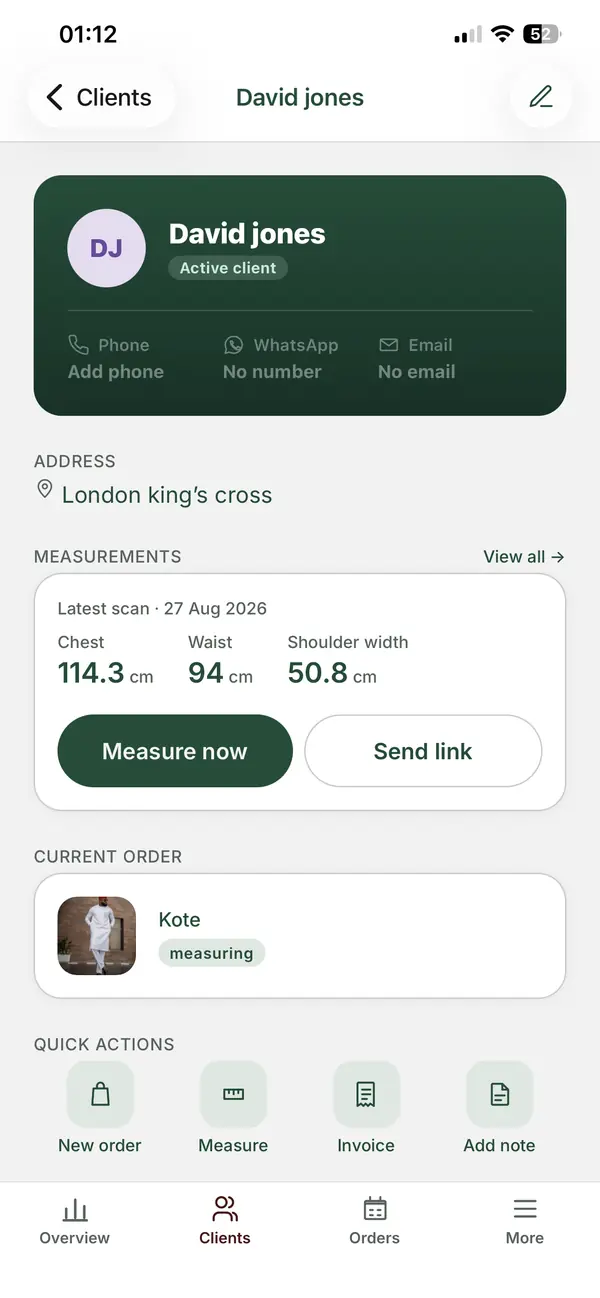
ZeDaq.ai gives tailors a client CRM, measurements through a link the client opens on their phone, orders with a delivery calendar, and multi-currency invoicing. Each person on a group list can send their own measurements, so you are not typing numbers from voice notes.
Run aso ebi group orders from one app
FAQs
How much should I charge for aso ebi sewing?
It depends on your hours, materials and style. Use the per-person formula above and replace the example figures with your own costs.
Should I charge the organizer or each person?
Take a deposit from each person where you can. That way one late payer doesn't hold up the whole batch.
What if someone changes their size after cutting?
Set a cut-off date for measurements and say that changes after it cost extra. Keep each person's measurements on record so you can check what they gave you.
Is it fair to give a group discount?
You can, once you have checked your own hours and costs. Don't discount below the price that covers materials, time and a buffer.
Try ZeDaq.ai free
Virtual try-on and Find my size for your store, plus client, order and invoicing tools for tailors, in one subscription.

