How to Move From Etsy to Shopify as a Clothing Seller
By the ZeDaq.ai team · · 5 min read
On this page
- Should you leave Etsy completely or run both?
- What should you do before you move any products?
- How do you move your products?
- How do you rebuild sizes and variants?
- How do you set up your store policies?
- How do you get customers to your new store?
- How can you help shoppers pick a size on your own site?
- What is a sensible timeline?
To move from Etsy to Shopify as a clothing seller, build your Shopify store first, import your products with a CSV file, rebuild your size variants and policies, and keep your Etsy shop open until Shopify sales start to replace it. You do not have to leave Etsy on the day you launch.
This guide is for makers and small brands who want their own store. Once your products are live, the virtual try-on setup for Shopify shows how to help shoppers choose a size. For a broader comparison first, see Shopify versus Etsy for handmade clothing.
Should you leave Etsy completely or run both?
Most sellers do best running both for a while. Etsy is a marketplace with its own shoppers. A Shopify store is your own site, and you must bring the traffic yourself.
If Etsy provides most of your sales, closing it on day one could cut your income before Shopify has any customers. Run both until Shopify sales are steady, then decide what to keep.
What should you do before you move any products?
Prepare these first:
- Choose your store name and domain. Match your brand.
- Decide how you will take payments and ship.
- Write your policies. Shipping, returns and exchanges need to be on your site.
- Gather your photos. Keep the original files, not just the Etsy copies.
- List your sizes. Write your size chart in body measurements.
The guide to launching a clothing brand on Shopify covers these steps in more depth.
How do you move your products?
Shopify imports products from a CSV file. It describes a spreadsheet with a specific format, in its guide to importing products by CSV.
- Download Shopify's sample CSV and delete the two example products.
- Copy your Etsy listing details into the columns. Only Title is required for a new product, but you should fill in description, price and images.
- Use the option columns for sizes and colors. Shopify says a product can have up to 3 options, set with Option1 name and Option1 value.
- Add image URLs. Shopify says images must be at publicly accessible HTTPS URLs, and you can host them in your admin under Content, then Files.
- Import and check. Open a few products to confirm that variants and images came through.
Shopify says a product can have up to 250 images, in its CSV import rules. For a product with variants, enter the full details in the first row and only the handle and variant details in the following rows.
Etsy decides what your shop can export, so check Etsy's Help Center for the current options. If export is limited, copy listings by hand for your best sellers first.
How do you rebuild sizes and variants?
Etsy listings often put sizes in a variation menu or in the description. On Shopify, give each size and color its own variant so that stock is tracked per variant.
The guide to setting up size variants in Shopify shows the structure. Use the same size labels on every product, and add a size chart to each page.
How do you set up your store policies?
Etsy shows its own shop policies on your listings. Your Shopify store needs its own.
Write plain policies for shipping times, returns, exchanges and custom orders. Clothing buyers look for these before they buy. The article on returns policy ideas that protect margins gives options, and made-to-order items often need stricter terms.
How do you get customers to your new store?
Traffic does not move across automatically. Tell people where you are:
- Add your Shopify link to your Etsy shop announcement and your social profiles. Check Etsy's current seller rules before you add outside links.
- Collect emails from buyers and followers, with consent.
- Post new products on your own channels first.
- Set up search visibility. The guide to Google Shopping for Shopify clothing stores explains one free route to reach shoppers.
Give it time. A new store builds traffic over months, not days.
If the brand grows, you may later ask whether Shopify Plus for fashion brands is worth it. Most sellers can ignore that question at the start.
How can you help shoppers pick a size on your own site?
On Etsy, shoppers rely on your listing text and photos. On Shopify, you can add tools that Etsy does not offer.
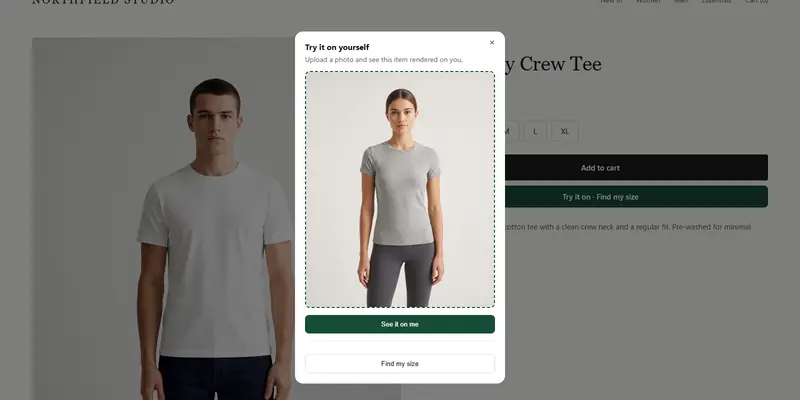
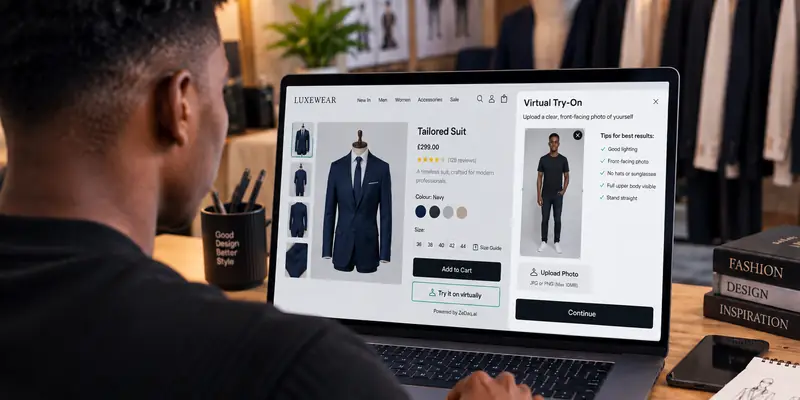
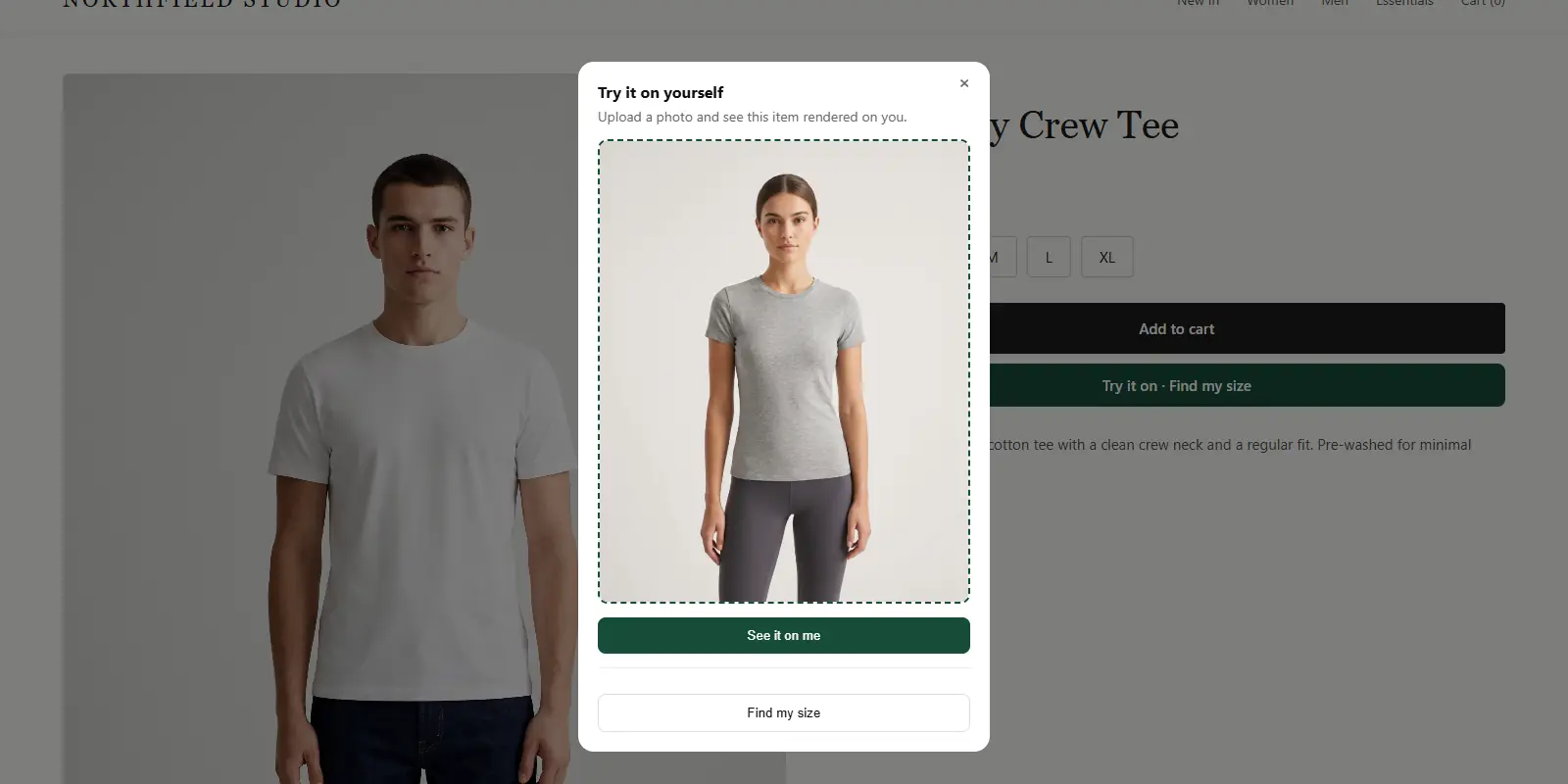
ZeDaq.ai is a Shopify app with AI virtual try-on and size recommendation. The shopper uploads one photo and sees your real garment on their body, and a 30-second scan matches their measurements to your own size chart. You enter that chart once per garment type, in the app.
The Free plan includes 3 try-ons, 3 measurements and 5 invoices a month. Paid plans start with Micro at $14 a month, and the first month is $1, then $14 a month. That offer applies to monthly plans only, once per store, on its first paid plan. Every paid plan has a 3-day free trial with no card required. Check the pricing page for the current plans.
What is a sensible timeline?
| Stage | What happens |
|---|---|
| Prepare | Name, policies, photos, size chart |
| Build | Theme, products, payments, shipping |
| Soft launch | Tell your Etsy buyers and followers |
| Run both | Compare sales and costs on both |
| Decide | Keep Etsy as one channel, or close it |
This table is a suggested order of work, not a fixed schedule.
Help your new shoppers choose a size
FAQs
Can I import my Etsy listings straight into Shopify?
Shopify imports from CSV files. Check Etsy's Help Center for what you can export, then format it to Shopify's template.
Do I lose my Etsy reviews when I move?
Don't expect them to transfer, because they belong to your Etsy listings. Keep your Etsy shop open while it still helps you sell.
Should I use the same prices on both?
That is your choice. Consider your costs on each channel and whether you want shoppers to prefer your own site.
Do I need a size chart on Shopify?
Yes, it helps. Add a chart for each garment type, and consider a size recommendation tool so shoppers can find their size faster.
Try ZeDaq.ai free
Virtual try-on and Find my size for your store, plus client, order and invoicing tools for tailors, in one subscription.