Shopify vs Etsy for Handmade Clothing
By the ZeDaq.ai team · · 7 min read
On this page
- What is the main difference between Shopify and Etsy?
- What does each one cost?
- Which one brings you customers?
- Which gives you more control over your brand?
- Which is better for sizing and fit?
- Should you use both?
- What does a handmade clothing listing or product page need?
- How do you move buyers from Etsy to your own store?
- What should you think about when pricing across both?
- How do customer relationships differ?
- How should you test both before committing?
- What does a first-month plan look like?
- How should you decide?
Shopify vs Etsy for handmade clothing is a choice between owning your store and renting space in a marketplace. Etsy puts your listings in front of people already browsing for handmade goods, while Shopify gives you full control of your brand, your customer list and your product pages.
Many makers use both. This guide compares the two on the points that matter for clothing, using each company's public pages, checked November 2026. For more on running your own store, see the guide to virtual try-on for WooCommerce and custom stores, which also applies to any site you control.
What is the main difference between Shopify and Etsy?
Etsy is a marketplace. Buyers come to Etsy, search, and find your listing next to thousands of others.
Shopify is a store platform. You build your own site and bring your own traffic.
| Etsy | Shopify | |
|---|---|---|
| Model | Marketplace with shared search | Your own branded store |
| Who owns the relationship? | Shared with the marketplace | You |
| Traffic | Buyers already on the site | You must create it |
| Design control | Within Etsy's listing format | Wide control through themes |
What does each one cost?
Costs differ in structure. Etsy charges per listing and per sale. Shopify charges a monthly plan plus card fees.
Etsy's help center says there is a $0.20 fee for creating or renewing a listing (checked November 2026). Etsy has other seller fees too, so read its current fee pages before you start and add them to your costs.
Shopify lists its plans on its pricing page (checked November 2026):
| Plan | Monthly billing | Yearly billing, per month | Online card rate |
|---|---|---|---|
| Basic | $39 | $29 | 2.9% + 30¢ |
| Grow | $105 | $79 | 2.7% + 30¢ |
| Advanced | $399 | $299 | 2.5% + 30¢ |
Work out your own numbers. A maker who sells a few pieces a month and one who sells hundreds will find different options cheaper.
Which one brings you customers?
Etsy brings built-in browsing traffic, which helps when nobody knows your brand yet. You also compete with many similar sellers.
Shopify gives you no traffic at first. You must bring people through search, social media, email and word of mouth. Building that audience takes real time, and it is the hidden cost of owning your store. If you are weighing other platforms too, see Shopify alternatives for clothing brands.
A common path is to start on Etsy to get early sales, then move repeat buyers to your own store.
Which gives you more control over your brand?
Shopify. On your own store you choose the theme, the layout, the product page content, the checkout flow and the policies. You also own the customer email list, which you can use to tell people about new drops.
On Etsy, your listing sits inside Etsy's format and next to competitors. That is fine for starting out, but harder if you want a distinct brand experience.
Which is better for sizing and fit?
Handmade clothing often has custom or limited sizing, so fit information matters.
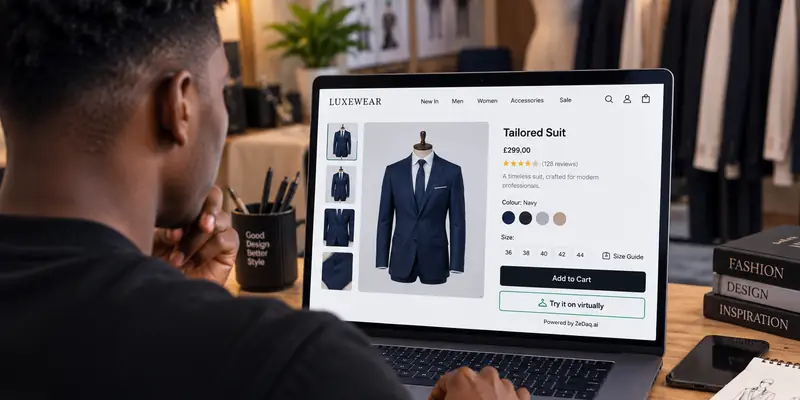
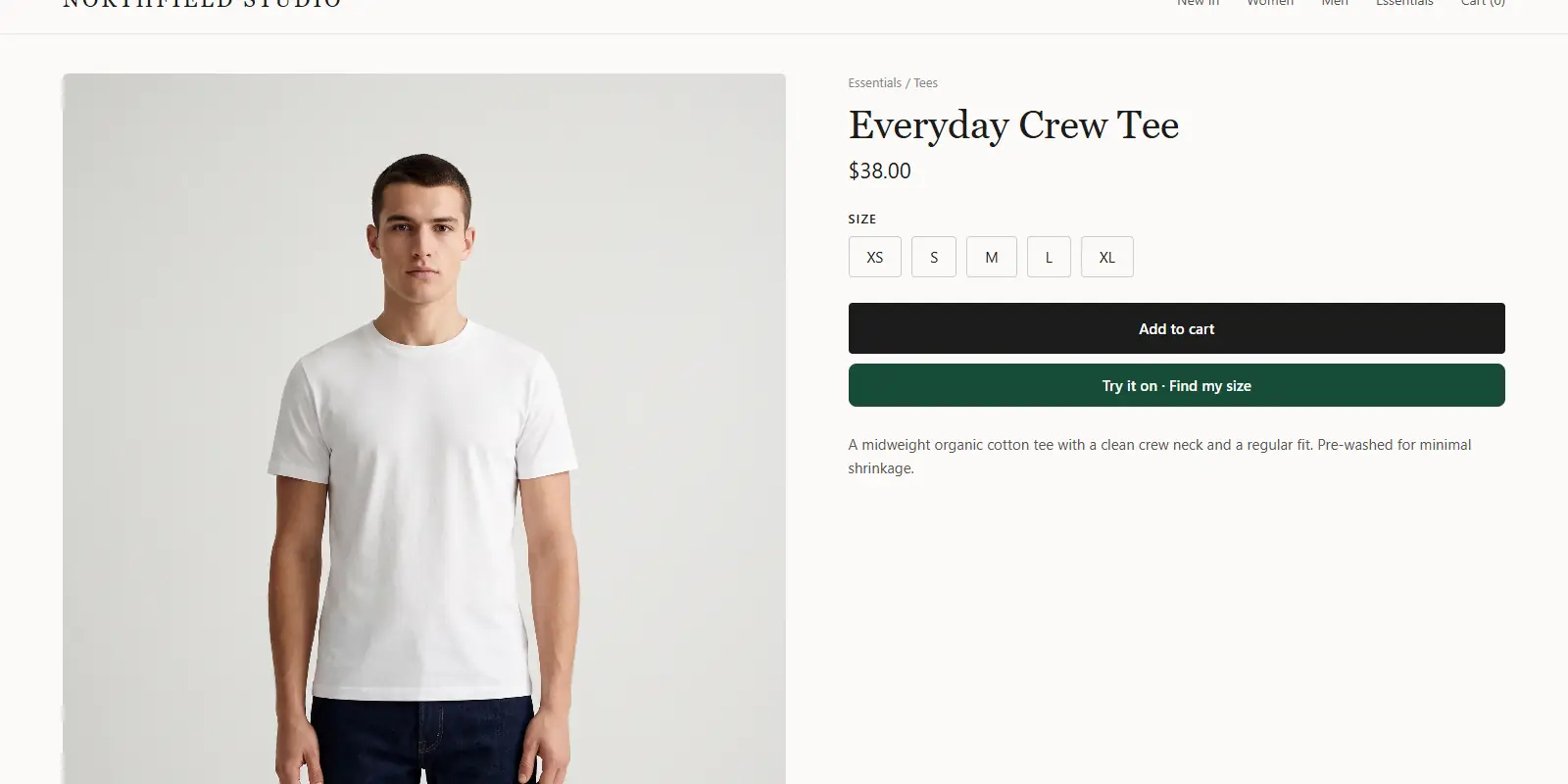
On your own store, you can add tools that help shoppers choose. ZeDaq.ai, for example, is a Shopify app that lets shoppers upload one photo to see your real garment on their body, and a 30-second scan with height recommends a size from the size chart you enter. Non-Shopify sites can use the script-tag widget.
On Etsy, check what the marketplace lets you add to a listing. Whatever you use, write a clear size chart with body measurements and a fit note in every listing.
Should you use both?
Many handmade sellers do. A simple split:
- Etsy for discovery and first sales.
- Shopify for your brand, repeat customers and full collections.
- A link in each package to your own store, where Etsy's rules allow it. Check Etsy's policies first.
Read Etsy's rules before you promote your own store, since marketplaces set limits on this.
What does a handmade clothing listing or product page need?
On either platform, handmade clothing sells on trust. Shoppers cannot touch the fabric, so your page has to do that job.
- Photos that show detail. Include close shots of seams, buttons and the fabric, plus the garment on a person.
- The story of the piece. Who made it, how, and from what materials.
- Honest sizing. A chart with body measurements, not just letters, and a note on how the piece is cut.
- Made-to-order details. If you sew after the order, state the lead time and what you need from the buyer.
- Care instructions. Handmade fabrics often need gentle washing.
- Return and exchange terms. Say what you accept on made-to-measure items, and say it before checkout.
Writing this once gives you a template. You can reuse it on both platforms.
How do you move buyers from Etsy to your own store?
Plan the move, and do it politely and within the rules.
- Read Etsy's seller policies about contacting buyers and promoting outside sites.
- Build the store first. Do not send anyone to a half-finished site.
- Offer something real. A new collection, custom sizing or early access gives people a reason to visit.
- Keep both running until the store has steady orders.
Never rely on one platform for all your income. If a marketplace changes its rules or search, your sales can change overnight.
What should you think about when pricing across both?
Price each platform with its own costs in mind. A piece that sells well on one may need a different price on the other.
- Add up all fees per sale before you set a price. Use the fee pages linked above, not memory.
- Count your time. Handmade work is slow, and the price must pay for your hours.
- Keep prices consistent if you sell the same piece in both places, so buyers do not feel cheated.
- Plan shipping the same way on both, and say clearly what the buyer pays.
If the margin disappears on one platform, raise the price there, list fewer items, or sell that piece only where it makes sense.
How do customer relationships differ?
On a marketplace, the buyer often thinks of themselves as an Etsy customer. On your own store, they are your customer.
That matters for repeat sales. With your own store, you can ask buyers to join your email list at checkout and tell them about new designs. You can also learn what they ask about most, such as sizing, and answer it on the page.
Customer data rules differ by country, so check the privacy requirements where you sell. This is general information, not legal advice.
How should you test both before committing?
Run a small test on each.
- List three pieces on Etsy and build the same three on a Shopify trial.
- Use the same photos and descriptions on both.
- Track time spent, questions from buyers and where visitors come from.
- After a month, compare the effort, the sales and the questions about size.
A simple spreadsheet is enough. The result is a decision based on your own numbers, not on a general rule.
What does a first-month plan look like?
Here is a simple plan if you choose to run both.
- Week one: Photograph three pieces well, and write one size chart you can reuse.
- Week two: Publish the pieces on Etsy, and open a Shopify trial store with the same pieces.
- Week three: Share the Shopify store with people who already follow you, such as friends and social media followers.
- Week four: Review where each sale came from, how much time each channel took, and what shoppers asked.
Keep notes in a simple table. After the month, you will know whether to focus on one platform or keep both.
How should you decide?
Answer these questions:
- Do you already have an audience? If yes, lean toward Shopify.
- Is your goal to test products quickly? Etsy may be quicker.
- Do you want your own brand experience and customer list? Choose Shopify.
- Do you have time to market? Without it, Shopify will sit quiet.
If you want to compare more options, see Webflow vs Shopify for fashion brands. For making Shopify work for handmade pieces, read how to sell handmade clothing on Shopify.
Add try-on and sizing to your own store
FAQs
Can I sell on both Shopify and Etsy?
Yes, many sellers do. Keep stock counts in sync and read each platform's rules.
Is Shopify harder to set up than Etsy?
Usually yes, because you design and run the whole store. Etsy gives you a ready format.
Which is better for made-to-order clothing?
Either can work if you explain lead times clearly. A store you own gives you more room to describe the process and sizing.
Can I use ZeDaq.ai on Etsy?
ZeDaq.ai is offered as a Shopify app, a script-tag widget and an API for your own store or site. Check what Etsy allows in a listing before planning around any outside tool.
Try ZeDaq.ai free
Virtual try-on and Find my size for your store, plus client, order and invoicing tools for tailors, in one subscription.