How to Chase Unpaid Tailoring Invoices
By the ZeDaq.ai team · · 4 min read
On this page
To chase an unpaid tailoring invoice, start with a friendly message that includes the invoice, the amount and the due date. If there is no reply, send a firmer reminder with a clear deadline, and keep the finished garment until the balance is paid. Stay polite at every step and keep a written record.
This guide is for tailors and designers who are waiting on money. It works best when your invoices are clear from the start, which is what the ZeDaq.ai tools for tailors are built around.
Why do clients pay late?
Most late payments are not refusals. Clients forget, wait for payday, lose the message or are unsure what they owe. Others are waiting to see the finished garment.
Knowing the reason changes your tone. A forgetful client needs a nudge. A client in difficulty may need a plan. Treat the first message as a reminder, not an accusation.
What should you check before you chase?
Look at your own paperwork first. A chase message fails if the invoice is unclear.
Check that:
- The invoice has a number, date, client name and amount.
- It says what the payment is for, such as "balance for two-piece suit".
- The due date is written plainly.
- Payment details are correct and easy to find.
- The currency is stated, especially for clients abroad.
If any of these are missing, fix the invoice and send a corrected copy. The invoice template for tailors lists what a clear invoice contains.
How do you send a polite first reminder?
Send it a day or two after the due date. Keep it short, warm and specific.
Example message:
Hello [Name], I hope you are well. This is a quick reminder that invoice [number] for [amount] was due on [date]. You can pay by [method]. Please let me know if you have any questions. Thank you.
Attach the invoice again. Do not make the client search for it. Use the channel the client already uses, whether email or WhatsApp.
What if there is no reply?
Wait a few days, then send a second message with a clear deadline. Be firm but calm.
Example message:
Hello [Name], I am following up on invoice [number] for [amount]. Please could you pay by [date]? Your garment is ready and I will release it once payment is received. If you need to arrange a payment plan, please tell me so we can agree one.
Offering a way out matters. Many clients will pay part of the balance if you give them the option.
Should you hold the garment until you are paid?
For the balance, yes, usually. A finished garment is your leverage, and holding it until payment is common practice in made-to-order work.
The best protection is set up before you cut. Take a deposit when you accept the order, and agree in writing that the balance is due before collection. If you are also deciding what to refund when an order goes wrong, read refunds in tailoring: when and how much.
Be careful with garments the client has already collected. Once they have the item, your leverage drops, so avoid releasing it on a promise.
How do you follow up in steps?
Use a simple schedule, adjusted to your own terms:
- Due date: invoice sent with the date clearly stated.
- A day or two late: friendly reminder.
- About a week late: firmer message with a deadline.
- After the deadline: call the client, and offer a payment plan if it makes sense.
- Still unpaid: hold the garment, stop new work for that client and consider a final written notice.
Keep every message and the date it was sent. If you ever need to take it further, those records help.
For legal steps such as small claims, check your own country's courts or regulator, because rules differ. This is general information, not legal or tax advice.
How do you stop it happening again?
Prevention is easier than chasing. Take a deposit, put the balance date on every invoice and send invoices the same day the order is agreed. Raising prices can also help you take fewer risky jobs, as covered in how to raise your prices as a tailor.
Group orders carry the highest risk, since one late payer can hold up the whole set. The guide to managing wedding and aso ebi group orders explains how to collect payments per person.
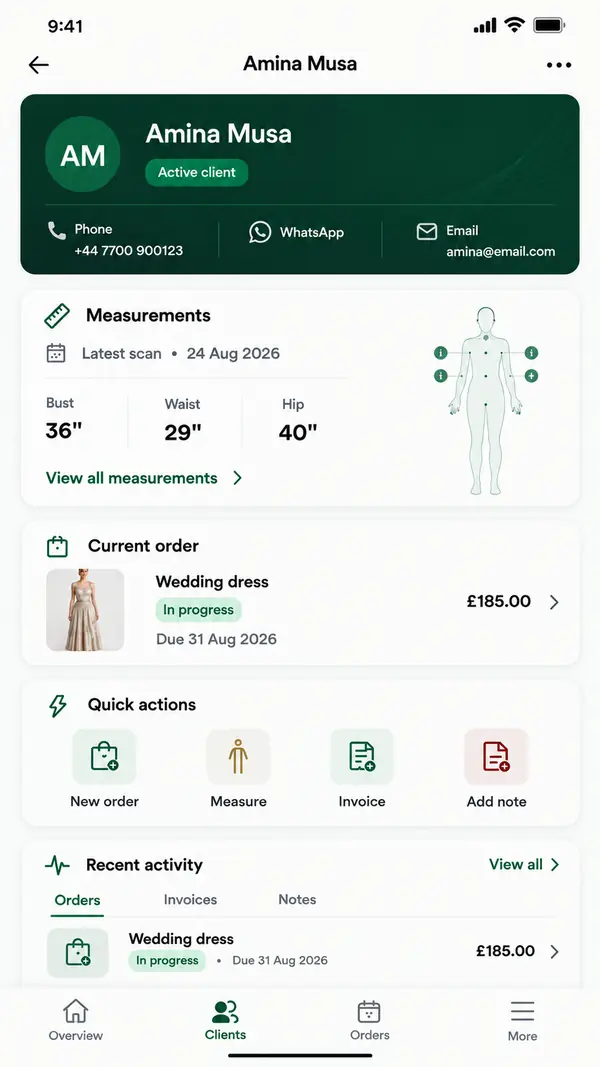
ZeDaq.ai includes client records, orders with a delivery calendar and invoicing in multiple currencies, including NGN, GBP and USD, so each client's invoice and order sit in one place.
Keep clients, orders and invoices in one place
FAQs
How soon should I chase an unpaid invoice?
A day or two after the due date is reasonable. Earlier feels pushy, and waiting too long makes the debt feel unimportant.
Is it rude to remind a client about payment?
No. A short, polite reminder is normal business. Clients usually respond well to a clear message.
Can I charge a late fee?
Only if you stated it before the work began. Check your local rules and agree the terms in writing. This is general information, not legal advice.
Should I stop work for a client who owes me money?
Many tailors pause new work until the balance is paid. Tell the client you are doing so, and keep the tone calm.
Try ZeDaq.ai free
Virtual try-on and Find my size for your store, plus client, order and invoicing tools for tailors, in one subscription.

