How Much Do Tailors Charge in the US?
By the ZeDaq.ai team · · 5 min read
On this page
- Where do these price figures come from?
- What do common alterations cost?
- Why do two pages give different prices for a pants hem?
- Does location change what tailors charge?
- Worked example: a wedding party fitting
- What affects the price of a tailoring job?
- What about custom suits and seamstress rates?
- How should you set your own prices as a tailor?
US tailors charge per job, and a simple hem usually costs a small fraction of a full suit alteration. Published estimates put suit pants hems in the tens of dollars and bigger jacket work in the hundreds, with prices higher in big cities. There is no single national rate card.
This guide is for tailors and designers who want a reference point for their own pricing. If you run a shop, ZeDaq.ai's tailor tools can help you quote and invoice, but start by understanding what the market publishes.
Where do these price figures come from?
We could not find an official government price list for alterations, so the figures here are estimates published by Airtasker, an online services marketplace. Airtasker says its pants figures are estimated from recent pants alteration tasks, adjusted for typical labor costs by city (page last updated June 2026). Its suit alteration page says its estimates come from research on industry and third-party rates (page last updated July 2026).
Treat them as ballpark figures, not what every tailor charges.
What do common alterations cost?
The table uses Airtasker's suit alteration page. Prices are ranges per job.
| Job | Estimated range | Source |
|---|---|---|
| Suit pants hem | $15 to $35 | Airtasker, suit alterations |
| Suit pants hem with cuff | $25 to $45 | same page |
| Suit pants waist | $25 to $50 | same page |
| Taper leg, two-seam | $25 to $45 | same page |
| Taper leg, four-seam | $50 to $75 | same page |
| Jacket sleeves, basic | $30 to $70 | same page |
| Jacket sleeves with buttonholes | $70 to $150 | same page |
| Shorten jacket | $60 to $150 | same page |
| Reduce jacket shoulders | $100 to $160 | same page |
| Reline jacket | $200 to $400 | same page |
Work on shoulders and linings costs more because it takes more skill and time. Small fixes, such as replacing buttons, cost much less.
Why do two pages give different prices for a pants hem?
Airtasker's pants alterations page lists a basic hem or shortening at $30 to $60, while its suit alterations page lists a suit pants hem at $15 to $35. Both are Airtasker estimates, published on different pages.
The gap shows why you should treat any price guide with care. Differences may come from the type of trousers, the finish, the data used and the city. Ask local tailors for quotes.
Does location change what tailors charge?
Yes. The Airtasker pants page says costs are higher in major cities such as New York City and San Jose and lower in places like Jacksonville. Rent, wages and demand differ across the country.
If you set prices for your shop, check what two or three nearby tailors charge for the same jobs. Compare the same job, such as a basic hem on dress pants.
Worked example: a wedding party fitting
Say a guest needs a suit pants hem, basic jacket sleeve shortening and a waist adjustment. Using the ranges in the table above from Airtasker's suit alteration page:
- Suit pants hem: $15 to $35.
- Jacket sleeves, basic: $30 to $70.
- Suit pants waist: $25 to $50.
That adds up to about $70 to $155 for the three jobs. A rush service or a big-city shop may cost more, so confirm before you book.
What affects the price of a tailoring job?
Beyond city, several factors move a quote up or down:
- The fabric. Delicate or lined fabrics take more care.
- The job type. Moving shoulders or relining costs more than a hem.
- The finish. Keeping an original hem takes more work than a plain hem. Airtasker's pants page lists original hem preservation at $45 to $80 against $30 to $60 for a basic hem.
- Turnaround. Rush work often costs more.
For your own shop, show customers why a job costs what it does. A written price list stops arguments at the counter.
What about custom suits and seamstress rates?
Custom, made-to-measure suits and hourly seamstress rates depend heavily on the cloth, the number of fittings and the tailor's experience. We did not find a reliable published national figure we could link, so we have not stated one. Ask for a written quote that lists fabric, labor and fittings separately.
How should you set your own prices as a tailor?
Use these steps:
- Write a price list by job, as in the table above.
- Note the time each job takes, then check that the price covers your hourly cost.
- Add a rush fee and a minimum charge.
- Take a deposit on larger jobs.
- Review prices every few months.
Our guides to tailors' prices in other markets show how much local context matters: see what tailors charge in Kenya and what tailors charge in Nigeria. For tools that help you quote, invoice and track orders, see the best software for tailors and fashion designers.
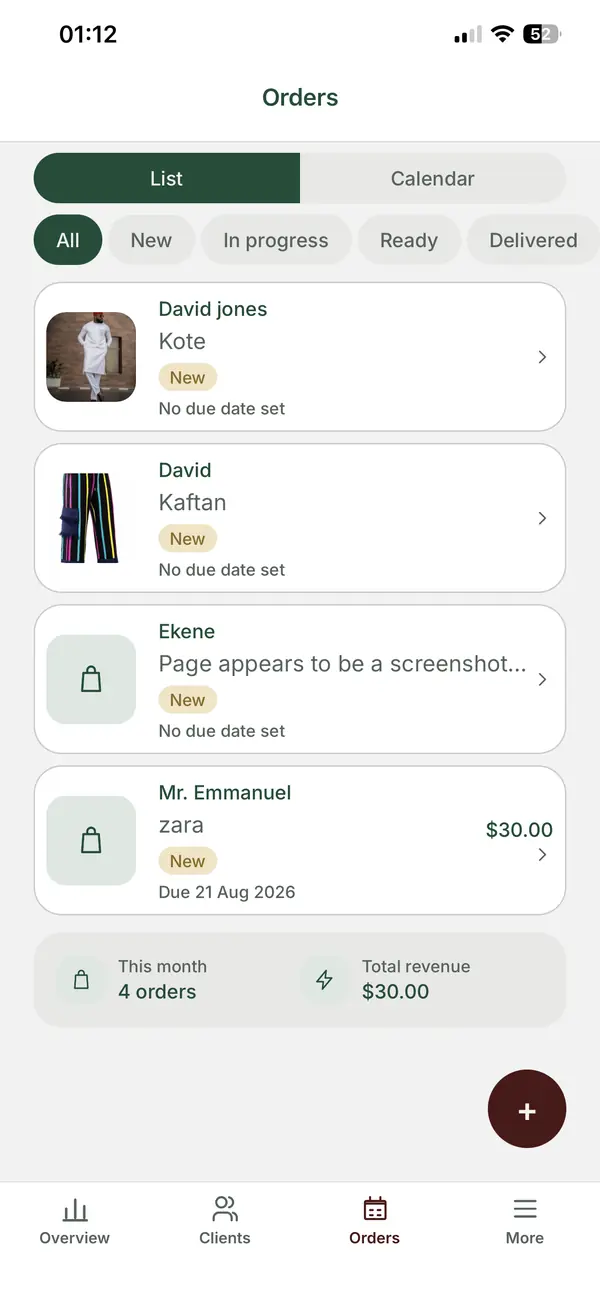
ZeDaq.ai's tailor tools include a client CRM, measurements through a link the client opens on their phone, orders with a delivery calendar, and invoicing in multiple currencies. The ZeDaq Business mobile app runs on iOS and Android.
See how ZeDaq.ai handles clients, orders and invoices
FAQs
Is there an official price list for tailoring in the US?
We did not find one. Prices are set by each tailor and vary by city and job.
Is it cheaper to hem pants myself?
Yes, if you have the skills and tools. For tailored fabric, many people pay a professional to keep the original finish.
Should I get a quote before I drop off clothes?
Yes. Ask for a written quote and a ready date.
Do tailors charge more for rush jobs?
Many do. Ask about rush fees when you book.
Try ZeDaq.ai free
Virtual try-on and Find my size for your store, plus client, order and invoicing tools for tailors, in one subscription.

