How Much Do Tailors Charge in Kenya?
By the ZeDaq.ai team · · 4 min read
On this page
Tailors in Kenya charge anywhere from a few thousand shillings for simple work to well over a hundred thousand for bespoke suits, and the price depends mostly on fabric, design and the tailor's reputation. There is no single rate, and we found no published survey of everyday fundi prices.
This guide gives the sourced figures we could verify, then shows how to set your own prices. It is written for Kenyan tailors and designers, and the ZeDaq.ai tailor tools are built for the same work.
What have Kenyan tailors said they charge?
The most recent sourced figures come from Business Daily, in an article published in October 2026 titled "Tailors cash in as Kenyans embrace bespoke suits". It quotes two businesses.
| Source | Price point | What it covers |
|---|---|---|
| Sydney Owino, SAO Sartorial | Sh58,500 for the cheapest made-to-measure suit | Current made-to-measure price, as quoted |
| Sydney Owino, SAO Sartorial | $1,850 (about Sh239,000) for bespoke | Current bespoke price, as quoted |
| Logical City, as reported | About $200 (Sh25,900) to $1,500 (Sh194,250) | Range of suits, reported by the journalist |
Source: Business Daily, October 2026. These are prices for suits from named businesses, not averages for the whole country.
Is that what a neighborhood fundi charges?
No. Those figures are for suits at established tailoring brands. A small shop doing alterations, school uniforms or simple dresses will charge differently.
The same article says one customer expected trousers to cost about Sh7,000 but the requested design came to about Sh13,500, as reported by Business Daily. The gap came from the design the customer wanted. It shows how a request can change the price.
We could not find a reliable, independent price list for everyday work such as hems, kitenge dresses or school uniforms. Directories list ranges, but they are marketing pages and we did not use them. If you want to compare, ask three local tailors for a quote on the same item.
What decides the price of a garment?
These factors move the price most:
- Fabric. A suit in imported wool costs more than one in a basic blend, before any stitching.
- Design. Extra pockets, lining, embroidery and fitted cuts take more time.
- Fittings. Each fitting is time you cannot spend on another order.
- Deadline. A rush order for a wedding or funeral may cost more.
- Who makes it. A named brand with a strong reputation usually charges more than a new shop.
Business Daily's example shows the effect of design. Same tailor, same type of garment, almost double the price once the design changed.
How do you work out your own price?
Use a simple method, and keep your numbers in your own notes.
- Add the fabric and trims. Include lining, buttons, zips and thread.
- Add your time. Estimate hours for cutting, sewing and fittings, and multiply by an hourly rate you set.
- Add costs. Include rent, power, transport and tools.
- Add a margin. This is what makes the business grow.
- Compare. Check the result against similar tailors near you.
If your price is much lower than the market, you may be working for too little. If it is much higher, you need to show why, with better finish, fabric or service.
Why should you separate fabric from labor?
When the customer brings their own cloth, you charge for work only. When you supply it, you charge for both. Show the two lines separately on the quote, so the customer sees why the price changes with the fabric.
How should you quote a customer?
Quote in writing and include what is covered: the garment, the number of fittings and the delivery date. Ask for a deposit before you buy fabric, and write down the balance due.
When a customer changes the design, update the quote before you continue. That avoids the argument that follows a surprise bill.
How do you keep prices consistent?
Prices drift when you work from memory. Keep a record of each job: the customer, the measurements, the price, the deposit and the due date.
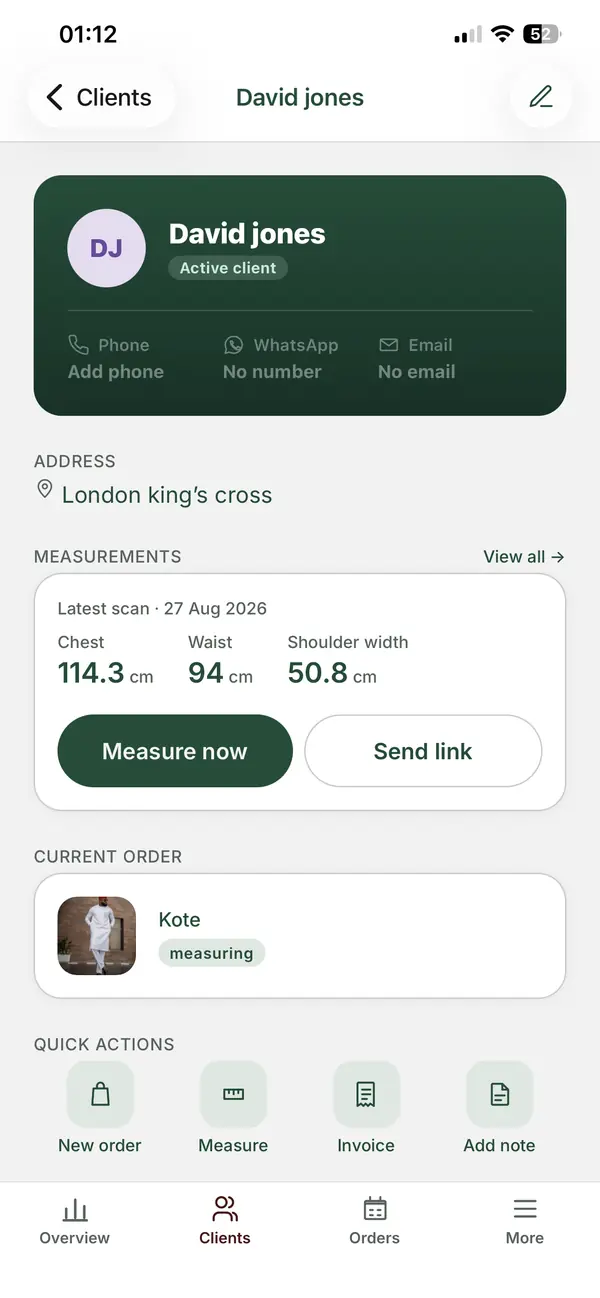
ZeDaq.ai includes a client CRM, measurements through a link the client opens on their phone, orders with a delivery calendar, and invoicing in multiple currencies, including NGN, GBP and USD. The Free plan includes 5 invoices a month. See the pricing page for the full plan list.
For a comparison with spreadsheets, read ZeDaq.ai vs Excel for tailors.
How do prices compare in other countries?
Prices depend on local costs, fabric and customers, so do not copy another market's rates. For comparisons, see how much tailors charge in the US and how much tailors charge in Ghana.
Keep clients, measurements and orders in one place
FAQs
What is the average tailoring price in Kenya?
We found no reliable national average. Prices in the sources we verified come from individual businesses and cover suits, not everyday sewing.
Why do bespoke suits cost so much more than made-to-measure?
Bespoke work usually involves more fittings, more hand work and higher-end cloth. The Business Daily figures above show the gap for one tailor.
Should I charge a deposit?
Yes, many tailors do. A deposit covers fabric and shows the customer is serious. Put the amount and balance in writing.
How can I raise my prices without losing customers?
Show the value: better finish, reliable deadlines and clear quotes. Raise prices on new orders first and keep old quotes honored.
Try ZeDaq.ai free
Virtual try-on and Find my size for your store, plus client, order and invoicing tools for tailors, in one subscription.

