
How Many Orders Can a Tailor Handle a Week?
By the ZeDaq.ai team · · 4 min read
On this page
The number of orders a tailor can handle a week equals your productive sewing hours divided by the average hours each order takes, minus a buffer for fittings, fixes and surprises. There is no single right number, because a shirt alteration and a wedding gown use very different amounts of time.
You can find your own number in about an hour. This guide shows a method for it, and it fits with the ZeDaq.ai tools for tailors that track orders and delivery dates.
Why does a tailor need an order cap?
Without a cap, every new order feels like good news until deadlines start to slip. Late work costs trust, and rushing hurts quality.
A cap protects three things: your delivery promises, your garment quality and your own health. It also gives you a clear, polite reason when you must say no.
How do you calculate your weekly capacity?
Follow these steps.
- Count your working hours. Write down the hours you actually plan to work in a week.
- Remove non-sewing time. Subtract time for client calls, fittings, shopping for fabric, cleaning and paperwork. What remains is your productive sewing time.
- Time each garment type. For the last few jobs of each type, note how long the sewing took from cutting to final press.
- Average each type. Use your real times, not your best day.
- Add a buffer. Include time for remakes, fixes after fittings and late client changes.
- Divide. Productive hours divided by hours per order gives your capacity.
What does a worked example look like?
Here is an example with made-up numbers, to show the method. Use your own figures instead.
| Item | Hours |
|---|---|
| Hours planned in the week | 40 |
| Client calls, fittings, errands, admin | 12 |
| Buffer for fixes and changes | 4 |
| Productive sewing time | 24 |
If a plain dress takes about 8 hours of sewing, that is three dresses. If a shirt takes 4 hours, it is six shirts. A mix of one dress, two shirts and some alterations would fit the same 24 hours.
This is an illustration, not a benchmark. Your times depend on your skill, your tools, the fabric and any helpers.
How do you set limits by garment type?
Instead of one number, set a cap per type. This reflects the real load better.
- Alterations: many small jobs, short time each.
- Everyday garments: shirts, trousers and skirts.
- Complex garments: suits, lined jackets, gowns and heavily embellished pieces.
Complex work should take up a larger share of your capacity. One gown may use the room of several simple orders, so count it as such.
How do you spot that you are over capacity?
Watch for these signs:
- You regularly work past your planned hours.
- Fittings are booked back to back with no gaps.
- Delivery dates keep moving.
- You rush finishing details like hems and buttons.
- Clients chase you for updates.
If two or more are true for several weeks, lower your cap or raise your prices and lead times.
How do you keep track of the load?
An order list with due dates shows your capacity at a glance. Many tailors start in a notebook or spreadsheet, then outgrow it. See our comparison of ZeDaq.ai vs Excel for tailors if that sounds familiar.
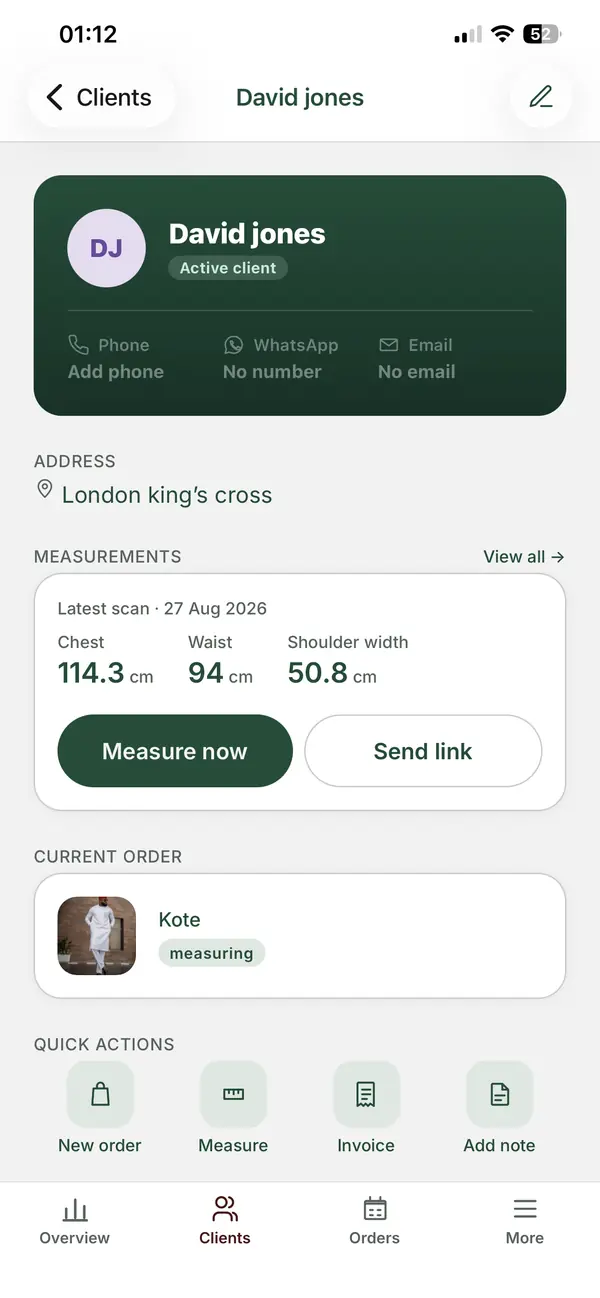
ZeDaq.ai includes orders and a delivery calendar for tailors, along with a client list and measurements collected through a link the client opens on their phone. A calendar view makes busy weeks obvious before you accept another order.
For turning the cap into a daily plan, read the guide to production planning for a small shop.
How do you plan for busy seasons?
Demand for tailors is not even through the year. Weddings, holidays and school terms can all create peaks, and you probably know yours from past years.
Before a peak, lower the number of new orders you accept per week, confirm delivery dates early and book fittings in advance. Take on complex pieces earlier, because they leave little room to recover if something goes wrong. After the peak, review how close your estimates were and adjust your hours per order.
If you work with an assistant or seamstress, count their hours separately and be honest about how long they take on each task.
What do you say when you are full?
Say it early, kindly and with an alternative. For example: "I'm fully booked until the end of the month. I can start your order on the first available date, or I can suggest another tailor."
Offering a later date is better than a promise you can't keep. For wording you can reuse, see how to say no to rush orders politely.
Plan your orders and delivery dates in one place
FAQs
How many orders a week is normal for a tailor?
There is no standard figure. It depends on garment type, your speed and whether you work alone. Calculate your own number from your timed jobs.
Should I count fittings in my capacity?
Yes, but as non-sewing time. Fittings use your hours even though no sewing happens, so subtract them before you count sewing time.
Should I include a buffer?
Yes. Remakes, late changes and sick days happen, and a buffer stops one problem from delaying every other order.
How often should I review my cap?
Review it every few months, or after you hire help, buy a new machine or change what you sell.
Try ZeDaq.ai free
Virtual try-on and Find my size for your store, plus client, order and invoicing tools for tailors, in one subscription.

