
FreshBooks for Fashion Designers: Is It a Good Fit?
By the ZeDaq.ai team · · 7 min read
On this page
- What kind of fashion designer are you?
- What does FreshBooks include and cost?
- Where does FreshBooks fit a fashion designer well?
- Where does FreshBooks fall short for bespoke designers?
- How does FreshBooks compare with a designer-focused tool?
- Which should you choose?
- What should you test during a FreshBooks trial?
- What does ZeDaq.ai cost for a designer?
FreshBooks is a good fit for fashion designers who bill a small number of clients for design time, projects or retainers. It is a weaker fit for made-to-measure designers with many private clients, because its plans cap billable clients and it has no place for body measurements or garment orders.
This article explains who FreshBooks suits, where the fit breaks down, and what a designer running a bespoke studio might use instead. For a tool built around client measurements and orders, see ZeDaq.ai's tailor and designer tools.
ZeDaq.ai publishes this blog. FreshBooks facts come from the FreshBooks website, checked November 2026.
What kind of fashion designer are you?
"Fashion designer" covers very different businesses, and the right software depends on which one you run. Most designers fall into one of three groups.
- Freelance and studio designers. You design for brands, retailers or production houses. You bill a handful of business clients for hours, sketches, tech packs or a project fee.
- Bespoke and made-to-measure designers. You make one-off garments for private clients: bridal, eveningwear, traditional outfits, suits. Each client needs measurements, fittings and a due date.
- Ready-to-wear label owners. You sell finished pieces, often online. Your problem is stock, sizing and orders, not invoicing individual clients.
FreshBooks was built for the first group's style of work: service businesses that bill time and projects. Keep your group in mind as you read the rest.
What does FreshBooks include and cost?
FreshBooks is accounting and invoicing software for small service businesses. When we checked the FreshBooks pricing page in November 2026, it listed these plans:
| Plan | Regular price shown | Billable clients |
|---|---|---|
| Lite | $23.00/mo | 5 |
| Plus | $43.00/mo | 50 |
| Premium | $70.00/mo | Unlimited |
| Select | Custom ("Let's Talk") | Unlimited |
The same FreshBooks page was also showing a promotion of 80% off for four months, and a 30-day free trial with no credit card required. Promotions change often, so check the page on the day you sign up.
According to the same page, every plan includes unlimited time tracking, expense tracking and online payments by card, ACH bank transfer, digital wallets and Buy Now, Pay Later. Lite includes estimates. Plus and Premium add proposals and client retainers.
Where does FreshBooks fit a fashion designer well?
For a freelance or studio designer, FreshBooks lines up with how you already work.
Time tracking for design hours
If you charge brands by the hour for design, fittings on a fit model, or tech pack work, unlimited time tracking means you can bill exactly what you spent. You start a timer, stop it, and pull those hours into an invoice.
Proposals and retainers for brand clients
On Plus and above, proposals let you scope a capsule collection before work starts. Retainers suit a designer who holds a monthly arrangement with a label.
Expenses for fabric and trims
Fabric, trims, sampling and courier costs add up. Expense tracking helps you see what each project really cost, which matters when you set next season's rates.
Card and bank payments
Clients can pay online by card or bank transfer, according to the pricing page. That shortens the wait between delivering a collection and getting paid.
Where does FreshBooks fall short for bespoke designers?
The fit changes once your clients are private individuals ordering garments made to their body.
Client limits add up fast
Lite allows 5 billable clients and Plus allows 50, based on the pricing page. A bridal or eveningwear designer can serve more than 50 private clients in a busy year. That pushes you to Premium at $70.00 a month before you have stored a single measurement.
No measurement profiles
FreshBooks is built for invoices, time and expenses. There is no structured place for bust, waist, hip, shoulder or gown length, and no way for a client to send their own measurements in.
No garment orders or fitting stages
A made-to-measure order moves through stages and dates: deposit paid, cut, first fitting, final fitting, collection. FreshBooks tracks projects and time, not the garment's progress or its delivery date. Our guide to tracking deposits and delivery dates shows what a tailoring order record needs.
Accounting features you may not use
If you only need to bill private clients, much of FreshBooks' accounting depth goes unused. You may be paying for features while the work you actually struggle with sits elsewhere.
How does FreshBooks compare with a designer-focused tool?
Here is a side-by-side view. FreshBooks details come from its pricing page, checked November 2026.
| Need | FreshBooks | ZeDaq.ai |
|---|---|---|
| Invoices | Yes | Yes, in multiple currencies including NGN, GBP and USD |
| Time tracking | Unlimited on all plans | Not listed |
| Expenses | Yes | Not listed |
| Online card and ACH payments | Yes | Not listed |
| Client records | Billable clients, capped on Lite and Plus | Client CRM |
| Body measurements | No | Yes, by a link the client opens on their phone |
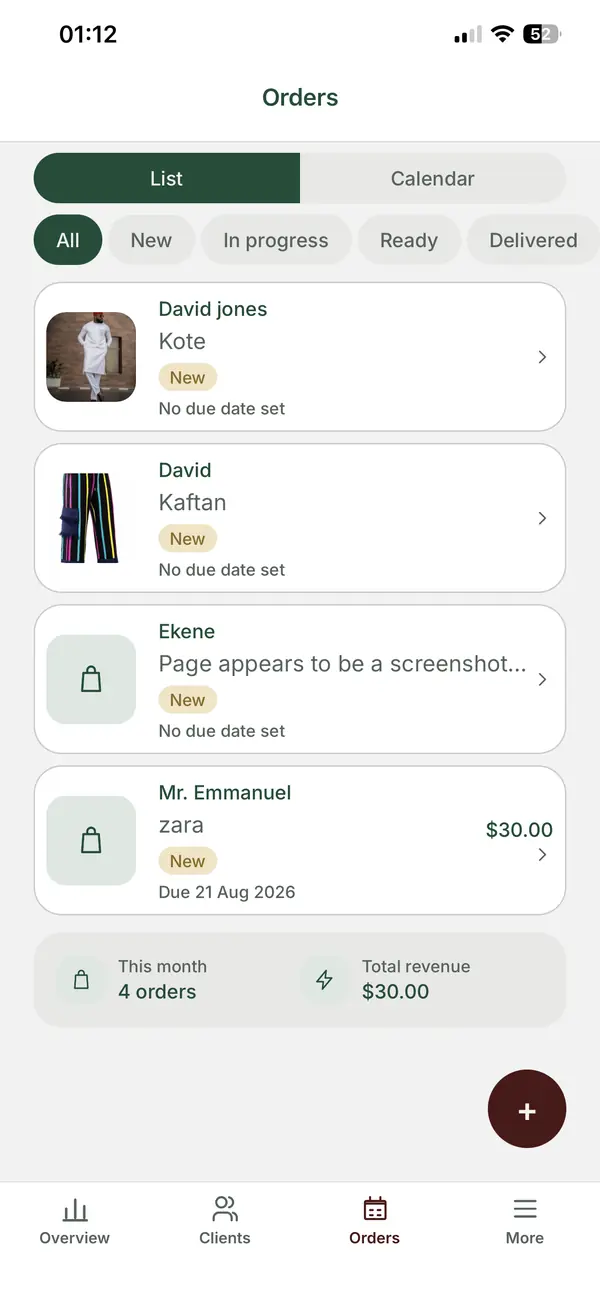
| Orders and due dates | No | Orders and a delivery calendar |
| Mobile app for the designer | Check FreshBooks' site | ZeDaq Business for iOS and Android |
| Starting price | Lite, $23.00/mo regular price | Free plan, paid from $14/mo |
The two tools solve different problems. FreshBooks is stronger on accounting. ZeDaq.ai is stronger on clients, measurements and garment orders.
If you are still weighing client databases more broadly, our roundup of the best CRM for fashion designers compares general CRMs with tailoring tools.
Which should you choose?
Use your business type from the first section to decide.
- Freelance or studio designer billing brands: FreshBooks is a good fit. Time tracking, proposals and retainers match your work.
- Bespoke designer with many private clients: a tailoring tool fits better. You need measurements, orders and due dates more than time tracking.
- Bespoke designer who also does brand work: consider both. Use FreshBooks for brand billing and accounting, and a tailoring tool for private clients.
- Ready-to-wear label selling online: neither invoicing tool is your main need. Your bigger questions are sizing and returns. Our look at Fit Analytics alternatives for stores covers that side.
A worked example
Kemi designs bridal and occasion wear. Last year she made gowns for 70 private clients, and she also did two freelance capsule projects for a boutique.
On FreshBooks, 70 billable clients would put her past the Plus limit of 50, so she would need Premium. She would still keep measurements in a notebook. A tailoring tool would hold her 70 brides' measurements and due dates, while her two boutique projects could be billed from either tool.
What should you test during a FreshBooks trial?
A free trial only helps if you test the work you do every week. Before the trial ends, run through this checklist with real jobs, not sample data.
- Count your clients. Add every client you billed last year. If the number passes 5 or 50, note which plan you would really need.
- Send one real invoice. Bill a current client and ask them how easy it was to pay.
- Track one project's time. Time a full tech pack or sampling job. See whether the hours match what you would have guessed.
- Log a fabric purchase. Add the receipt for one bolt of fabric and check where it shows up.
- Try to record a fitting. Write down a client's measurements and next fitting date. Notice where that information has to live.
- Check it on your phone. Do the same tasks on your phone between appointments, since that is when most admin happens.
If the last two steps feel awkward, that is a sign your bottleneck is client and order management, not accounting.
Questions to ask yourself after the trial
- Did I finish my invoices faster than before?
- Did I still open my notebook or WhatsApp to find client details?
- Would I pay the regular price, not the promotional one, for what I used?
Your honest answer to the third question usually settles it. Promotional prices end, and you should judge the tool at the price you will pay in month five.
What does ZeDaq.ai cost for a designer?
ZeDaq.ai's Free plan costs $0 and includes 3 try-ons, 3 measurements and 5 invoices a month. That lets you test a measurement link with a real client.
Paid plans are Micro at $14 a month, Starter at $49, Growth at $129 and Scale at $299. Each paid plan has a 3-day free trial with no card required. Full details are on the ZeDaq.ai plans page.
Keep every client's measurements and due dates in one place
FAQs
Does FreshBooks have a free plan?
The pricing page we checked in November 2026 showed a 30-day free trial rather than a free plan. Paid plans started at Lite, with a regular price of $23.00 a month.
Can I store client measurements in FreshBooks?
Not in a structured way. You could add notes to a client, but there are no measurement fields and no way for clients to submit measurements themselves.
What counts as a billable client in FreshBooks?
FreshBooks limits the number of clients you can bill on Lite and Plus. Check its pricing page FAQ for the exact definition before you choose a plan.
Is ZeDaq.ai accounting software?
No. ZeDaq.ai's tailor tools cover a client CRM, measurements, orders, a delivery calendar and multi-currency invoicing. Many designers keep a separate tool for accounting.
Try ZeDaq.ai free
Virtual try-on and Find my size for your store, plus client, order and invoicing tools for tailors, in one subscription.