Collecting Measurements for Made-to-Order Gowns Sent Abroad
By the ZeDaq.ai team · · 5 min read
On this page
- Why are overseas gown orders harder to measure?
- Which measurements do you need for a fitted gown?
- How should you send instructions to the client?
- How do you check the numbers before cutting?
- How do you plan for fit changes you can't make in person?
- What should your written sign-off include?
- How do you keep overseas orders organized?
To collect measurements for made-to-order gowns sent abroad, send the client a fixed measurement list with plain instructions, review every number on a short video or voice call, and get written sign-off before you cut. A phone measurement link can replace the tape measure when the client has no one to help.
When a gown leaves Lagos for London, Toronto or Houston, there is no fitting before the big day. A fix that costs an hour in your workshop becomes an expensive return across borders, or a gown that doesn't fit at the wedding. This guide gives you a process you can repeat for every overseas order. It sits within our wider guide to try-on and sizing for African brands.
Why are overseas gown orders harder to measure?
Three things change when the client is abroad:
- No fitting. You can't pin, adjust or check the fit before shipping.
- Self-measuring. The client often measures alone, or with a friend who has never done it.
- Long timelines. Wedding dates are fixed, and international shipping adds days you can't get back.
Many diaspora clients also think in UK or US dress sizes. "I'm a UK 14" tells you very little about a fitted corset gown.
Which measurements do you need for a fitted gown?
Ask for the same list every time. It stops clients from skipping the hard ones.
| Measurement | Where to take it | Why it matters for gowns |
|---|---|---|
| Bust | Fullest part of the chest | Bodice fit |
| Underbust | Directly under the bust | Corset and structured bodices |
| Waist | Narrowest part of the torso | Waist seam placement |
| Hip | Fullest part of the hips and bottom | Mermaid and fitted skirts |
| Shoulder to waist | Top of shoulder to natural waist | Bodice length |
| Waist to floor | Natural waist to floor, in the shoes she'll wear | Hem length |
| Upper arm | Fullest part of the arm | Fitted sleeves |
| Height | Standing, without shoes | Overall proportions |
Add any style-specific points, such as across back for off-shoulder designs.
How should you send instructions to the client?
Make it impossible to misunderstand. Send the list in one message, in this order:
- What to wear: the bra and shapewear she'll wear on the day, plus fitted clothing.
- Who should help: ask a friend or family member to hold the tape.
- How to hold the tape: snug but not tight, level all the way around.
- What units: ask for centimeters or inches, and say which you prefer.
- What to send back: the numbers in a typed message, not a photo of handwriting.
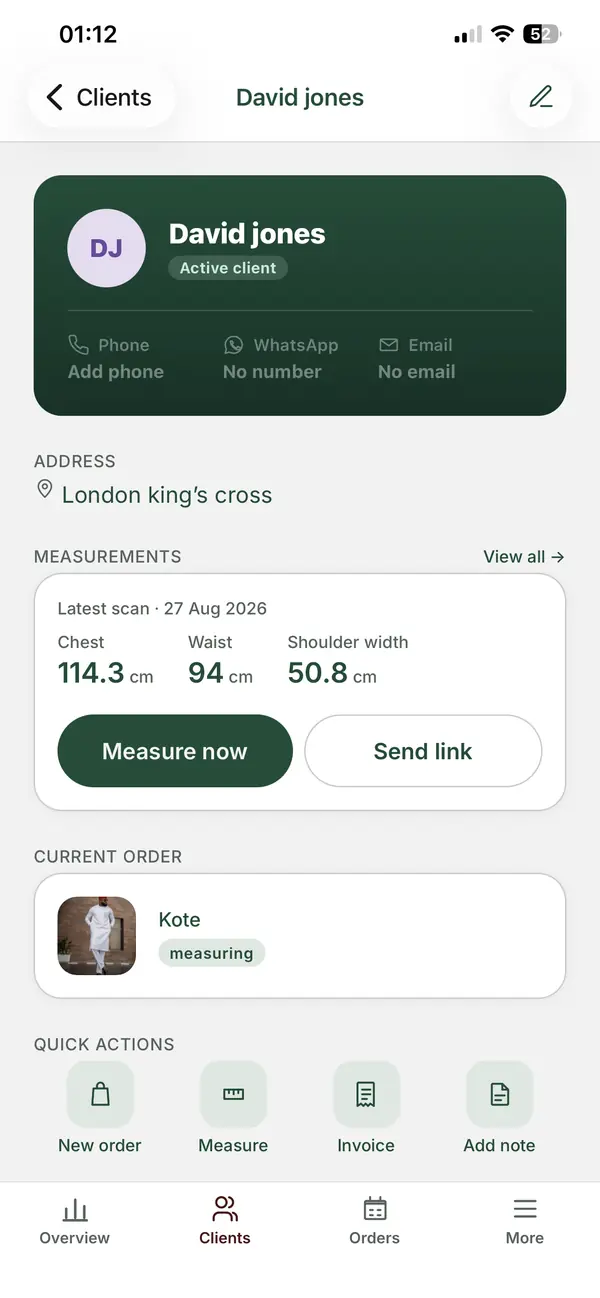
If the client has no one to help, or no tape measure, send a measurement link instead. The client opens it on their phone, and the results save to their record. Our guide to sending a measurement link to a client explains each step.
How do you check the numbers before cutting?
Never cut straight from the first set of numbers. Run this check:
- Do the numbers make sense together? Hip smaller than waist, for example, needs a second look.
- Do they match her stated size? If she says UK 12 but her hip suggests much bigger, ask.
- Are units consistent? Mixed inches and centimeters is a common error.
- Is the waist-to-floor taken in her shoes? Heel height changes hem length.
- Has anything changed recently? Weight change before a wedding is common.
Then hold a short video call. Ask her to show you where she placed the tape for the bust, waist and hip. Five minutes on a call can save a remake.
Many of these errors are the same ones that cause remakes in local orders. Our article on measurement mistakes that cause remakes covers them in more depth.
How do you plan for fit changes you can't make in person?
Build in safety where you can:
- Leave seam allowance at the side seams and waist, so a tailor abroad can adjust.
- Use lace-up or adjustable backs on corset styles where the design allows.
- Hem with care. A slightly longer hem can be taken up abroad. A short one can't be fixed.
- Send a care and alterations note explaining where the gown can be let out or taken in.
Tell the client, in writing, what a local tailor can adjust and what they can't.
What should your written sign-off include?
Before you cut, send a short summary and ask the client to confirm it in writing on WhatsApp or email:
"Hi Tolu, here are your final measurements for the reception gown: bust, underbust, waist, hip, lengths and sleeve as attached. Style: fitted mermaid, sweetheart neckline. Please reply 'confirmed' and we'll start cutting."
This protects both of you. If the fit is off, you can check whether the gown matches the confirmed numbers.
How do you keep overseas orders organized?
Diaspora orders often come in groups, such as a bride and her friends ordering Aso-ebi together. Keep each client's measurements, style notes and deadline in one record.
ZeDaq.ai's tailor tools include a client CRM, measurement links, orders with a delivery calendar, and invoicing in multiple currencies, including NGN, GBP and USD. The ZeDaq Business app for iOS and Android lets you check a client's record from the workshop. If you're still choosing between custom and stock pieces, see our guide on made-to-order or ready-to-wear.
Manage overseas gown orders in one place
FAQs
Should I ask for photos as well as measurements?
Yes. A front and side photo in fitted clothing helps you spot posture or shape details that numbers miss.
What if the client sends a dress that fits her well?
That is useful. Ask her to measure the dress flat, then compare those numbers with her body measurements.
How early should I collect measurements for a wedding?
As early as the client can commit. Leave enough time for production, shipping and any adjustments abroad.
Can I invoice diaspora clients in pounds or dollars?
Yes. ZeDaq.ai invoicing supports multiple currencies, including GBP and USD.
Try ZeDaq.ai free
Virtual try-on and Find my size for your store, plus client, order and invoicing tools for tailors, in one subscription.

