Measurement Mistakes That Cause Remakes in Nigerian Workshops
By the ZeDaq.ai team · · 5 min read
On this page
The measurement mistakes that cause most remakes in Nigerian workshops are a handful of repeat errors: tape held too loose or too tight, the waist taken at the wrong point, lengths taken without the right shoes, and numbers lost between the measuring book and the cutting table. Fix those, and most remakes disappear.
A remake costs fabric, tailor hours and often a customer's trust, especially close to an Owambe or wedding date. The good news is that these errors are predictable. This guide lists them, shows how to catch each one, and gives you a simple checklist for your team. It connects to our broader guide on try-on and sizing for African brands.
Which mistakes happen while taking measurements?
These errors happen with the tape in hand.
Tape too loose or too tight
A loose tape adds room the client doesn't need. A tight one makes the garment pull. Hold the tape snug and flat, with one finger able to slide underneath.
Wrong waist point
"Waist" means different things to different people. Some clients point to where they wear trousers. Others mean the narrowest point. Agree on one definition in your workshop and use it for every client.
Tape not level
On the bust and hip, a tape that dips at the back gives a bigger number. Ask the client to stand in front of a mirror, or check the back yourself.
Measuring over thick clothing
Measuring over a heavy boubou or jeans adds width. Ask clients to wear fitted clothing, and the underwear they'll wear with the outfit.
Lengths in the wrong shoes
A gown hem taken barefoot will drag when the client wears heels to the party. Ask what shoes they'll wear, and take floor lengths in similar heels.
Which mistakes happen after the measurements are taken?
Some of the costliest errors happen between measuring and cutting.
| Mistake | Where it happens | How to prevent it |
|---|---|---|
| Numbers copied wrongly | From book to pattern | Read numbers back to the client before they leave |
| Mixed units | Inches and centimeters on one sheet | Choose one unit for the whole workshop |
| Wrong client's record | Two clients with the same name | Store a phone number with every record |
| Old measurements reused | Repeat clients | Ask if anything has changed before each order |
| Style notes missing | Verbal requests not written down | Write the style next to the measurements |
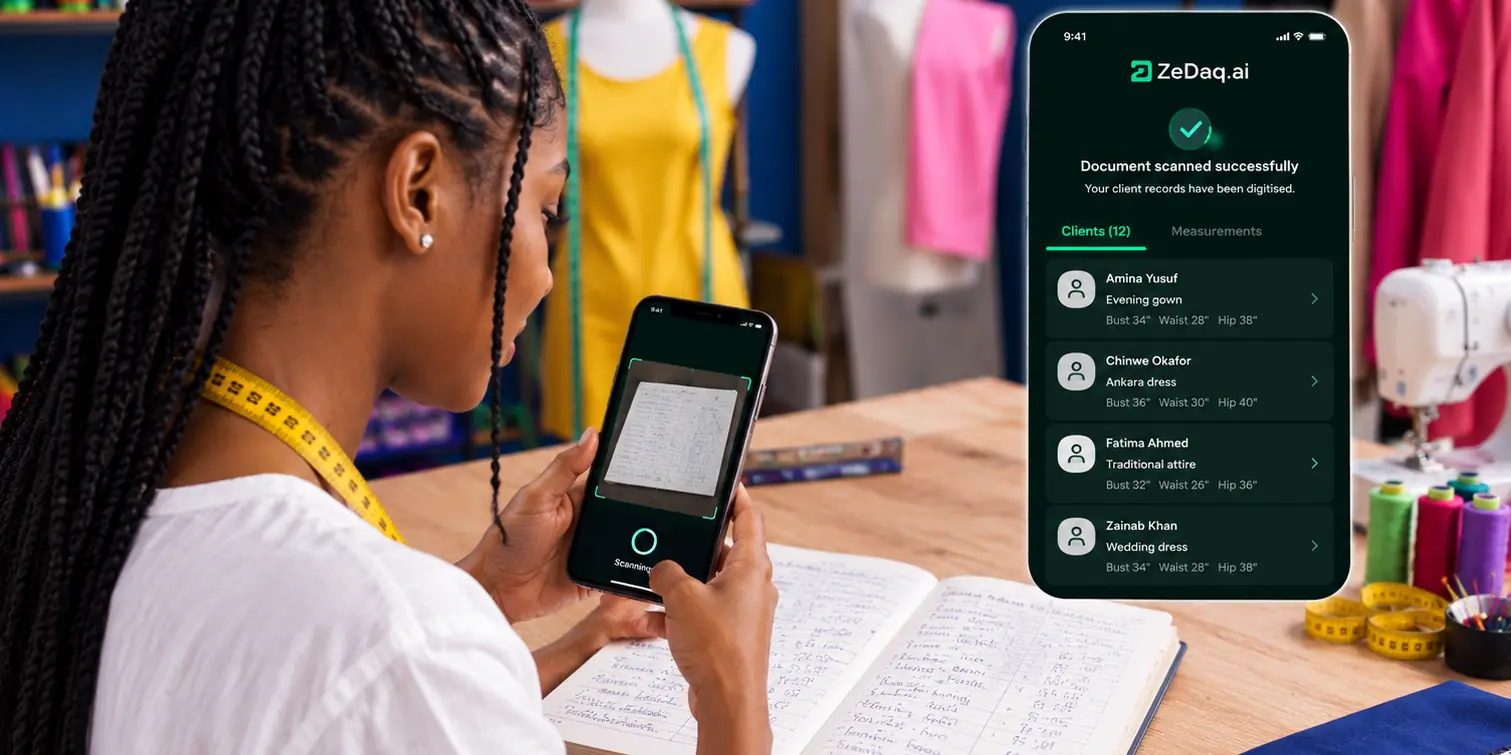
| Lost notebook | Shared exercise books | Keep records in one digital place |
Many Nigerian workshops still rely on exercise books and WhatsApp photos. They work, but a single lost book can take years of client records with it.
Which mistakes come from the client's side?
Remote and self-measured orders add their own risks:
- Measuring alone. A client can't measure their own back or bust accurately without help.
- Guessing. "I think my waist is about 30" is not a measurement.
- Using a dress size instead. "I'm a UK 14" doesn't tell you how a fitted gown will sit.
- Recent body changes. Pregnancy, weight loss or gain before a wedding can change everything.
For diaspora clients, these risks multiply because there's no fitting before shipping. Our guide to measuring for gowns sent abroad gives a full process for overseas orders.
How do you catch mistakes before cutting?
Add a quick review between measuring and cutting. It takes minutes and saves days.
- Sense-check the numbers together. Does the hip make sense for the waist and bust? Does the shoulder width fit the client's frame?
- Compare with past orders. For repeat clients, large changes need a quick call.
- Confirm the style. "Fitted" means different things to different clients. Ask how close they want it.
- Get sign-off. Send the client a summary and ask them to confirm in writing.
- Mark the cutting sheet. The cutter should see the same numbers the client confirmed.
What should a workshop measurement checklist include?
Print this, or save it on your phone, and use it for every client:
- Client name and phone number recorded
- One unit used throughout
- Client in fitted clothing and correct underwear
- Waist taken at the workshop's agreed point
- Tape level on bust and hip
- Lengths taken in the shoes the client will wear
- Numbers read back to the client
- Style notes written next to measurements
- Client confirmed in writing before cutting
For ready-to-wear, the same discipline applies to your size chart. A chart built from carefully measured bodies helps more shoppers choose correctly. Our size chart template for women's ready-to-wear is a good starting point.
How can software reduce measurement errors?
Software can't hold the tape, but it can remove the copying and lost-book errors. ZeDaq.ai's tools for tailors and designers include:
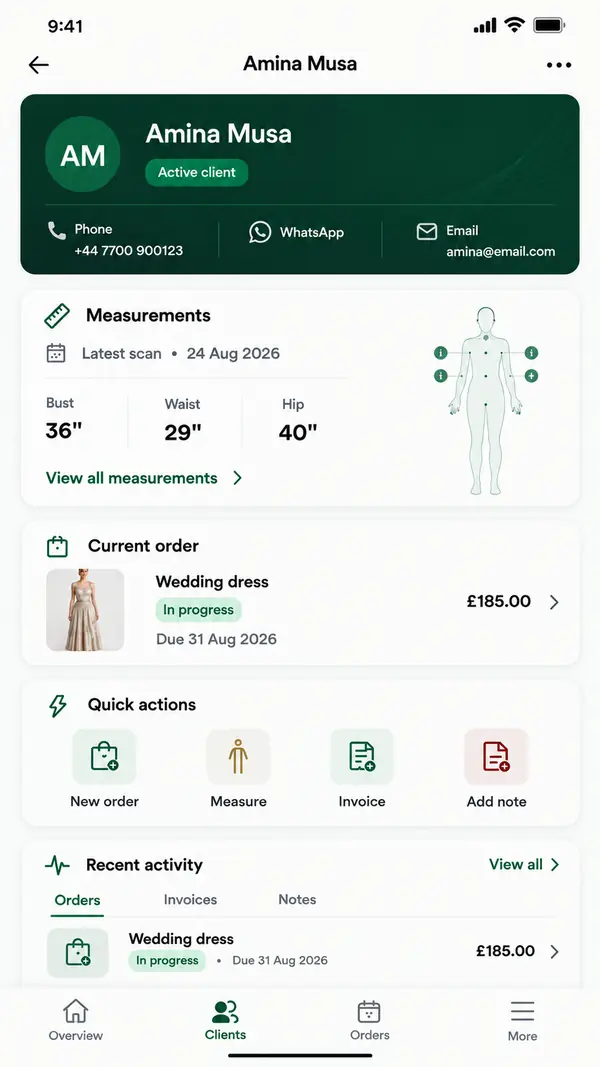
- A client CRM, so each client's measurements and orders stay in one record.
- Measurements through a link the client opens on their phone, useful when they can't visit.
- Orders and a delivery calendar, so you can see deadlines before the wedding rush.
- Invoicing in multiple currencies, including NGN, GBP and USD.
- The ZeDaq Business app for iOS and Android, so the cutting table and the front desk see the same numbers.
Keep every client's measurements in one place
FAQs
Should I measure in inches or centimeters?
Use whichever your team knows best, but use only one. Mixing units on the same sheet is a common cause of errors.
How often should I re-measure repeat clients?
Ask before every new order whether anything has changed. For fitted occasion wear, re-measure if the last record is old.
Who pays for a remake caused by a measurement error?
That depends on your policy and who made the error. Write your policy down and share it before taking a deposit.
Can apprentices take measurements?
Yes, with training. Have a senior tailor check their first few clients against the checklist before they work alone.
Try ZeDaq.ai free
Virtual try-on and Find my size for your store, plus client, order and invoicing tools for tailors, in one subscription.

