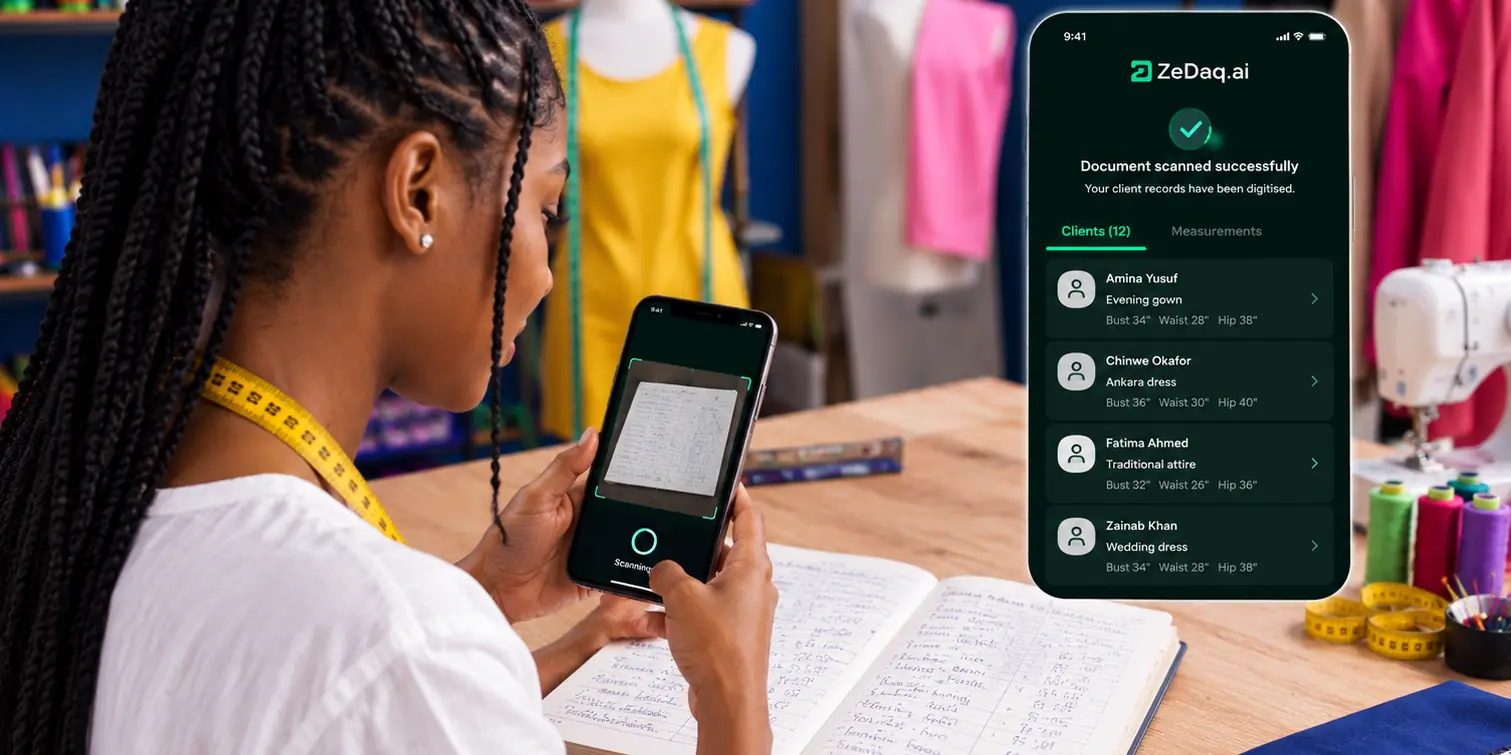
A Size Chart Template for Nigerian Women's Ready-to-Wear
By the ZeDaq.ai team · · 5 min read
On this page
A good size chart template for Nigerian women's ready-to-wear lists body measurements for bust, waist and hip in each size, adds a length column for every garment type, and includes short fit notes. Fill it with measurements from your own patterns and fit sessions, not numbers copied from another brand, and your chart will match how your clothes actually fit.
Below is a template you can copy, an explanation of each column, and a step-by-step method to fill it. It is part of our series on fit and try-on for African fashion brands.
Why do Nigerian brands need their own size chart?
There is no single national size standard that every Nigerian brand follows. Labels such as "size 12" or "M" mean different things from one brand to the next. Many shoppers also mix UK, US and local tailor sizes when they talk about their size.
That is why copying a UK or US chart rarely works. Your patterns, your ease and your fabrics decide how a size fits. Your chart needs to describe your clothes.
Diaspora shoppers in the UK and US still think in their local labels. You can add a "closest UK size" column, but treat it as a guide and base it on your own fittings.
What does the template look like?
Here is the core template for dresses and tops. The numbers are an example only, to show the format. Replace them with your own measurements.
| Size | Closest UK size | Bust (cm) | Waist (cm) | Hip (cm) | Bust (in) | Waist (in) | Hip (in) |
|---|---|---|---|---|---|---|---|
| XS | 6 | 80 to 83 | 62 to 65 | 87 to 90 | 31.5 to 32.5 | 24.5 to 25.5 | 34 to 35.5 |
| S | 8 | 84 to 87 | 66 to 69 | 91 to 94 | 33 to 34 | 26 to 27 | 36 to 37 |
| M | 10 to 12 | 88 to 93 | 70 to 75 | 95 to 100 | 34.5 to 36.5 | 27.5 to 29.5 | 37.5 to 39.5 |
| L | 14 | 94 to 99 | 76 to 81 | 101 to 106 | 37 to 39 | 30 to 32 | 40 to 41.5 |
| XL | 16 | 100 to 105 | 82 to 87 | 107 to 112 | 39.5 to 41.5 | 32.5 to 34 | 42 to 44 |
| 2XL | 18 | 106 to 112 | 88 to 94 | 113 to 119 | 42 to 44 | 34.5 to 37 | 44.5 to 47 |
Example chart only. Check your brand's own patterns before publishing.
Notice that each range ends where the next begins. Gaps between sizes leave some shoppers with no size at all.
Which extra columns should you add for each garment type?
One chart doesn't suit every style. Add a length table for each garment type you sell.
| Garment type | Extra measurements to list |
|---|---|
| Fitted gowns and corset dresses | Torso length, dress length |
| Bubu and kaftan gowns | Dress length only, plus bust room |
| Iro and buba sets | Buba length, wrapper length, sleeve length |
| Skirts and trousers | Waist, hip, length, thigh |
| Jumpsuits | Torso length (shoulder to crotch), inseam |
State the model's height next to the length column, so shoppers can compare.
How do you fill the template with your own measurements?
Your sizes come from your patterns and your fit model, not from guesswork.
- Pick your base size. Usually the size your fit model wears, such as M or size 10.
- Measure the fit model's body. Bust at the fullest point, natural waist, and hips at the fullest point.
- Check the finished garment. Measure the garment flat and note the ease, which is the extra room above body size.
- Grade up and down. Apply your pattern cutter's grading steps to get each size's body range.
- Test the end sizes. Try your smallest and largest sizes on real people before you publish.
- Add both units. Many shoppers measure in inches; others use centimeters.
Most remakes and exchanges start with measuring errors. Our guide to measurement mistakes in Nigerian workshops shows the common ones.
What fit notes should sit under the chart?
Fit notes tell shoppers how to use the chart. Keep them short:
- "Measure your body, not your clothes."
- "If you are between sizes, choose the larger size for fitted styles."
- "This style has no stretch."
- "Model is 170 cm and wears size M."
Add a short "how to measure" guide with a simple diagram. Put it on the same page as the chart, so shoppers don't have to search.
If you also sell men's native wear, the matching guide is our men's native wear size chart template.
How can shoppers use your chart without a tape measure?
Many shoppers don't own a tape measure, or they guess. A body scan can fill that gap.
ZeDaq.ai lets you enter this chart in Dashboard → Size charts, one chart per garment type. The shopper uploads one photo and types her height, and a 30-second scan recommends one of your own size labels. You can learn more in our guide to AI size recommendation for fashion stores, or try it yourself first.
Try the size scan on yourself
Try it on yourself
Live renderUpload a photo, pick a piece, see it rendered on you.
Pick something to try on
See your size chart in action
FAQs
Should I use UK sizes for Nigerian women's clothing?
You can show a closest UK size as a guide, but base the chart on body measurements. That way it reflects how your clothes fit.
Should my chart be in inches or centimeters?
Show both. Local shoppers and tailors often use inches, while some diaspora shoppers prefer centimeters.
How many sizes should a new brand offer?
Start with the sizes your customers order most, and make sure the ranges meet without gaps. Add sizes as demand grows.
Do I need a different chart for each style?
Use one core chart for bust, waist and hip, then add length details for each garment type.
Try ZeDaq.ai free
Virtual try-on and Find my size for your store, plus client, order and invoicing tools for tailors, in one subscription.

