Made-to-Order or Ready-to-Wear: Which Should a Nigerian Brand Start With?
By the ZeDaq.ai team · · 7 min read
On this page
- What is the difference between made-to-order and ready-to-wear?
- How do the two models compare?
- When does made-to-order make more sense?
- When does ready-to-wear make more sense?
- How does sizing differ between the two?
- How do cash flow and pricing differ?
- What about diaspora customers?
- Can you run both models at once?
- What is a practical path for a new brand?
- How can ZeDaq.ai support either model?
Most new Nigerian brands should start with made-to-order, then add ready-to-wear once they know which styles and sizes sell. Made-to-order protects your cash because customers pay before you cut, while ready-to-wear needs money tied up in stock before a single sale.
That said, the right choice depends on your skills, your capital and who you sell to. A designer with a strong tailoring background in Lagos has different options from a founder with marketing skills and a small production partner in Aba. This guide compares both models side by side and ends with a practical path most brands can follow. It is part of our series on virtual try-on and sizing for African brands.
What is the difference between made-to-order and ready-to-wear?
Made-to-order means you make each piece after the customer orders it. Usually that's cut to their measurements, sometimes in a fabric they choose. Bespoke Aso-ebi, bridal gowns and custom senator sets are typical examples.
Ready-to-wear (often shortened to RTW) means you produce pieces in standard sizes before anyone orders. Customers pick a size and receive a finished garment.
Many Nigerian brands sit somewhere between the two. A common middle option is "made-to-order in standard sizes": you show a design, the customer picks a size from your chart, and you cut after payment.
How do the two models compare?
| Factor | Made-to-order | Ready-to-wear |
|---|---|---|
| Cash needed to start | Low: deposits fund fabric | Higher: you pay for stock first |
| Stock risk | Very low | Unsold sizes and styles |
| Sizing | Cut to each body | Must fit a range of bodies from one chart |
| Delivery time | Longer, often weeks | Fast, ships from stock |
| Price per piece | Usually higher | Usually lower |
| Scaling | Limited by tailor hours | Easier to grow with production runs |
| Customer service load | High: measurements, fittings, changes | Lower per order, but more size questions |
| Diaspora appeal | Strong for occasion wear | Strong for gifts and quick orders |
Neither model is better in every way. The question is which trade-offs you can handle right now.
When does made-to-order make more sense?
Start with made-to-order if most of these are true:
- You have limited capital. A deposit before cutting means customers fund your fabric runs from Balogun or Onitsha.
- You or your team can tailor well. Your skill is the product.
- You sell occasion wear. Owambe outfits, weddings and Aso-ebi groups expect a personal fit.
- Your customers know you personally. Referrals and repeat clients drive your business.
- You want to learn what sells. Every order tells you which styles, fabrics and sizes people want.
The main challenge is measurements. Every piece depends on accurate numbers, and taking them in person limits you to clients who can visit. Our guide to measuring customers across Nigeria explains how a phone link removes that limit.
When does ready-to-wear make more sense?
Start with ready-to-wear if most of these are true:
- You have capital for stock. You can afford to hold sizes that may sell slowly.
- You have a reliable production partner. A factory or workshop that can repeat a style consistently.
- Your designs are simple to grade. Kaftans, shirts, relaxed dresses and two-piece sets work well.
- You sell online at volume. Instagram ads and a website reach strangers who want fast delivery.
- Your strength is marketing or branding. You'd rather build demand than measure clients.
The main challenge is sizing. One chart must fit many bodies, and every wrong guess becomes an exchange. A sound size chart, clear fit notes and a size recommendation tool all help.
How does sizing differ between the two?
This is the biggest practical difference, and it shapes your daily work.
Made-to-order sizing
You need a full, accurate set of measurements for each client. The risks are measurement errors: a tape held loosely, a waist taken in the wrong place, or numbers copied wrongly from a WhatsApp message.
For clients abroad, the risk is higher because there's no fitting before shipping. Our guide to collecting measurements for gowns sent abroad covers that case.
Ready-to-wear sizing
You need a size chart that matches your patterns, and shoppers who choose correctly from it. The risks are:
- A chart copied from another brand that doesn't match your cut.
- Customers choosing by habit rather than by measurement.
- One chart used across stretch and non-stretch fabrics.
The general approach to sizing custom-fit pieces online is covered in our guide to selling made-to-measure clothing online.
How do cash flow and pricing differ?
Made-to-order
You can ask for a deposit, or full payment, before cutting. That means you rarely carry unsold stock. The trade-off is time: each piece takes tailor hours, so your income is capped by how much your team can sew.
Pricing is usually higher per piece because the customer is paying for a personal fit. Be clear about your deposit, timeline and alteration policy in writing before you start.
Ready-to-wear
You pay for fabric, cutting and sewing before selling anything. If a style or size doesn't sell, that money stays on your shelf. Producing in batches can lower your cost per piece, which lets you price lower or keep more margin.
Start with fewer styles and a narrow size range, then expand based on what sells. Reorder best sellers rather than launching a dozen new designs at once.
What about diaspora customers?
Diaspora buyers in the UK and US are an important market for many Nigerian brands, and they behave differently by model.
- For made-to-order, diaspora clients often order occasion wear for weddings back home. They need a reliable way to send measurements, a clear timeline and a plan for shipping or collection.
- For ready-to-wear, diaspora shoppers expect to choose a size quickly, often by comparing to UK or US labels. They need a size guide that bridges those labels to yours.
In both cases, a wrong fit is expensive to fix across borders, so get the sizing right before dispatch.
Can you run both models at once?
Yes, and many established brands do. A common pattern looks like this:
- Ready-to-wear core: a small range of easy-fit best sellers in standard sizes, always in stock.
- Made-to-order premium: custom bridal, Owambe and Aso-ebi pieces at a higher price.
- Made-to-order in standard sizes: a middle option for new designs before you commit to stock.
This mix lets you test designs without stock risk, then move proven styles into ready-to-wear. It also gives you a premium service for loyal clients.
The challenge is running two workflows. You need a way to track custom orders, measurements and delivery dates alongside stock-based orders.
What is a practical path for a new brand?
If you're starting today, this sequence works for many brands:
- Months one to six: take made-to-order work from your network. Record every client's measurements and which styles sell.
- Next: pick your two or three most-ordered styles. Build a size chart from the measurements you collected.
- Then: produce a small ready-to-wear run of those styles in your most common sizes.
- After that: add a size recommendation tool to your product pages so online shoppers choose well.
- Keep going: keep made-to-order for occasion wear, and grow ready-to-wear with best sellers.
Your made-to-order records become the data behind your ready-to-wear chart. That is a big advantage over copying a chart from another brand.
How can ZeDaq.ai support either model?
ZeDaq.ai covers both sides:
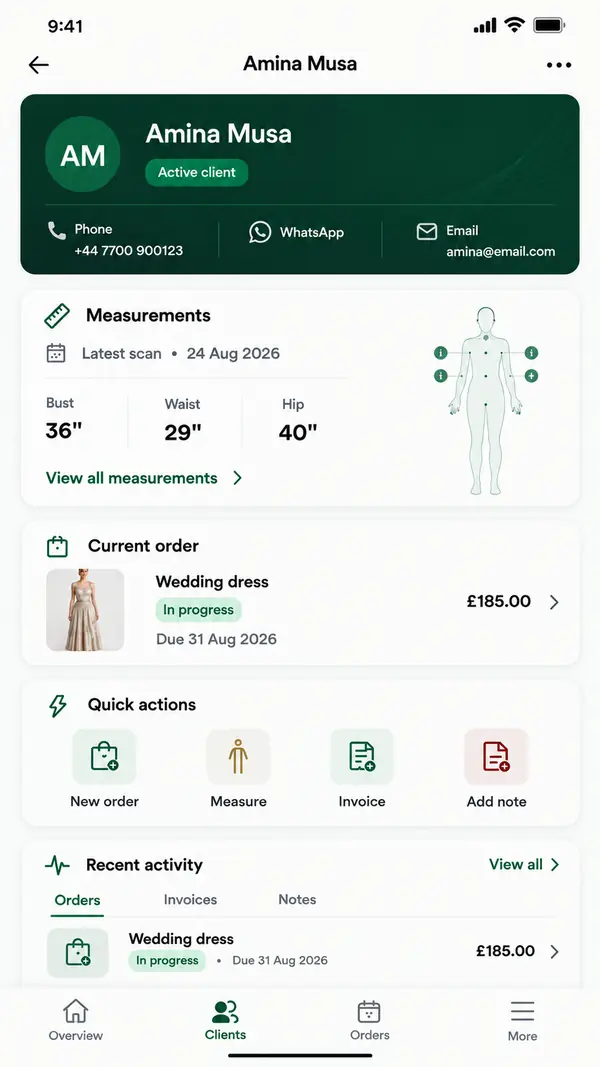
- For made-to-order: a client CRM, measurements through a link the client opens on their phone, orders with a delivery calendar, and invoicing in multiple currencies, including NGN, GBP and USD. The ZeDaq Business app runs on iOS and Android.
- For ready-to-wear: a size recommendation from a 30-second body scan, matched to your own size chart, plus AI virtual try-on so shoppers see your real garment on their own photo.
You can start with the side that matches your model today and add the other as you grow.
Try ZeDaq.ai free for 3 days
FAQs
Is made-to-order more profitable than ready-to-wear?
Not automatically. Made-to-order often earns more per piece but limits volume. Ready-to-wear earns less per piece but can scale, if your stock sells.
How big should my first ready-to-wear run be?
Keep it small enough that unsold stock won't hurt your business. Start with your most common sizes in a few proven styles.
Can I offer alterations on ready-to-wear?
Yes, and it helps. Leaving seam allowance on fitted pieces lets you or a local tailor adjust the fit after delivery.
Do I need a website for made-to-order?
Not at first. Many brands start on Instagram and WhatsApp. A website helps once you want to reach strangers and diaspora shoppers.
Try ZeDaq.ai free
Virtual try-on and Find my size for your store, plus client, order and invoicing tools for tailors, in one subscription.

