Can Virtual Try-On Show How Fabric Drapes?
By the ZeDaq.ai team · · 4 min read
On this page
Virtual try-on can give a shopper a preview of how a garment sits on their body, but you shouldn't rely on it to show true fabric drape or movement. Drape is how a fabric hangs and folds, and an AI-generated still image can only suggest it.
This guide is for store owners who sell flowing or heavy fabrics and want to set honest expectations. For the basics of the technology, see the overview of a virtual fitting room for clothing websites. Below we explain what a try-on image can show, what it can't and how to describe drape in other ways.
What is fabric drape?
Drape describes how a fabric falls under its own weight. A stiff fabric holds a shape. A soft fabric hangs in folds and moves with the body.
Drape depends on several things:
- Fiber and weave. Silk, linen, denim and jersey behave differently.
- Weight. Heavy fabrics hang straight, and light ones float.
- Cut. A bias cut drapes differently from a straight cut.
- Lining and structure. Interfacing and linings change how a garment falls.
A flat product photo already hides much of this. A try-on image does not remove that problem by itself.
What can virtual try-on show?
A try-on image can help with several parts of the decision:
- Overall shape. How the garment sits on the shoulders and torso.
- Length. Where the hem falls on the shopper's body.
- Color and print. How the design looks next to the shopper's coloring.
- Silhouette. Whether the cut looks fitted, relaxed or oversized.
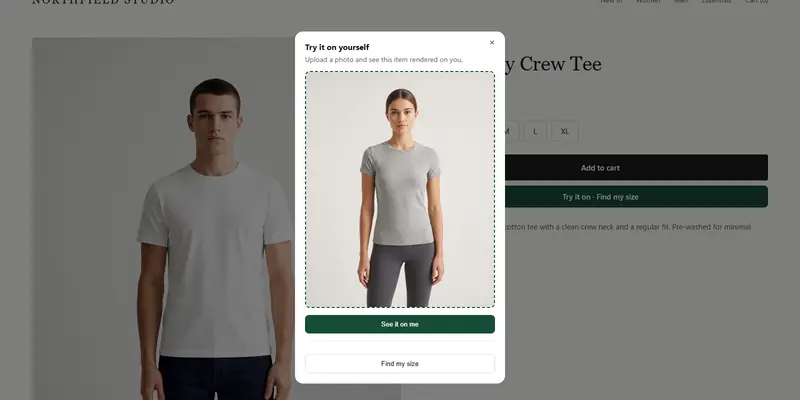
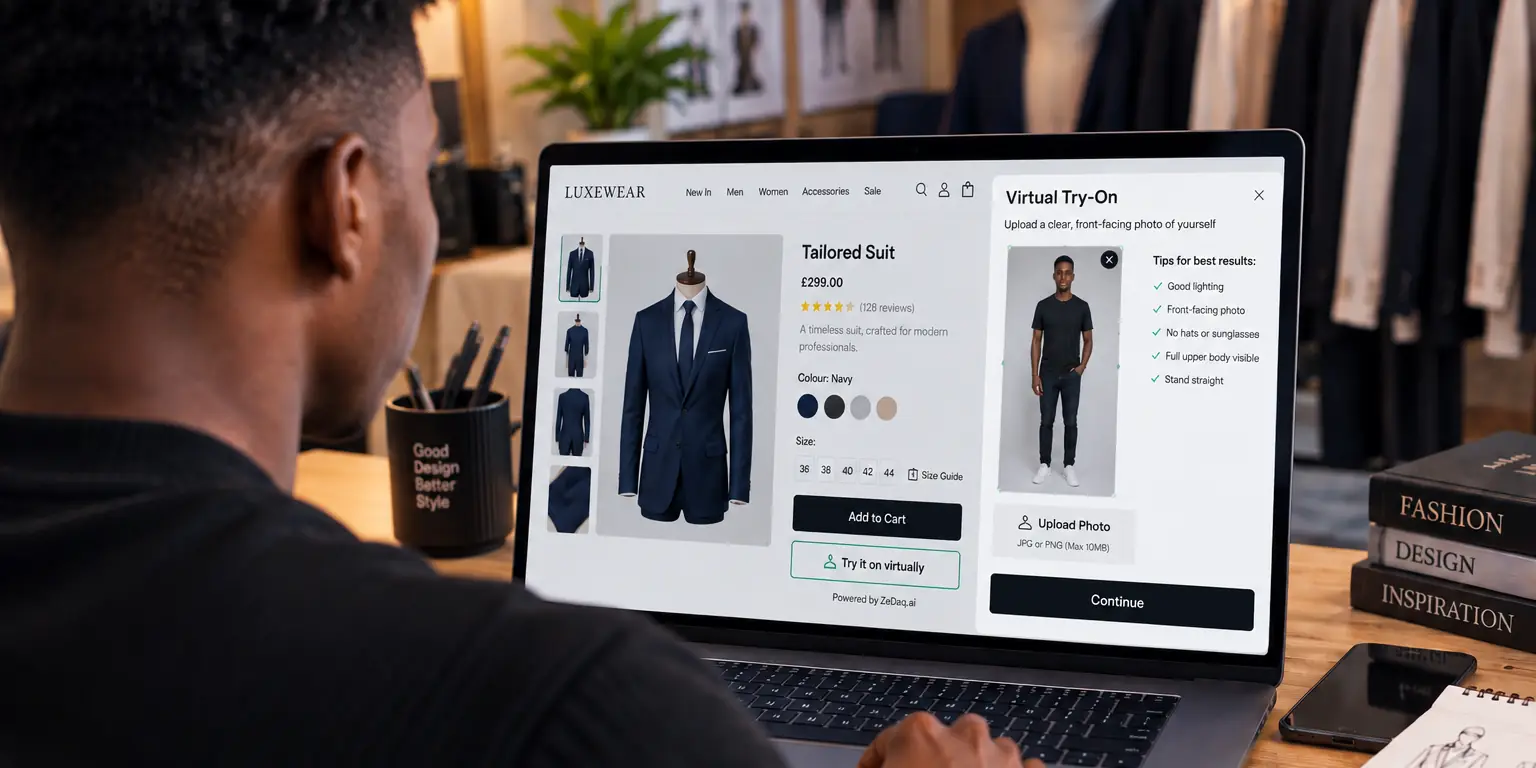
ZeDaq.ai's try-on lets a shopper upload one photo and see the store's real garment on their body. That is a preview of the look, built from your garment image.
Test a flowing garment on your own photo
Try it on yourself
Live renderUpload a photo, pick a piece, see it rendered on you.
Pick something to try on
What can't it show reliably?
Be honest with yourself and your shoppers. A single generated image generally cannot prove:
- How the fabric moves when someone walks or turns.
- How it feels against the skin.
- How it behaves in other poses, such as sitting or raising an arm.
- How a sheer fabric looks in different light.
- How the weight pulls on the garment, which affects the fall.
The result also depends on your product photo. If the photo shows a garment pressed flat, the model has little to say about how it would hang. Our article on how accurate AI try-on is discusses the limits in more depth.
Which garments are hardest?
Garments where drape is the main selling point need the most care:
- Silk and satin dresses and skirts
- Wrap and bias-cut pieces
- Wide-leg trousers and gathered skirts
- Capes, kaftans and flowing robes
- Soft knits that change shape on the body
For textured knits, the guide to knitwear try-on and chunky textures lists what to check.
How do you show drape without relying on try-on?
Use more than one kind of evidence. Shoppers trust a page that answers the question from several angles.
- Add a short video of the garment moving, such as a model turning or walking.
- Shoot photos in motion, with natural folds and a gentle breeze if you can.
- Describe the fabric in plain words, such as "fluid", "crisp" or "heavy".
- State the fiber content and weight from the label.
- Show the garment on different body types and say what size each person wears.
- Give a fit note, for example "falls loosely from the waist".
A table can make this easy to scan:
| Drape word | What it tells the shopper |
|---|---|
| Fluid | Hangs softly and moves with the body |
| Crisp | Holds its own shape and stands away from the body |
| Structured | Has built-in shaping, such as a lining or interfacing |
| Clingy | Follows the body closely |
| Heavy | Hangs straight and feels substantial |
Use the words that really match your garment, and check them against a sample.
How does sizing connect to drape?
Drape and fit work together. A fluid dress in the wrong size can look clingy in one place and baggy in another. A stiff jacket in the wrong size may not close properly.
ZeDaq.ai offers a size recommendation from a 30-second body scan, one photo plus height. It matches the measurements to your own size chart and recommends your labels, going up to the largest relevant measurement. Write your chart in body measurements and add a fit note about the drape.
How should you test try-on on a flowing garment?
Run a small test before you promote try-on on drapey products:
- Pick two flowing garments and one structured garment.
- Run each on the same clear, full-length photo.
- Compare the result with how the real garment looks on a person.
- Note what the image gets right and wrong.
- Decide where to rely on the preview and where to add video and detail.
If you run WooCommerce, see virtual try-on for WooCommerce for how to add it to your product pages.
Test your own flowing garments
FAQs
Can AI simulate cloth movement?
A still try-on image does not show movement. For motion, use a video of the real garment.
Does a better product photo improve how drape looks?
It can help. A clear photo that shows the garment hanging naturally gives the preview more to work from.
Should I avoid try-on for silk or satin?
Not necessarily. Test your own products and decide. Pair the image with a video and a clear description.
Does drape affect the size recommendation?
The size recommendation uses body measurements and your size chart, not the try-on image. Add a fit note to explain how the fabric falls.
Try ZeDaq.ai free
Virtual try-on and Find my size for your store, plus client, order and invoicing tools for tailors, in one subscription.