Assigning Orders to Staff: Who Is Sewing What?
By the ZeDaq.ai team · · 4 min read
On this page
To assign orders to tailoring staff, give every order one named owner, one stage and one due date, and keep all three where the whole shop can see them. When anyone can answer "who is sewing what?" in ten seconds, fewer orders get lost, doubled or finished late.
This guide is for shop owners and designers with two or more people cutting and sewing. If you manage orders, clients and deliveries in one place, such as the ZeDaq.ai tools for tailors, the same method applies. It also works on paper.
Why do orders go missing in a busy shop?
Most mix-ups come from the same few gaps:
- Two people think the other is handling it. Nobody starts the order.
- Two people start the same order. Cloth is cut twice.
- The order is "with someone" but nobody knows who. The client calls and no one has an answer.
- A deadline lives in one person's head. That person is absent on the day it matters.
All four disappear when each order has one owner and the information is written down.
What should every order record?
Keep it short. Six fields cover most shops:
| Field | Example |
|---|---|
| Client | Name and contact |
| Garment | Two-piece agbada, A-line dress, suit jacket |
| Owner | The person responsible right now |
| Stage | Measured, cut, sewn, fitted, finished, delivered |
| Due date | The promised delivery or fitting day |
| Notes | Fabric details, changes, special requests |
The example garments are only illustrations. Use your own list of stages, because a suit and a dress do not follow the same path.
How do you decide who gets which order?
Use a few simple rules, in this order.
- Skill first. Give bridal work and tailoring to the person who does it best, not to whoever is free.
- Deadline second. Orders due soonest are assigned before orders due later.
- Load third. Check how much each person already holds before adding another.
- Continuity last. Where possible, keep a repeat client with the same maker, since they know the client's fit.
Write the rules on the wall. Staff accept assignments more easily when the logic is visible.
What is a good way to show who is sewing what?
A visible board beats a private spreadsheet. You have three options.
A whiteboard or wall board
Make a column for each stage and a card for each order, with the owner's name on it. Move the card as work moves. It costs almost nothing and works on day one.
A shared sheet
Use a spreadsheet with the six fields above and filter by owner. It is fine for a small team, but it relies on people updating it. The article on ZeDaq.ai versus Excel for tailors compares the two approaches in more detail.
Order software with a calendar
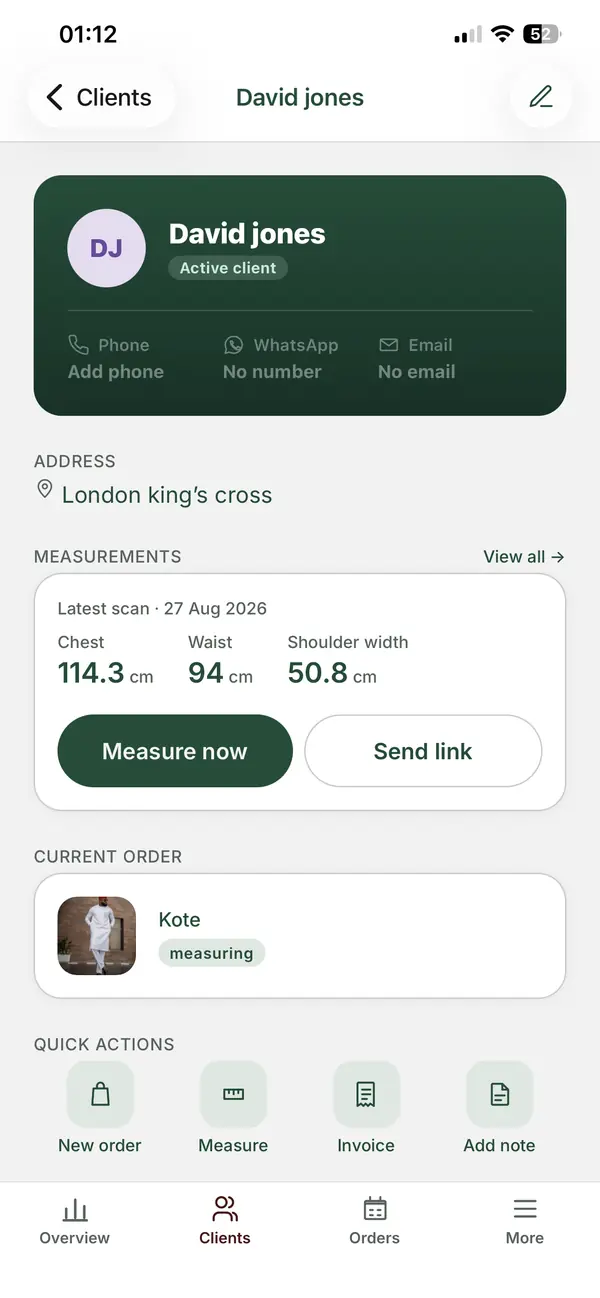
Tailor tools list orders, clients and a delivery calendar in one place. ZeDaq.ai offers a client CRM, an orders view and a delivery calendar, plus invoicing. Use the owner and notes on each order in whatever way your team agrees on.
How do you hand work from one person to another?
Handoffs are where orders slip. Make them explicit.
- The first person marks their stage as done.
- They name the next owner on the order.
- They tell the next owner directly, and note any open questions.
- The next owner confirms they have the cloth and the measurements.
If the handoff is not confirmed, the order stays with the first owner. That rule alone prevents most "I thought you had it" mix-ups.
How do you handle absences and rush jobs?
Plan for the day someone is out. Each morning, look at the board for orders owned by absent staff and reassign them before work starts.
For rush jobs, decide the trade first. If a rush order goes in, which order moves back? Tell that client the new date at once, instead of letting them find out.
How often should you review the board?
A short weekly meeting is enough for a small shop.
- Walk through orders by due date, soonest first.
- Ask each owner if the date is safe.
- Move any order at risk to someone with room, or call the client early.
- Note delays and their cause, such as late fabric or a change request.
Over time, those notes show whether the problem is capacity, skills or planning. For related people matters, see managing staff in a tailoring shop. If bulk orders are straining your team, discounts for bulk tailoring orders helps you price them so the extra load is worth it.
Keep clients, orders and deliveries in one place
FAQs
Should each order have only one owner?
Yes. Several people can work on it, but one person should be responsible for the result and the date. That is who the client and the owner should ask.
Can I assign by garment type instead of by order?
You can, for example one person for trousers and another for jackets. Still record a named owner on each order, because garment types alone don't tell you who has it today.
What if staff don't update the board?
Make the board the only place orders are discussed. If it isn't on the board, it isn't assigned. Update it during the same short check each morning.
Do I need software for this?
No. A wall board and a shared sheet are enough for many small shops. Software helps once the number of orders, clients and currencies grows beyond what you can track by eye.
Try ZeDaq.ai free
Virtual try-on and Find my size for your store, plus client, order and invoicing tools for tailors, in one subscription.