Accepting Payments as a Tailor in Nigeria
By the ZeDaq.ai team · · 4 min read
On this page
- What payment methods can a tailor use in Nigeria?
- How do you set up deposits and balances?
- How do you invoice a client properly?
- How do you take payment from clients abroad?
- What records should you keep?
- What is a worked example of a deposit and balance?
- How do you keep client data safe?
- What should you avoid?
Tailors in Nigeria can accept payments by bank transfer, by an online payment link, or at a POS terminal, and the most reliable approach is to combine one method with a written invoice. Take a deposit when you accept the order, and the balance before you hand over the garment.
If you want one place for clients, measurements, orders and invoices, see the ZeDaq tailor tools. This guide focuses on how to collect money cleanly, whichever method you choose.
What payment methods can a tailor use in Nigeria?
Three methods cover most workshops:
- Bank transfer. The client sends money to your business account. It needs no extra equipment, but you must confirm each payment.
- Payment links and online checkout. A provider such as Paystack lets you send a link that the client pays from their phone. We could not load Paystack's pages when writing this, so check its site for current features, fees and sign-up requirements. Checked November 2026.
- POS terminal. Useful for walk-in clients who pay in person. Fees and terms depend on the provider, so compare before you sign up.
Cash still happens. If you accept it, write a receipt every time.
How do you set up deposits and balances?
A simple structure protects you from losing fabric money on an order that is abandoned.
- Agree the full price in writing before you cut.
- Ask for a deposit that covers your materials at least.
- State the date the balance is due.
- Collect the balance before the client takes the garment.
- Send a receipt for each payment.
Put your terms on the invoice: deposit amount, due dates and what happens if the client changes the order. The article on lost measurements and missed deposits explains why chat-only orders go wrong.
How do you confirm a bank transfer?
Check your own banking app, not a screenshot from the client. Screenshots are easy to fake. Match the amount and the name, then mark the invoice paid.
How do you invoice a client properly?
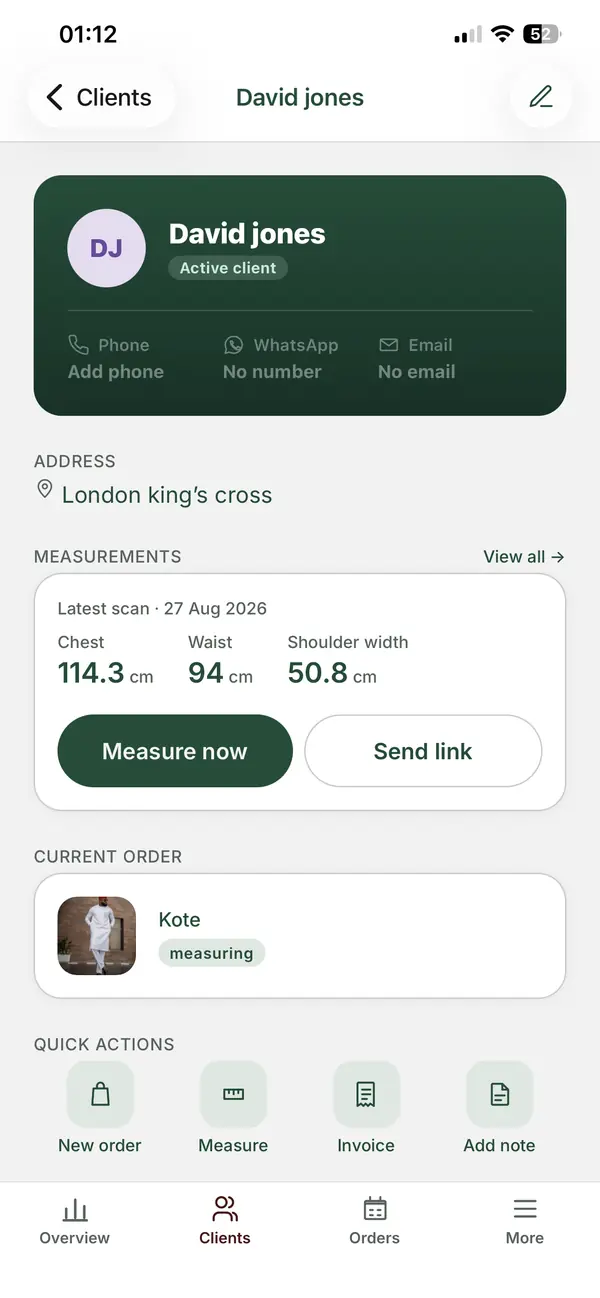
An invoice should show your business name, the client's name, a description of each garment, the total, what has been paid, the balance and the due date. Number your invoices so you can find them later.
ZeDaq.ai's tailor tools include invoicing in multiple currencies, including NGN, GBP and USD, plus a client CRM, orders and a delivery calendar. The ZeDaq Business mobile app for iOS and Android is built for tailors and designers.
How do you take payment from clients abroad?
Clients in the diaspora may prefer to pay in dollars or pounds. Agree the currency before you start and put it on the invoice. The guide to accepting USD payments from Nigeria goes through the options.
You can also compare how tailors in other countries collect money, for example in Ghana and in the UK.
What records should you keep?
Keep a record of each order: client, measurements, price, deposit, balance and delivery date. A spreadsheet works to begin with; an app is easier once you have many clients.
For tax and business registration questions, use official Nigerian sources such as the Corporate Affairs Commission and the Nigeria Revenue Service. This is general information, not legal or tax advice.
What is a worked example of a deposit and balance?
Here is an example with made-up numbers, to show the method. Say you agree to sew an outfit for a client.
- You write down the full price and the delivery date.
- The client pays a deposit when the order is accepted. You confirm it in your banking app and send a receipt.
- You cut and sew, and update the client on progress.
- When the outfit is ready, you send a message with the balance due.
- The client pays the balance. You confirm it, mark the invoice paid and hand over the garment.
Each step leaves a record. If a question comes up later, you can show what was agreed and what was paid.
How do you handle clients who pay late?
Send a polite reminder on the due date, with the invoice attached. Keep the garment until the balance is paid, as agreed in your terms. Put the late-payment rule on the invoice from the start so it is never a surprise.
How do you keep client data safe?
Client measurements and payment details are personal data. Keep them in one place with a password, not scattered across chat apps. The article on customer data and body measurements under the Nigeria Data Protection Act gives background.
What should you avoid?
- Starting work without a deposit.
- Mixing personal and business accounts.
- Accepting payment without a receipt.
- Releasing a garment before the balance clears.
- Agreeing a price in chat and never writing it down.
Manage clients, orders and invoices in one place
FAQs
Should I ask for a deposit?
Yes. A deposit that covers your materials protects you if an order is cancelled.
Can I send invoices in naira and dollars?
ZeDaq.ai invoicing supports multiple currencies, including NGN, GBP and USD.
Is a payment link better than a bank transfer?
It depends on your clients. Links are convenient for remote clients, while transfers are simple and need no extra account. Compare costs before choosing.
Does ZeDaq.ai process my payments?
We don't claim that. ZeDaq.ai provides invoicing and order tools; check the product for what it supports.
Try ZeDaq.ai free
Virtual try-on and Find my size for your store, plus client, order and invoicing tools for tailors, in one subscription.