Accepting Payments as a Tailor in Kenya
By the ZeDaq.ai team · · 4 min read
On this page
- What payment methods can a tailor accept in Kenya?
- Why use a business till instead of a personal number?
- How do you take deposits on made-to-measure orders?
- How do you match M-Pesa payments to orders?
- What should a payment record look like?
- What if a client lives abroad?
- What should you tell clients before they pay?
- How does this compare with other countries?
Most Kenyan tailors accept payments through M-Pesa, using a business till, and keep cash and bank transfer as backups. Take a deposit when you agree the order, then ask for the balance before the client collects the garment.
This guide is for tailors and designers. It focuses on how to run payments day to day, because fees and sign-up rules change. For the current M-Pesa business details, always read Safaricom's M-PESA Buy Goods page. If you want clients, orders and invoices together, see the tailor tools from ZeDaq.ai.
What payment methods can a tailor accept in Kenya?
Common options are:
- M-Pesa to a business till. Safaricom lists a Buy Goods service for businesses.
- M-Pesa to a personal number. Some small sellers do this, though it mixes business and personal money.
- Cash. Still common for walk-in alterations.
- Bank transfer. Useful for large orders or clients abroad.
We could not load Safaricom's page content when writing this guide, so we do not quote its fees or requirements here. Confirm them on the Safaricom page above before you apply.
Why use a business till instead of a personal number?
A till keeps business money apart from your personal money. That makes it easier to see what you earned each month.
It also looks more professional. Clients can pay from their phone and you receive a confirmation message for each payment.
Check Safaricom's page for how to apply and what documents they ask for. Do not rely on third-party blogs for fees, since they often disagree.
How do you take deposits on made-to-measure orders?
A deposit covers fabric and shows the client is serious. Follow this routine:
- Agree the style, fabric, price and pickup date.
- Write the details down and share them with the client.
- Ask for the deposit by M-Pesa before you cut.
- Save the M-Pesa confirmation message with the order.
- Ask for the balance when the garment is finished.
Say clearly whether the deposit is refundable. Put it in writing so there is no argument later.
How do you match M-Pesa payments to orders?
Mobile money messages pile up fast. Without a system, you lose track of who paid what.
Try this:
- Ask the client to put their name or order number in any note field, if one is offered.
- Record each payment against the order the same day.
- Keep a simple list of unpaid balances.
- Send a polite reminder when a balance is late.
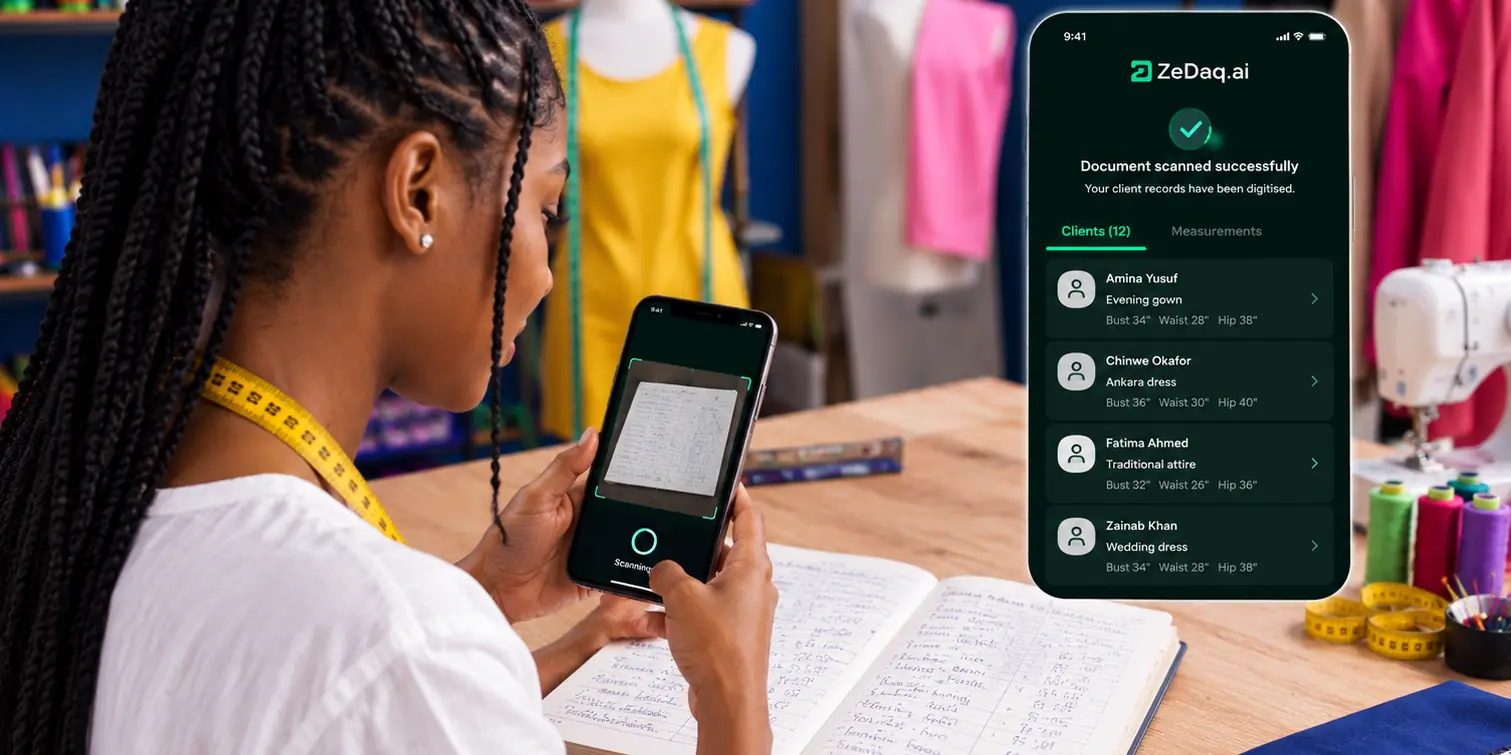
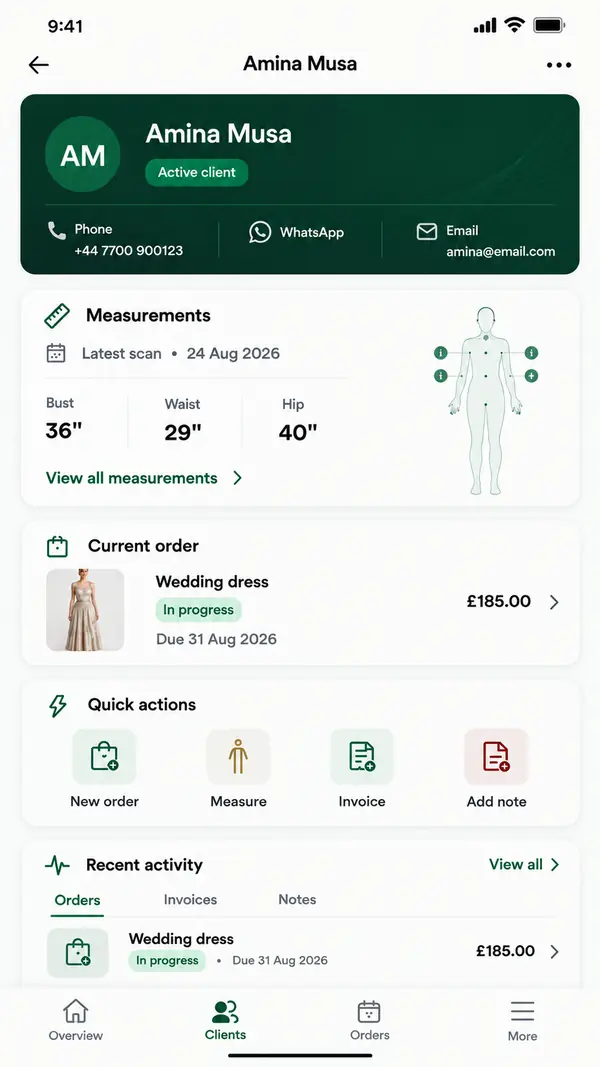
Invoices help here. ZeDaq.ai includes invoicing in multiple currencies, including NGN, GBP and USD, with a client CRM, measurements through a link the client opens on their phone, and an orders and delivery calendar. It does not replace your till or bank.
What should a payment record look like?
A simple record keeps you honest and helps at tax time. For each order, note these fields:
| Field | Example |
|---|---|
| Client name | Amina W. |
| Order | Two-piece suit, navy |
| Total agreed | Written in your invoice |
| Deposit received | Date and M-Pesa message reference |
| Balance due | Total minus deposit |
| Balance paid | Date and method |
Keep the M-Pesa confirmation message with the order, or save it in your phone's notes. Back it up weekly.
What if a client lives abroad?
Clients in the diaspora may want to pay in dollars or pounds. Agree the currency in writing before you start. For a related case, read accepting USD payments from Nigeria.
Bank transfer is often the simplest cross-border route, but check costs with your bank first. Do not quote exchange rates you have not verified.
What should you tell clients before they pay?
Clients pay more confidently when they know the rules. Tell them in advance:
- Which payment method you accept, and the number or till to use.
- How much the deposit is, and when the balance is due.
- How long you keep finished garments.
- That you will send a written invoice and a receipt.
Say it in person and put it in a message they can keep.
How does this compare with other countries?
Mobile money is central in several African markets, though the services differ. See how tailors handle payments in Nigeria and how the US setup differs, where cards and bank apps lead.
Track orders, balances and invoices in one place
This is general information, not legal or tax advice. For business registration and tax, use official sources such as the Kenya Revenue Authority.
FAQs
Do I need a till number to take M-Pesa?
Check Safaricom's page for what applies to your business. A till keeps business payments separate from personal money, so many tailors prefer one.
How do I confirm a client has really paid?
Check the M-Pesa confirmation message and your till or account record before you hand over the garment. Do not rely on a screenshot alone.
Should I ask for a deposit on alterations?
For small alterations, many tailors take payment at pickup. For made-to-measure work, take a deposit before you cut fabric.
What if a client disputes the balance?
Show the written order, the invoice and the saved payment messages. A clear record settles most disagreements quickly.
Can I send invoices to clients?
Yes. A written invoice shows the price, deposit paid and balance due. It helps both sides stay clear.
Try ZeDaq.ai free
Virtual try-on and Find my size for your store, plus client, order and invoicing tools for tailors, in one subscription.

