Which Measurements Does a Dressmaker Need for a Dress?
By the ZeDaq.ai team · · 4 min read
On this page
- What are the main body measurements for a dress?
- Which vertical measurements decide how the dress sits?
- What extra measurements do sleeves, necklines and fitted bodices need?
- Do bridal and evening gowns need more?
- What order should you take the measurements in?
- How do you avoid common measuring mistakes?
- What should you ask the client before you measure?
- How should you record and reuse the measurements?
A dressmaker needs bust, waist and hip measurements, plus shoulder width, back length, dress length and, for sleeves, arm measurements. Style adds a few more, such as bust point to bust point for a fitted bodice.
This guide is for dressmakers and designers who want one checklist for every client. If you manage fittings and orders for many clients, the ZeDaq.ai tailor tools keep each client's measurements with their orders.
What are the main body measurements for a dress?
Take these over close-fitting clothing, with the client standing relaxed.
- Bust. Measure around the fullest part of the chest, with the tape level across the back.
- Waist. Measure around the natural waist, the narrowest part of the torso.
- Hips. Measure around the fullest part of the seat, below the waist.
- Shoulder width. Measure from the edge of one shoulder to the other across the back.
Record the body number, not the number plus ease. Add ease when you draft the pattern.
Which vertical measurements decide how the dress sits?
Vertical measurements keep the waist seam, bust shape and hem in the right places.
- Nape to waist. Measure from the bump at the base of the neck down to the natural waist.
- Shoulder to bust point. This places darts and bust shaping.
- Waist to hip. This helps a fitted dress stay smooth over the hips.
- Waist to hem. This sets skirt length. Ask the client which shoes they will wear.
- Full length. Measure from the shoulder to the hem, standing in the planned shoes.
What extra measurements do sleeves, necklines and fitted bodices need?
Add these only when the design calls for them.
| Design feature | Extra measurements |
|---|---|
| Sleeves | Sleeve length, upper arm, wrist |
| Fitted bodice | Bust point to bust point, underbust |
| Strapless or low back | Underbust, back width |
| Wide or boat neckline | Neckline width and depth |
| Full or long skirt | Hem circumference preference, train length |
This is a working checklist, not a standard. Fit the list to the dresses you make.
Do bridal and evening gowns need more?
Usually yes. Gowns are less forgiving, and a client's shape under a corset or shapewear can differ from their everyday shape.
Take the measurements in the undergarments they will wear on the day. The guide on how to measure for a wedding dress covers bridal specifics.
To cost the extra fittings, see pricing a wedding dress as a dressmaker.
What order should you take the measurements in?
A fixed order helps you avoid missing numbers. Many dressmakers work from the top of the body down:
- Shoulder width and neck.
- Bust and underbust.
- Waist.
- Hips.
- Vertical lengths, from nape to waist and waist to hem.
- Sleeve and arm measurements, if the design has sleeves.
Call each number out as you take it, so whoever writes it down can repeat it back. This catches slips before they reach the pattern.
How do you avoid common measuring mistakes?
- Keep the tape level. A tape that dips at the back makes the bust or hip look larger.
- Don't pull the tape tight. Snug, with one finger of room, is enough.
- Measure at the same time of day. Bodies change a little through the day.
- Ask about weight or life changes. Pregnancy, a new fitness plan or an upcoming event can shift numbers before the dress is finished.
- Check against a similar dress. Compare your numbers with a dress the client already wears and likes.
What should you ask the client before you measure?
A few questions change which numbers matter and how much ease you add:
- What is the occasion? A cocktail dress and a workwear dress need different ease.
- Which fit do you prefer? Close, regular and relaxed fits start from the same body numbers but end differently.
- Which shoes and underwear will you wear? Both change length and shape.
- When is the event? Late changes in the body are easier to catch with the date in mind.
How should you record and reuse the measurements?
Write each measurement with its name, unit and date. Add notes on posture, shoe height and underwear worn.
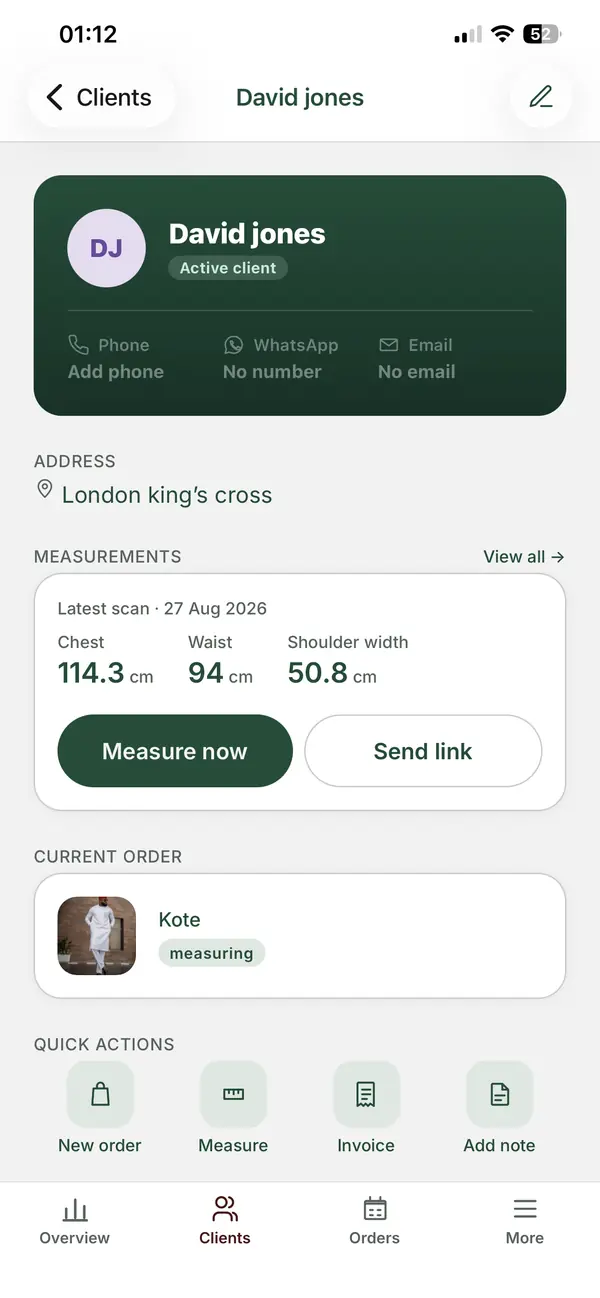
Clients can give their own measurements through a link they open on their phone, and you keep them in the client's record. The same record holds orders, a delivery calendar and invoices, and the ZeDaq Business app for iOS and Android keeps it on your phone.
If you also take a shirt order, the list in measurements a tailor needs for a shirt overlaps with the upper-body numbers here.
If you are comparing ways to run your business, see ZeDaq.ai versus WhatsApp Business.
Keep every dress client's measurements in one place
FAQs
How many measurements are needed for a dress?
A simple dress needs about six to eight. A fitted gown with sleeves and a structured bodice needs more.
Should I measure over a bra or shapewear?
Measure over the undergarments the client will wear with the dress. Otherwise the bust and waist can change at the final fitting.
What is the difference between bust and bust point measurements?
Bust is the circumference around the fullest part of the chest. Bust point to bust point is the distance between the two peaks, used to place darts.
Can clients measure themselves for a dress?
They can, with a helper and a clear guide. Check the bust, waist and length, because those are the numbers most often entered wrongly.
Try ZeDaq.ai free
Virtual try-on and Find my size for your store, plus client, order and invoicing tools for tailors, in one subscription.

