Storing Patterns for Repeat Clients
By the ZeDaq.ai team · · 4 min read
On this page
To store patterns for repeat clients, label every pattern with a client ID and date, keep it with the measurements it was cut from, and save a digital copy. Then a repeat order starts from a proven block instead of from scratch.
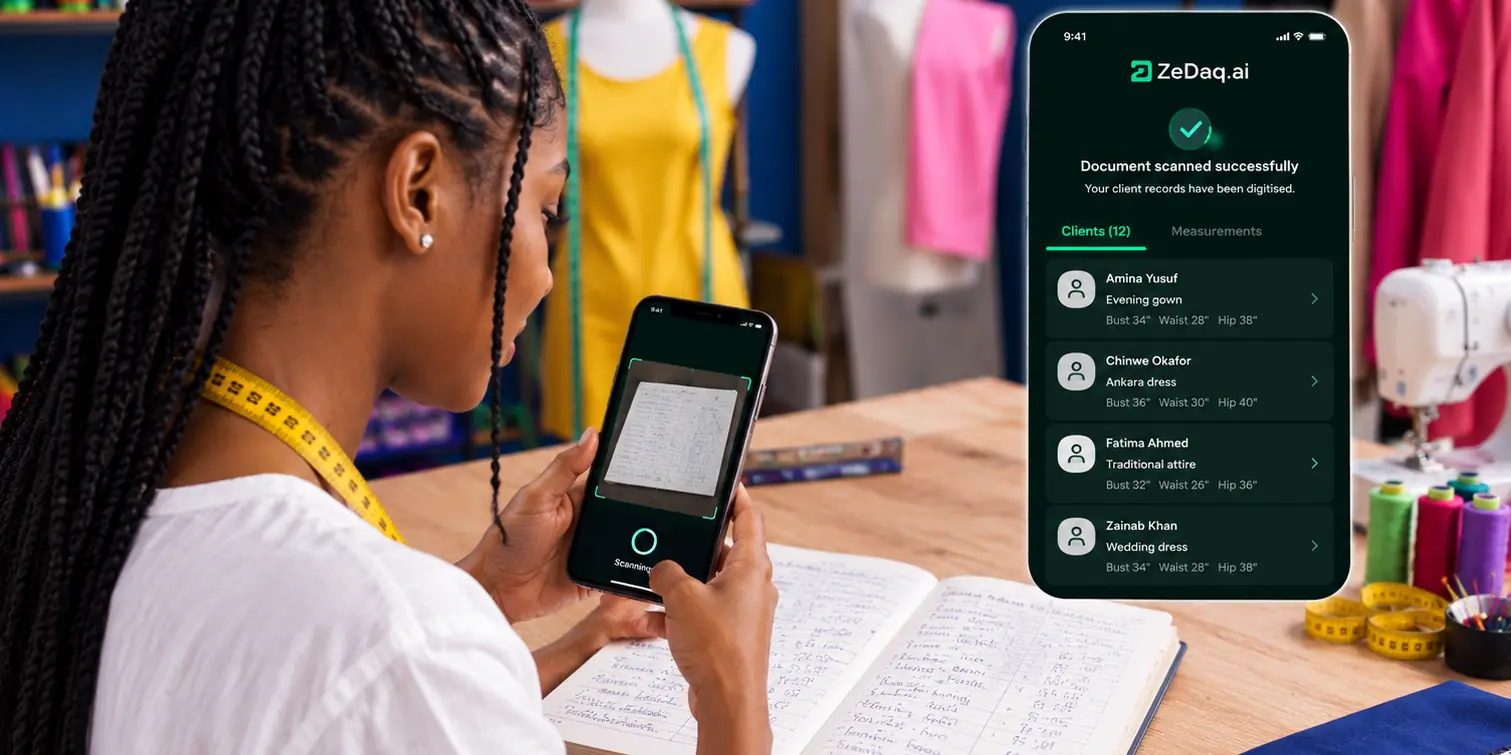
Repeat clients are worth the effort. The guide to getting repeat clients as a tailor explains why, and a good pattern archive is one of the quickest ways to make a second order faster and fit better. ZeDaq.ai's tailor tools keep client records and measurements in one place, which pairs well with the system below.
Why store patterns at all?
A pattern that fitted once will fit again if the client's body has not changed. Reusing it saves drafting time and removes guesswork.
It also gives you a record to check against. When a client says "make it like last time", you can open the exact block and the notes from that fitting.
What should you keep with each pattern?
A pattern on its own is not enough. Keep these items together:
- Client name and ID. Use a short code so labels stay readable.
- Measurements and the date taken. Bodies change, so the date matters.
- Garment type and style. Note whether it was a fitted dress, a shirt, trousers and so on.
- Fit adjustments. Write what you changed on the toile or at fittings, such as "raised armhole" or "added ease at hip".
- Fabric used. Stretch and weight change how a block behaves.
- Photos. A front, side and back photo of the finished garment on the client.
What is a block pattern, and why does it help?
A block (also called a sloper) is a basic fitted pattern made from a client's measurements, with no style details. You draft each new design from it.
Keeping a block per client means a new order only needs the style lines added. You do not redraft the fit every time. Update the block when the client's measurements change, and keep the old one marked as archived.
How do you store paper patterns?
Paper is still common in tailoring, and it works if you stay organized.
- Label clearly. Write the client ID, garment type, date and pattern piece name on every piece.
- Group the pieces. Put all pieces of one garment in a labeled envelope or folder.
- Hang or roll large pieces. Hanging patterns on hooks or rolling them in tubes avoids creases that change the dimensions.
- Use a simple index. Keep a list on paper or in a spreadsheet, so you can find any pattern by client ID.
- Protect from damp. Keep patterns away from moisture and direct sun.
How do you keep a digital copy?
A digital copy protects you if paper is lost or damaged. A phone camera is enough to start.
- Photograph each pattern piece flat with a ruler in frame.
- Name files with the same client ID and garment type.
- Back files up to cloud storage and a second location.
- Keep measurements in your client records, not just in photo captions.
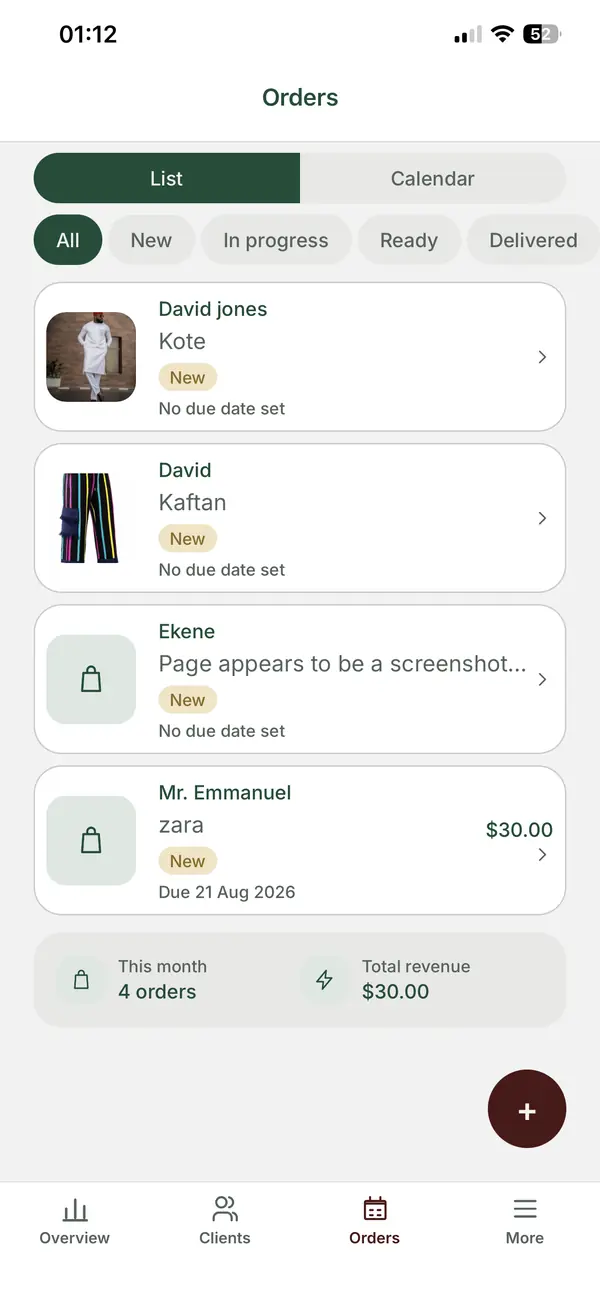
If clients send measurements through a link on their phone, those numbers go straight into their record, so you do not retype them. That is the approach in the ZeDaq.ai tailor tools: client CRM, measurements through a link the client opens on their phone, and orders with a delivery calendar.
What does a simple filing system look like?
Pick one rule for naming and never break it. A common format is the client ID, then the garment type, then the year, such as one code for a client, "shirt", and the year. Everything about that order uses the same code: the paper pieces, the photos, the measurement sheet and the invoice.
Review the archive once a year. Remove duplicates, mark clients who have moved away, and check that digital backups still open. A small yearly tidy prevents a large mess later.
How do you handle a client whose body changes?
Treat the stored pattern as a starting point. At the start of each repeat order, ask for fresh measurements and compare them with the saved set.
If the differences are small, adjust the existing block and note the change. If they are large, draft a new block and archive the old one with its date. Never overwrite the old version, because the client may return to an earlier size.
How do group orders fit in?
When you make the same style for several people, such as a wedding party, each person still needs their own record. The article on wedding and aso ebi group orders explains how to track many clients on one event.
Client-supplied fabric can also affect a pattern, since stretch and width differ. See tracking fabric delivered by clients for a simple log.
Keep clients, measurements and orders together
FAQs
How long should I keep a client's patterns?
Keep them as long as the client may reorder. Many tailors archive patterns for a few years and ask clients to confirm before discarding.
Should I keep patterns after a client stops ordering?
Archive them rather than throwing them away. A returning client is much easier to serve when you still have their last block.
Are digital photos good enough as a backup?
They are a useful backup if each photo includes a ruler and a label. For exact reproduction you still want the original paper piece or a scanned copy.
Can I reuse one client's pattern for someone else?
No. A pattern is cut from one person's measurements, so reuse it only as a rough starting point and redraft the fit.
Try ZeDaq.ai free
Virtual try-on and Find my size for your store, plus client, order and invoicing tools for tailors, in one subscription.

