Size Exchanges Without Paying Shipping Twice
By the ZeDaq.ai team · · 4 min read
On this page
- Why do size exchanges cost so much?
- How can you pay for only one shipment?
- What should your exchange policy say about shipping?
- Should you offer an exchange instead of a refund?
- What does a low-cost exchange look like in practice?
- How do you stop a second exchange?
- How can you prevent wrong-size orders in the first place?
A size exchange normally costs you shipping twice: once for the item coming back and once for the new size going out. You can cut that cost by limiting free swaps, combining the return and the new shipment into one process, and helping shoppers pick the right size before they order.
This guide is for store owners who sell clothing and want exchanges to stay affordable. The best saving comes from fewer wrong-size orders, which is the focus of AI size recommendation for fashion stores.
Why do size exchanges cost so much?
Each exchange creates two parcels. The customer sends the first size back, and you send the second size out. You also pay for handling, packaging and the time it takes to inspect the return.
If the second size is also wrong, you pay the whole cycle again. That is why the first exchange matters most.
Work out your own numbers before changing anything. Look at your carrier invoices, add packaging and labor, and see what one exchange really costs.
How can you pay for only one shipment?
There are a few ways to avoid paying twice. Pick the ones that fit your store.
Let the customer pay for the return leg
Many stores send the new size free and ask the customer to cover return postage. This is simple to explain. It also makes customers think twice before ordering several sizes.
Use one return label for each exchange
Include a single prepaid label, or generate one when the exchange is approved. Do not create a separate label for each item in an order. Check your carrier's rules for pricing, because they vary by carrier and service.
Combine exchanges for multi-item orders
If a customer needs two items swapped, ask them to send both back in one parcel. You then pay for one return, not two.
Ship the new size first
You can send the new size before the old one comes back. This speeds up the swap, but it carries risk. Our guide to advance exchanges explains when it is worth it and how to protect yourself.
What should your exchange policy say about shipping?
Be specific so staff and customers know the rules. Write down:
- Whether the first size swap is free, and what happens on a second swap
- Who pays for return postage
- Which items qualify, such as unworn pieces with tags
- How long the customer has after delivery
- What happens when the new size is sold out
A short, plain policy reduces back-and-forth. If you use Shopify, you can create the exchange from the order page, as described in the Shopify Help Center.
Should you offer an exchange instead of a refund?
Often yes, because an exchange keeps the sale. Offer the swap first, and make it easy. Nudging customers toward swaps is covered in how to encourage exchanges instead of refunds.
A store credit is another option when the right size is out of stock. It avoids the second shipment until the item is back.
What does a low-cost exchange look like in practice?
Here is a simple example. A customer orders a medium and finds it tight across the hips.
- They email you the order number and the size they want.
- You confirm the large is in stock and approve the swap in writing.
- You send one return label, with the new size sent as soon as the parcel is scanned.
- You inspect the medium, restock it, and close the exchange.
One approval, one label and one outgoing parcel keeps the process cheap and quick to explain.
How do you stop a second exchange?
A second swap costs the most. Before you send the new size, check why the first one failed.
- Ask which measurement was off, such as chest, waist or hips.
- Compare it with your size chart.
- If the customer falls between sizes, say which way the garment runs.
- Confirm the product page chart matches the label on the garment.
Keep a log of exchange reasons. When several customers say "runs small" for one product, fix the chart or add a fit note.
How can you prevent wrong-size orders in the first place?
The cheapest exchange is the one that never happens. Clear size guidance before checkout gives shoppers a better chance of picking the right size, though no tool can promise a particular result.
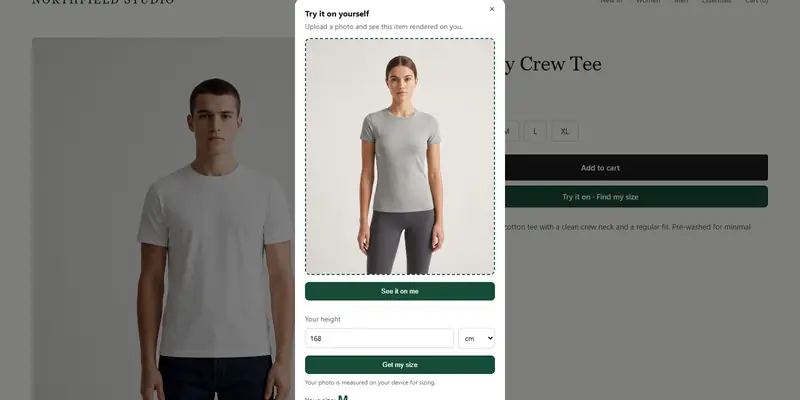
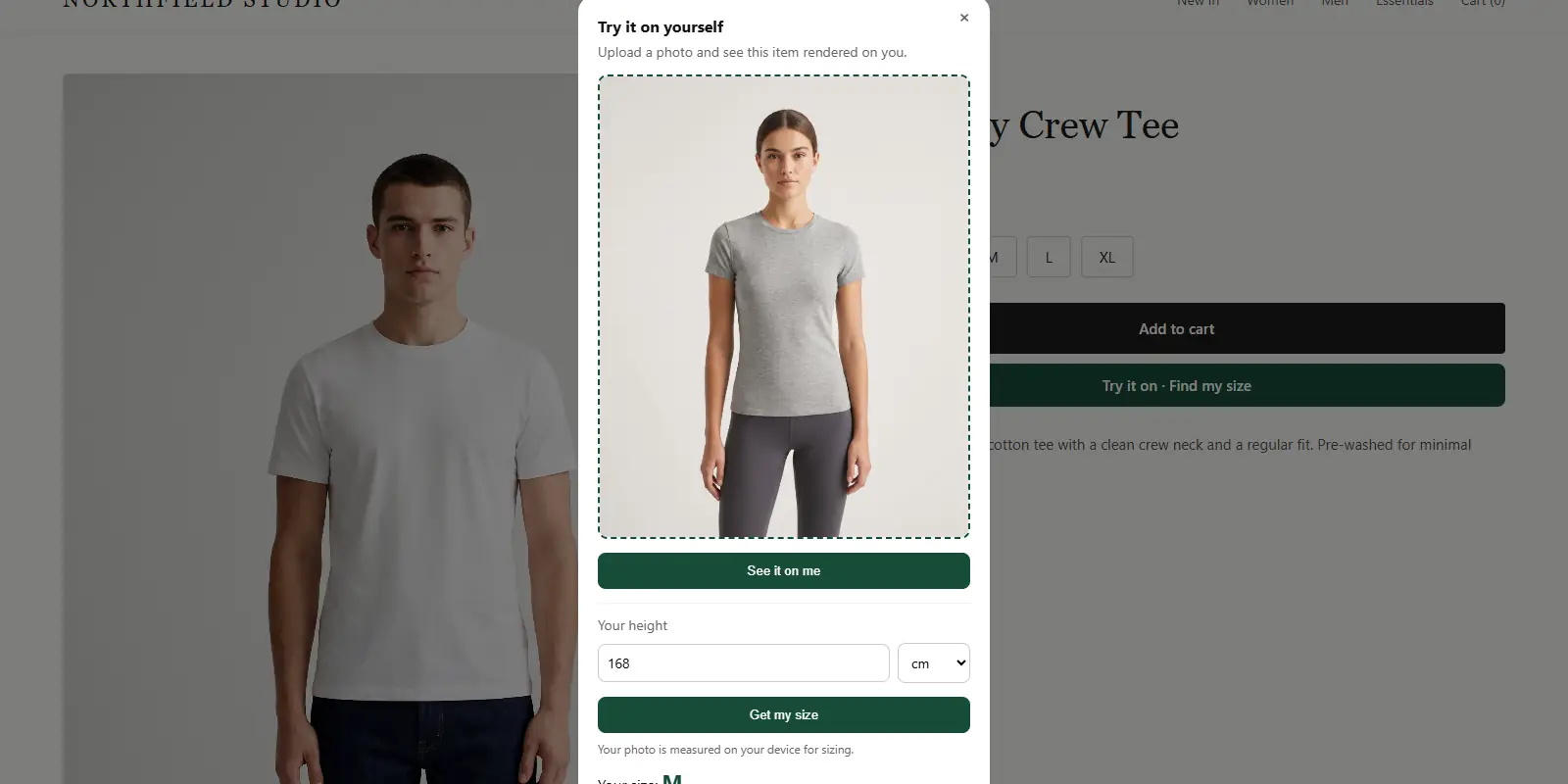
ZeDaq.ai gives a size recommendation from a 30-second body scan (one photo plus height), matched to the store's own size chart. It can also show the garment on the shopper through virtual try-on. Read how try-on helps with clothing returns in general.
The Free plan includes 3 try-ons and 3 measurements a month, enough to test it on a few products.
Help shoppers choose the right size first
FAQs
Should I charge for exchange shipping?
That is your decision. Many stores cover the new shipment and let the customer pay for return postage. Whatever you choose, state it clearly in your policy.
Is a store credit cheaper than an exchange?
It can be, when the needed size is sold out, because you avoid a second parcel for now. Make the credit easy to use, so the customer comes back.
Can customers exchange more than once?
You decide. Many stores allow one free exchange and charge for later ones, since a second swap often means the size advice was unclear.
Do I need a returns app for exchanges?
Not at first. A small store can handle exchanges by email and from the order page. Consider an app when volume makes manual work slow.
Try ZeDaq.ai free
Virtual try-on and Find my size for your store, plus client, order and invoicing tools for tailors, in one subscription.