Exchanges Instead of Refunds: How to Encourage Them
By the ZeDaq.ai team · · 4 min read
On this page
To encourage exchanges instead of refunds, make the exchange the easiest, fastest and most rewarding option in your return flow. Offer it first, remove its cost, and give a small reason to choose it, such as bonus store credit.
This guide is for fashion store owners who want to keep more sales when an item does not fit. Many returns start with a wrong size, so better sizing at the start, like AI size recommendation for fashion stores, reduces the problem at the source. This guide covers what to do when a return still happens.
Why do exchanges beat refunds for your store?
A refund ends the sale. An exchange keeps the revenue and the customer, and you only handle the product once more.
An exchange also gives you information. If shoppers keep swapping medium for large, your size chart or fit notes need work.
Not every return can become an exchange. Faulty items and wrong items should always get a refund if the customer wants one.
Which tactics make shoppers pick an exchange?
1. Show the exchange option first
In your return portal, list "Exchange for another size or color" above "Refund." People often take the first option that solves their problem.
2. Make exchanges free
If a refund costs the customer a shipping fee, and an exchange does not, many will choose the exchange. The guide to size exchanges without paying shipping twice covers ways to do this without losing money.
3. Add bonus credit
Offer a small bonus on store credit, such as "Choose store credit and get extra to spend." Keep it modest and set it against your margin, so it costs less than a lost sale.
4. Ship the new item quickly
Speed matters. A shopper who waits weeks for the replacement may ask for a refund instead. State when the exchange ships, and send tracking.
5. Suggest the right size
Do not leave the shopper to guess again. Show a size recommendation or a note such as "Customers who needed this swap usually choose the next size up." Only use statements you can back up from your own order data.
6. Keep the process short
Remove extra steps. A shopper should reach the exchange in a few taps, with their order already loaded.
7. Use clear, friendly wording
Say what happens next. For example: "Swap your size for free. We send the new one as soon as we receive your item."
What should your exchange policy say?
State these points in plain words:
- What can be exchanged and for how long.
- Whether the exchange is free and who pays shipping.
- What happens if the new size is out of stock.
- How bonus credit works, including any expiry.
- When a refund is still available, such as faulty items.
Do not hide the refund option. Where consumer law gives customers a right to a refund, you cannot remove it. Check your local consumer authority for your market. This is general information, not legal advice.
For stores that decide a refund without return is cheaper than shipping back, read when returnless refunds make sense.
How do you protect your margin?
Offer incentives only where they pay off. Free exchange shipping on a low-margin item can cost more than the sale earns.
Use this simple check before launch:
- Estimate the cost of one exchange, including both shipping legs and handling.
- Compare it with the profit on the original sale.
- Set a rule, such as free exchanges on all items, or only above a certain order value.
- Review monthly and adjust.
What does the exchange flow look like for the shopper?
A smooth flow has five steps, and each one should take seconds.
- The shopper opens the return page and enters their order number.
- They choose the item and the reason, such as "too small."
- The page offers an exchange first, with a suggested size.
- They confirm and print or receive a prepaid label.
- You ship the new item when the parcel is scanned, or on receipt.
Shipping on scan, rather than on receipt, is faster. It also carries risk, so only use it for customers or orders you trust. The reasoning behind that trade-off is in the guide to return fraud in fashion.
How can you cut the need for exchanges?
The best exchange is the one you never process. Fix the cause of wrong-size orders:
- Write a clear size chart with body measurements.
- Add fit notes such as "runs small."
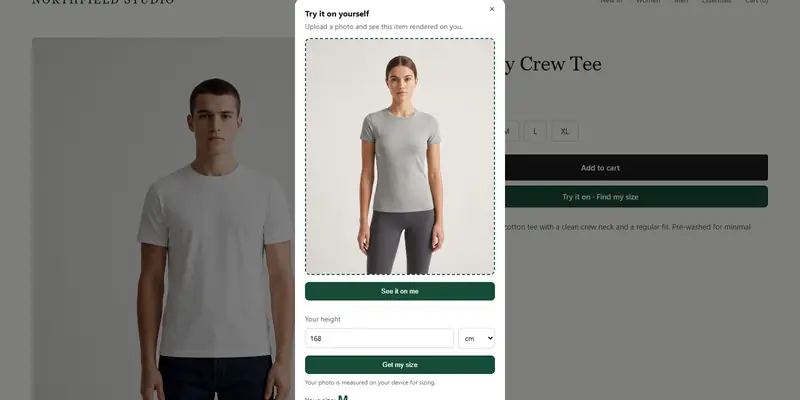
- Offer size help on the product page.
- Show the garment on different bodies.
For the wider story on fit and returns, see how virtual try-on can reduce clothing returns.
Help shoppers choose the right size first
FAQs
Should I charge for exchanges?
Free exchanges are the strongest incentive, but check your margins first. Some stores offer free exchanges only on selected items.
Is bonus store credit a good idea?
It can be. Keep the bonus small, set an expiry if the law in your market allows it, and explain the terms clearly.
Can I refuse a refund and offer an exchange only?
Not always. Consumer rules vary by country, so check yours. Faulty or wrong items usually need a refund option.
How do I know if exchanges are working?
Track the share of returns that become exchanges, plus the reasons customers give. Review both every month.
Try ZeDaq.ai free
Virtual try-on and Find my size for your store, plus client, order and invoicing tools for tailors, in one subscription.