Selling African Clothing on Amazon Handmade
By the ZeDaq.ai team · · 4 min read
On this page
- Who can sell on Amazon Handmade?
- How do you apply, step by step?
- What does it cost?
- How do you list African clothing so shoppers choose the right size?
- What about made-to-measure and custom orders?
- How do you write titles and bullets that match what people search?
- Should you also have your own store?
- How do you write a maker profile that builds trust?
- What mistakes should you avoid?
You can sell African clothing on Amazon Handmade if you make, alter or design the pieces yourself, apply, and get approved as a maker. It suits workshop-made and tailor-made garments, but not resold or outsourced stock.
Amazon's rules and fees change, so this guide uses Amazon's own Handmade page, checked November 2026. If you run a wider brand, see our overview of virtual try-on for African fashion brands for how fit fits into the bigger picture.
Who can sell on Amazon Handmade?
According to Amazon's Handmade program page (checked November 2026), eligible sellers are approved makers and collaborative groups. Products must be hand-altered, hand-designed, handcrafted, repurposed or upcycled, and must fall in the available Handmade categories.
That means a tailor sewing each dress in a Lagos workshop qualifies in principle. A reseller of factory-made garments does not.
How do you apply, step by step?
Amazon lists these steps on the same Handmade page (checked November 2026):
- Register as a Professional seller, or upgrade an Individual plan.
- Submit a Handmade application describing yourself, your products and your process.
- After approval, add the Handmade Classification attribute to your listings.
- Create a maker profile that customers can see.
- To sell in other regions, open an account in each one with its own maker profile.
Write your process section like a short story: who sews, what fabric you use and where it comes from.
What does it cost?
Amazon says the Professional plan typically costs $39.99 a month, and that the ongoing monthly fee is waived for approved Handmade sellers after a one-time first-month payment. It also lists a referral fee of "15% or $0.30, whichever is greater" per unit shipped, per its Handmade page (checked November 2026).
Add the referral fee to your price calculation before you list. For pricing across currencies, see pricing African fashion for international buyers.
How do you list African clothing so shoppers choose the right size?
Amazon shoppers can't ask you to hold the garment up. Your listing has to answer the questions for you.
- Measurements, not only labels. Give chest, waist, hips and length per size.
- Fabric and care. Name the fabric, such as ankara or kente, and say whether it is lined or stretches.
- Model details. State the model's height and the size she wears.
- Photos. Show the print close up and the full outfit.
Our guide to selling African clothing in the UK has more on setting expectations for overseas buyers. Our piece on TikTok Shop for African fashion covers a video-first marketplace route.
What about made-to-measure and custom orders?
Amazon states that custom products must be fulfilled by the seller and can't use Fulfillment by Amazon, per its Handmade page (checked November 2026). Make your lead time obvious in the title and bullets.
How do you write titles and bullets that match what people search?
Use plain words a shopper would type: the garment, the fabric and the occasion, such as "women's ankara wrap dress, handmade". Put the key fit fact in the first bullet, for example the length or the stretch. Keep claims you can prove, and do not copy text from other listings.
Should you also have your own store?
Yes, if you can. A marketplace brings traffic, but the customer relationship stays with the platform. A store of your own lets you collect emails and offer sizing help.
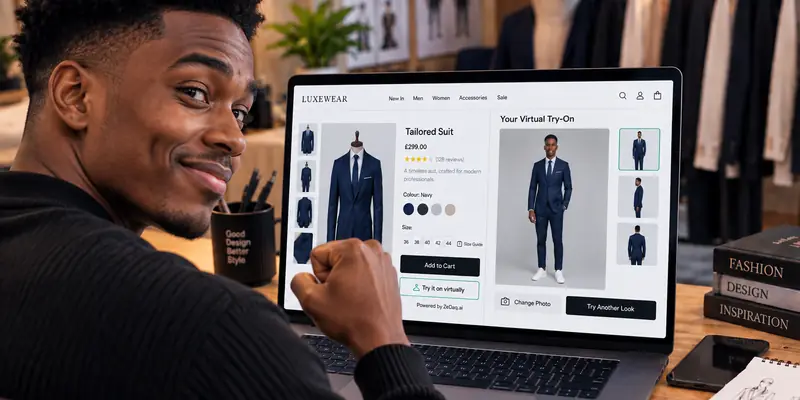
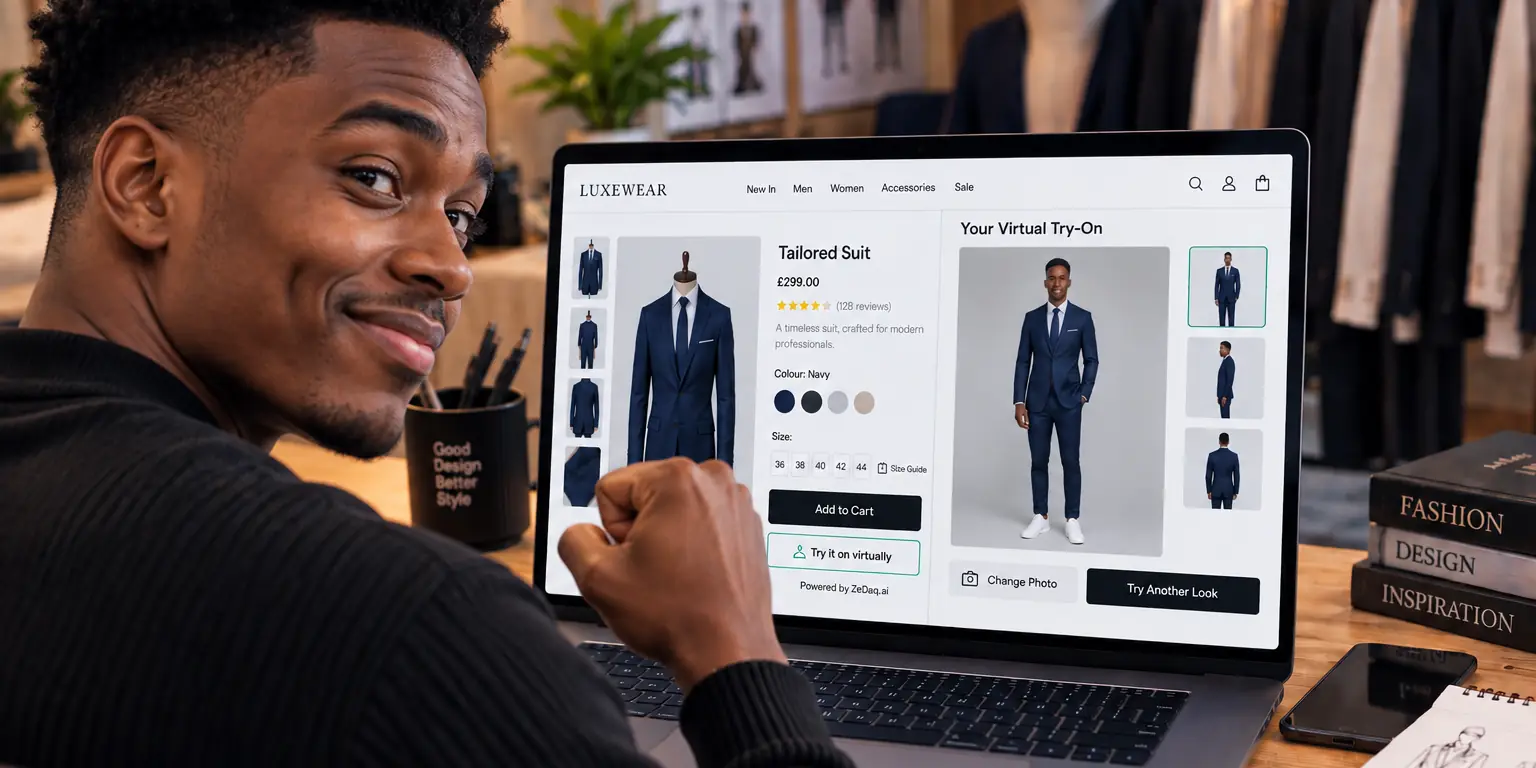
ZeDaq.ai can add "Try it on" and "Find my size" to your own store through the Shopify app or a script-tag widget. It matches a 30-second body scan to your size chart, as explained in our guide to AI size recommendation. It does not run inside Amazon.
How do you write a maker profile that builds trust?
Amazon asks you to create a maker profile that customers can see, per its Handmade page (checked November 2026). Use it to tell your story.
- Who you are. Name the tailor or designer and where the work happens.
- Your materials. Say where your fabric comes from and why you chose it.
- Your process. Describe cutting, sewing and finishing in plain words.
- Your fit approach. Explain how you create your sizes.
Real details help buyers who have never heard of your brand. They also support your application, which asks you to describe yourself, your products and your process.
What mistakes should you avoid?
- Listing outsourced or resold items. Amazon limits Handmade to makers.
- Skipping measurements. A label alone invites wrong-size orders.
- Ignoring lead times. Custom pieces take longer, so say so.
- Mixing up regions. Amazon says to open an account in each region you sell in.
- Underpricing. Include the referral fee and your time in the price.
Set up fit help on your own store
FAQs
Can I sell Ankara clothes I buy from a supplier?
Not on Handmade if you didn't make or alter them yourself. Amazon limits the program to makers and approved groups.
Is Amazon Handmade free to join?
Amazon says the storefront is free and referral fees apply when you sell, per its Handmade page (checked November 2026). Read the page for Professional plan details.
Can I ship from Nigeria?
Check Amazon's current seller registration pages for your country. We haven't verified country eligibility here.
Does ZeDaq.ai work on Amazon listings?
No. It works on your own site, not on Amazon product pages.
Try ZeDaq.ai free
Virtual try-on and Find my size for your store, plus client, order and invoicing tools for tailors, in one subscription.