ReturnGO vs Redo
By the ZeDaq.ai team · · 8 min read
On this page
- Who makes ReturnGO and Redo?
- How does pricing compare?
- What would ReturnGO cost at your volume?
- How do the return options compare?
- How do automation and integrations compare?
- Which store fits which app?
- How do you run a fair side-by-side test?
- What should you ask each vendor before you sign?
- How should a small fashion brand get started?
- Is a focused tool or a suite better for you?
- Where does fit fit into a returns strategy?
In ReturnGO vs Redo, ReturnGO suits stores that want detailed automation rules and back-office integrations on a fixed monthly plan, while Redo suits stores that want a free returns portal and may later add checkout, email or fulfillment tools from the same vendor. The two apps take very different routes to the same job, so pricing model is usually the first thing to settle.
Each detail below comes from the app's Shopify App Store listing, checked November 2026. For pre-purchase tools that sit on the product page instead, see our list of AI try-on apps for Shopify.
Who makes ReturnGO and Redo?
- ReturnGO Returns & Exchanges is listed as "Based in United Kingdom". It focuses only on returns and exchanges. Source: ReturnGO on the Shopify App Store.
- Redo is listed under Redo Tech, Inc. Returns is one of several modules, alongside checkout, email and SMS, and fulfillment. Source: Redo on the Shopify App Store.
That difference shapes everything else. ReturnGO is a specialist returns tool. Redo is a broader post-purchase suite with returns as one part.
How does pricing compare?
| ReturnGO | Redo | |
|---|---|---|
| Returns plan price | Premium $147/month; Pro $297/month | Returns plan listed as Free |
| Returns included | Premium 110/month; Pro 300/month | No limit listed |
| Extra returns | $1.25 each on Premium; $0.90 each on Pro | Not listed |
| Free trial | 14 days | Not stated |
| Other paid modules | Add-ons and integrations available | Email and SMS from $10/month; Fulfillment $99/month; Checkout priced per order |
| Source | ReturnGO listing | Redo listing |
Checked November 2026. Prices in USD.
Redo's listing also shows a Conversion plan described as "Free to install", with Checkout at "Monthly fee + $0.50/order and $0.06/upsell" and Reclaim, an AI chargeback disputes tool, at "No monthly fee + 25% of chargebacks won", per the Redo listing. These are separate from returns.
What would ReturnGO cost at your volume?
Because Redo lists its Returns plan as free, the cost question mostly applies to ReturnGO. Here is a worked example using only listed prices, before labels or add-ons.
| Monthly returns | ReturnGO Premium | ReturnGO Pro |
|---|---|---|
| 60 | $147 | $297 |
| 200 | $147 + (90 × $1.25) = $259.50 | $297 |
| 350 | $147 + (240 × $1.25) = $447 | $297 + (50 × $0.90) = $342 |
On these numbers, Premium is cheaper at lower volumes and Pro becomes cheaper at higher volumes. The switch point falls somewhere between 200 and 350 returns a month. Run your own count through the same formula.
For Redo, read the full terms behind the free plan. Its listing describes "return coverage", so check how that coverage is paid for and what it means for your shoppers at checkout.
How do the return options compare?
| Return option | ReturnGO | Redo |
|---|---|---|
| Variant (size or color) exchanges | Listed | Listed |
| Exchanges for other products | Listed, including Shop Now | Listed, with an AI exchange agent |
| Store credit | Listed | Listed |
| Gift cards | Listed | Listed |
| Gift returns | Listed | Not listed |
| Order cancellation | Listed | Not listed |
| Discount codes as resolution | Not listed | Listed |
| Replacements | Not listed | Listed |
| In-store returns | Not listed | Listed |
Checked November 2026 on the ReturnGO and Redo listings. "Not listed" means the listing didn't mention it, not that the feature is missing. Ask the vendor if one matters to you.
How do automation and integrations compare?
ReturnGO
ReturnGO's listing highlights automation rules: auto-exchange, auto-refund, auto-approval and auto-credits. Its Premium plan includes auto approval, two languages and return labels through Ship by ReturnGO. Pro adds advanced automation, packing slips, item validation, ERP integrations, auto-mark as done, unlimited languages, advanced analytics and API access. The listing also mentions integrations with shipping carriers, 3PLs, ERPs and helpdesks.
Redo
Redo's listing names apps it works with, including Shopify POS, Shopify Flow, Gorgias, Klaviyo, NetSuite and Yotpo. Its Returns plan lists variant-level returns analytics, a monthly AI returns analysis report and a "Fully customizable return flow".
What this means for you
If your warehouse or ERP needs return data in a specific format, ReturnGO Pro lists the deeper back-office features. If you already use Klaviyo, Gorgias or Shopify POS, check how Redo connects with them on its listing.
Which store fits which app?
| Your situation | Lean toward | Reason |
|---|---|---|
| Want to start with no monthly returns fee | Redo | Returns plan listed as free |
| Need ERP links or an API | ReturnGO Pro | Listed on Pro |
| Sell in several languages | ReturnGO | Premium lists two, Pro lists unlimited |
| Take returns in a physical shop | Redo | Lists in-store returns and Shopify POS |
| Want returns, email and fulfillment from one vendor | Redo | Sells each as a module |
| Want a returns-only tool with detailed rules | ReturnGO | Focused on returns and automation |
If you are also weighing Loop or AfterShip, the four-app Shopify returns comparison puts all of them in one table.
How do you run a fair side-by-side test?
Use the same three test orders in each app:
- A size swap. Exchange a medium dress for a large in the same color.
- A cross-product exchange. Swap a shirt for a pricier jacket and pay the difference.
- A refund with a reason. Return trousers as "too long" and check that the reason shows in reporting.
Time each flow on a phone. Then check the admin side: how easy is it to approve, refund and export a reason report?
Finally, write your must-haves on one line each. Score both apps against that list rather than against every feature on their listings.
What should you ask each vendor before you sign?
Listings are short by design. These questions fill the gaps that matter most for a clothing store.
Questions for ReturnGO
- How is a return with several items counted against the monthly allowance?
- Which carriers does Ship by ReturnGO support in the countries we ship to?
- Can we move from Premium to Pro mid-month, and how is the fee handled?
- Which ERP and 3PL systems are supported on Pro, by name?
Questions for Redo
- How is return coverage priced, and who pays for it, the store or the shopper?
- What happens to returns from orders placed without coverage?
- Which features of the free Returns plan have usage limits, if any?
- If we later add email or fulfillment, do they share one dashboard with returns?
Questions for both
- How long are return photos and shopper details kept?
- Can we export all return data if we leave?
- What support channels and hours come with our plan?
Ask for the answers in writing, by email or in the vendor's help center. That gives you something to point to if terms change.
How should a small fashion brand get started?
If you are a small brand with a few dozen orders a week, keep the first setup simple. Write a clear return policy first, with a window, condition rules and a list of final-sale items. Then add just one resolution beyond refunds, usually a size exchange.
Once that runs smoothly for a month, review the reasons. Add store credit or automation only where the data shows a need. A simple flow you understand beats a complex one nobody on your team can change.
Is a focused tool or a suite better for you?
This question comes up in many software decisions, not only returns. A focused tool does one job deeply. A suite covers more jobs with one login and one vendor.
Neither is right for everyone. A suite can save time if you would otherwise buy several separate apps. A focused tool can go deeper on the job you care about most. The same trade-off shows up in fit technology, as our comparison of a retail AI suite versus focused fit tools explains.
Where does fit fit into a returns strategy?
Returns apps start working once a shopper asks to send something back. For clothing, many of those requests come down to size, and a returns portal can only offer a swap.
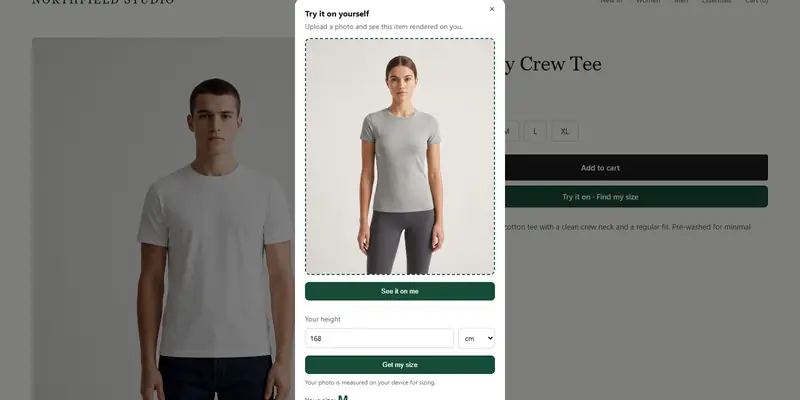
Tools on the product page help the shopper choose before ordering. A virtual fitting room on a clothing site combines two of them:
- Try-on. The shopper uploads one photo and sees your real garment on their body.
- Size recommendation. A 30-second scan, one photo plus height, matched to your own size chart.
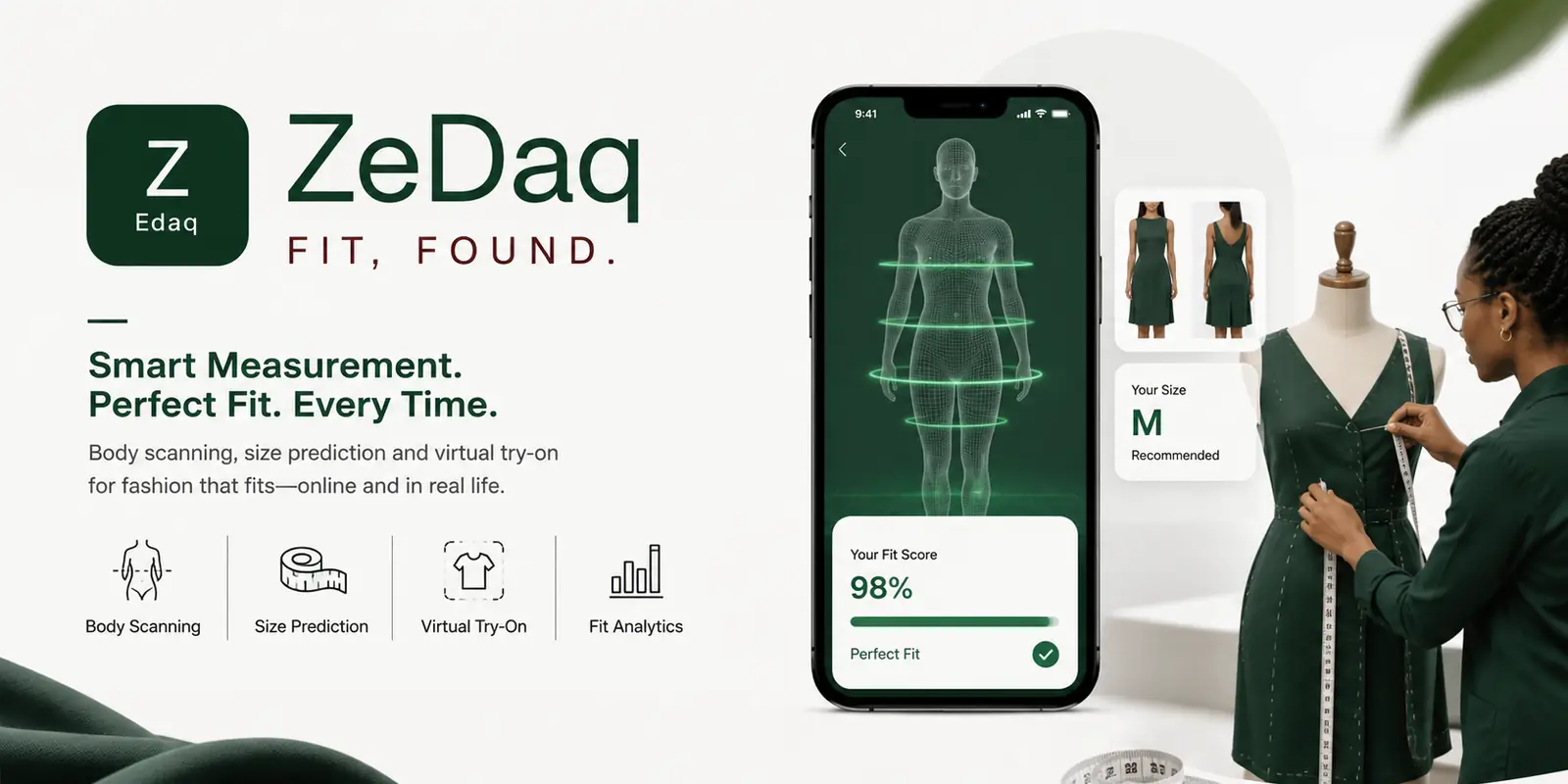
ZeDaq.ai offers both in a Shopify app that runs alongside ReturnGO or Redo. You enter your size guide in the app, one chart per garment type, and the scan recommends your own labels.
ZeDaq.ai's Free plan includes 3 try-ons and 3 measurements a month. Paid plans are Micro at $14/mo, Starter at $49/mo, Growth at $129/mo and Scale at $299/mo. Each paid plan has a 3-day free trial with no card required.
Pair your returns app with size help on the product page
FAQs
Is Redo really free for returns?
Redo's Shopify App Store listing, checked November 2026, shows its Returns plan as Free. Read the terms on the listing to see how its return coverage works and what shoppers pay.
Does ReturnGO have a free trial?
Yes. Both ReturnGO plans list a 14-day free trial on the Shopify App Store.
Can I use ReturnGO or Redo outside Shopify?
This comparison covers their Shopify apps only. Check each vendor's own website for other platforms.
Will a sizing app conflict with my returns app?
No. A sizing or try-on app runs on the product page, and a returns app runs after delivery. They handle different steps.
Try ZeDaq.ai free
Virtual try-on and Find my size for your store, plus client, order and invoicing tools for tailors, in one subscription.