Quality Control Checklist for Nigerian Clothing Production
By the ZeDaq.ai team · · 5 min read
On this page
- Why does quality control matter so much for Nigerian brands?
- When should you check garments?
- What goes on the checklist at each stage?
- How do you check measurements?
- What should the final finishing and packing check cover?
- How do you record and use quality problems?
- How can tools help with quality control?
A quality control checklist for Nigerian clothing production should cover six stages: fabric, cutting, sewing, measurements, finishing and packing. Checking each garment against the same written list before it leaves your workshop catches most problems while they are still cheap to fix.
This guide gives you a checklist to copy, plus tips on who should check and how to record problems. Quality also shapes how buyers judge fit online, which our guide to virtual try-on for African fashion brands covers from the shopper's side.
Why does quality control matter so much for Nigerian brands?
Your buyers talk. A loose button or uneven hem on one Owambe dress can turn into a complaint on Instagram. A wrong size on an order shipped to London means slow, costly returns.
A written checklist helps because:
- Every garment is checked the same way, no matter who checks it.
- New staff and apprentices learn what "finished" means in your workshop.
- Problems are caught before a dispatch rider collects the order.
- You can spot patterns, such as one style that always needs fixing.
When should you check garments?
Check at more than one point. Waiting until the end means a cutting error is found only after the garment is sewn.
| Stage | When | Who usually checks |
|---|---|---|
| Fabric check | Before cutting | Head tailor or production manager |
| Cut check | After cutting, before sewing | Pattern cutter |
| In-line check | After the first piece of each style | Head tailor |
| Final check | Before packing | Finisher or production manager |
| Packing check | Before dispatch | Whoever packs the order |
If you outsource some work, add a check when goods arrive from the outside workshop. The guide to outsourcing to tailors in Aba and Lagos explains how to set checks with partner workshops.
What goes on the checklist at each stage?
Copy these lists into a notebook, a printed sheet or a shared document. Tick each box before the garment moves on.
Fabric check
Before any cutting, check:
- The fabric matches the order: print, color and type.
- There are no holes, stains, fading or weaving faults.
- Ankara and adire are pre-washed or tested for shrinkage, if your process requires it.
- The print direction is correct for the style.
- Lining, interfacing and trims are ready and match.
Cutting check
After cutting, check:
- All pieces are cut from the right pattern size.
- Measurements on the job card match the pattern used.
- The print is placed well, especially across the front and on matching seams.
- Notches and markings are clear.
- All pieces for one garment are bundled and labeled together.
Sewing and construction check
Once the garment is sewn, check:
- Seams are straight, even and secure, with no skipped stitches.
- Thread color matches the fabric.
- Zips open and close smoothly and lie flat.
- Buttons and hooks are firmly attached and line up.
- Darts and pleats are even on both sides.
- Linings sit flat and don't pull.
- Beading, embroidery and stones are secure.
How do you check measurements?
Measure the finished garment against your size chart or the client's job card. Check the key points for each style:
- Dresses and tops: bust, waist, hip, length, shoulder and sleeve length.
- Trousers and skirts: waist, hip, inseam or length.
- Agbada and kaftans: chest, shoulder width, sleeve width and length.
Set a tolerance, the small difference you will accept, for each measurement. Write it on your checklist so every checker uses the same limit. Measure every custom piece, and check a sample of each size for ready-to-wear runs.
What should the final finishing and packing check cover?
Before the order leaves:
- Loose threads are trimmed.
- The garment is pressed with no shine marks or scorch marks.
- Brand and size labels are attached and correct.
- The garment matches the photo on the product page or the client's approved style.
- The order is folded and packed to avoid creasing.
- The packing slip and address are correct.
- Any extras, such as a matching gele or bag, are included.
How do you record and use quality problems?
Write every failed check on the job card, with the cause. Use simple categories:
- Measurement error.
- Cutting error.
- Sewing error.
- Fabric fault.
- Finishing error.
Review the list once a month. If one style keeps failing at the same point, fix the pattern or the instructions. If one tailor keeps making the same mistake, plan some training. When several tailors work on one order, tracking these notes alongside dates matters. The guide to tracking orders across several tailors shows how to keep it all in one place.
How can tools help with quality control?
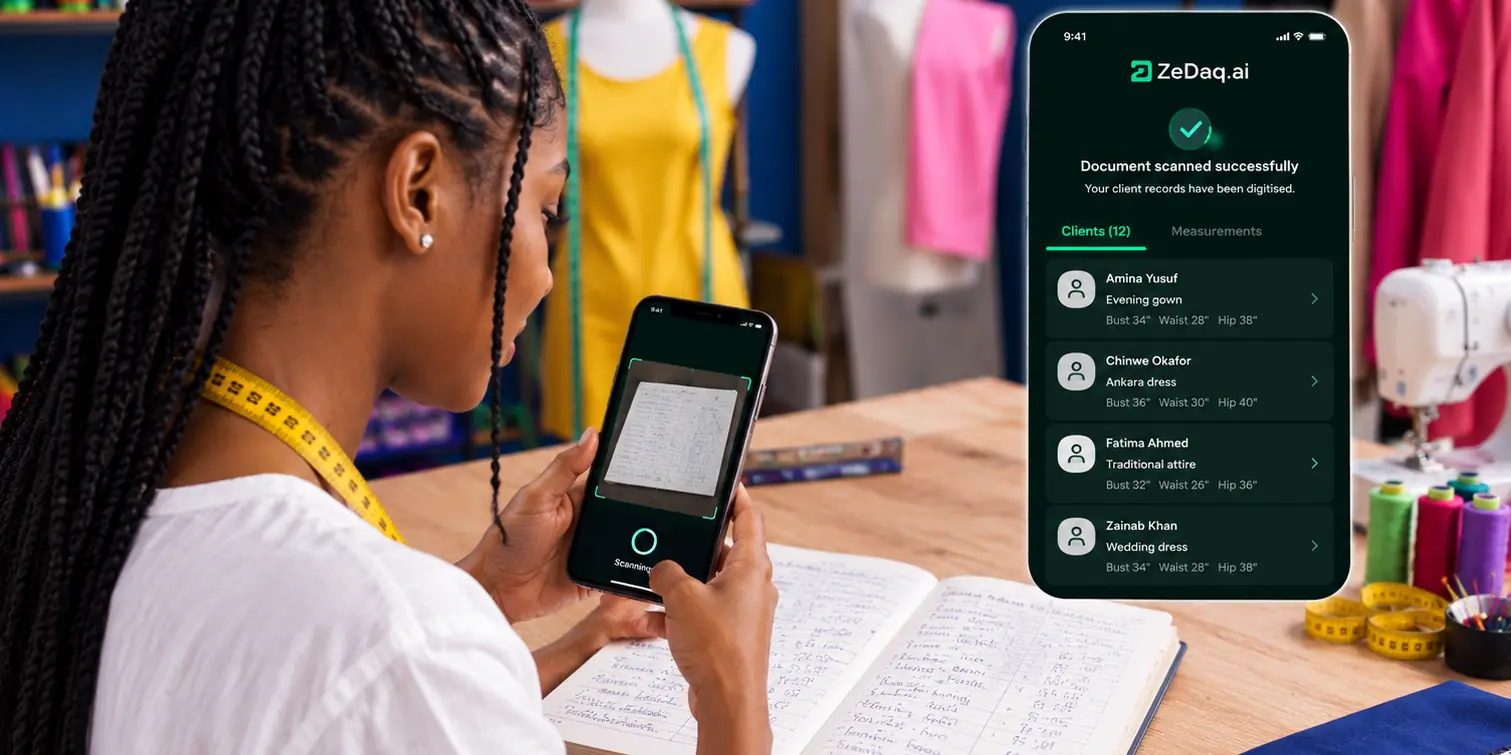
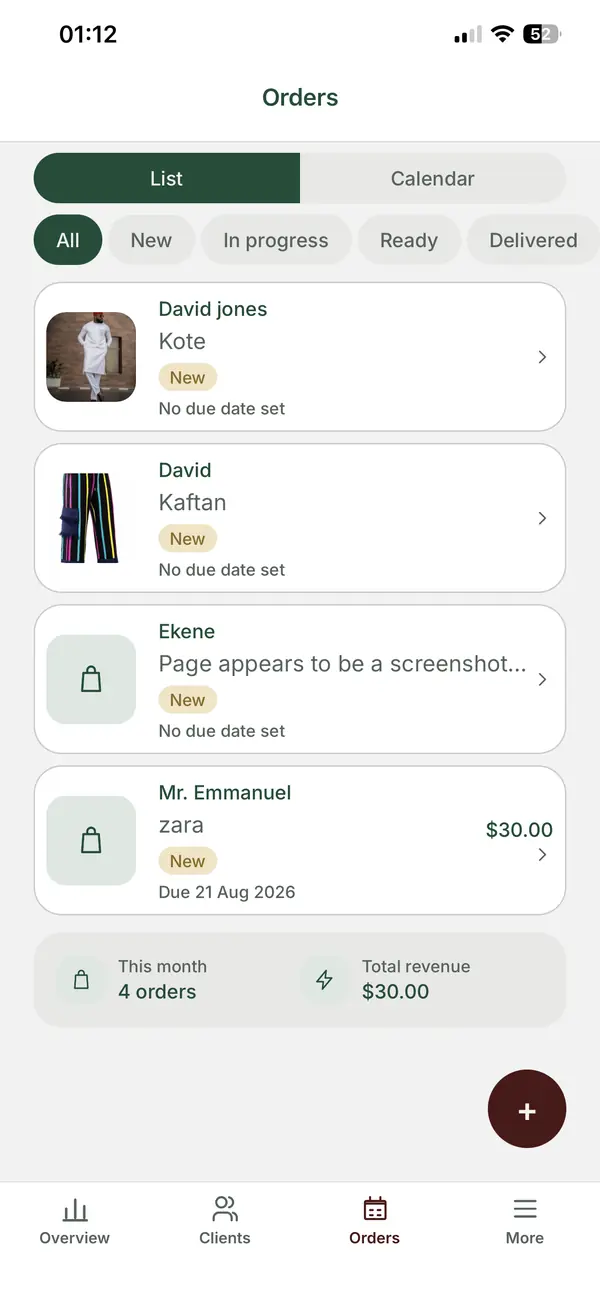
Good records make checking easier. ZeDaq.ai's tools for tailors and designers keep each client's measurements in a CRM, so the checker can compare the finished garment with the right numbers. Orders sit on a delivery calendar, so checks are scheduled before dispatch, not rushed on the day.
The tools also include measurement links clients open on their phone, invoicing in multiple currencies including NGN, GBP and USD, and the ZeDaq Business mobile app for iOS and Android. See the ZeDaq.ai tailor tools for details.
Keep measurements and orders ready for every check
FAQs
Should I check every garment or just a sample?
Check every custom piece. For larger ready-to-wear runs, check every garment for finishing and a sample of each size for measurements.
Who should do the final check?
Someone who didn't sew the garment, such as the head tailor or a finisher. A fresh pair of eyes catches more.
What is a measurement tolerance?
It is the small difference from the target measurement that you will accept. Set it in writing for each measurement point.
Can I use this checklist with outside workshops?
Yes. Share it with partner workshops before production starts, and use it again when their goods arrive.
Try ZeDaq.ai free
Virtual try-on and Find my size for your store, plus client, order and invoicing tools for tailors, in one subscription.

