Inventory Management for a Small Nigerian Fashion Brand
By the ZeDaq.ai team · · 5 min read
On this page
- What does inventory management mean for a fashion brand?
- How do you set up a simple inventory spreadsheet?
- How often should you count your stock?
- How do you track stock by size?
- How do you handle stock across Instagram, WhatsApp and a website?
- What should you do with slow-moving stock?
- How does ZeDaq.ai fit into your stock planning?
Inventory management for a small Nigerian fashion brand comes down to one sheet and one habit. The sheet lists every style by size and color with the quantity on hand, and the habit is updating it every time something is made, sold or returned. That alone stops you from selling a dress on Instagram that is no longer on your rail.
You don't need expensive software to start. A spreadsheet, clear labels and a weekly count will carry most small brands through their first busy Owambe season. When you start selling to customers you can't meet in person, it also helps to show them how pieces fit, which our guide to virtual try-on for African fashion brands explains.
What does inventory management mean for a fashion brand?
It means always knowing three things: what you have, where it is, and what is about to run out.
Fashion makes this harder than most products because one style splits into many variants. A single Ankara wrap dress in three prints and five sizes is fifteen separate items to track. If you only count "wrap dresses," you will promise a size 12 in blue that doesn't exist.
Track by variant. Each combination of style, color and size gets its own line and its own code.
How do you set up a simple inventory spreadsheet?
Create one row per variant and these columns:
| Column | Example | Tip |
|---|---|---|
| Code (SKU) | WRAP-BLU-12 | Style, color, size in short form |
| Style | Wrap dress | Use the same name everywhere |
| Color or print | Blue Ankara | Match the name in your posts |
| Size | 12 | Use your own size labels |
| On hand | 4 | Pieces physically in stock |
| Reserved | 1 | Paid or promised, not yet delivered |
| Available | 3 | On hand minus reserved |
| Reorder point | 2 | When to make or buy more |
| Location | Shelf B | Shop, workshop or home store |
A SKU (stock keeping unit) is just a short code that identifies one exact variant. Write it on a tag attached to the garment and on the bag it's stored in.
The "Reserved" column matters for brands that take orders on WhatsApp. A customer who has paid for a piece awaiting delivery should not show as available to the next buyer.
How often should you count your stock?
Count fully once a month and spot-check your fastest sellers every week.
- Pick a quiet time, such as Monday morning before orders start.
- Count by shelf, not by memory. Touch each piece and check its tag.
- Compare with the sheet. Write down any difference.
- Find the cause. Was a sale not recorded, a return not added, or a piece given to a model for a shoot?
- Fix the process, not just the number.
Many small brands find that most gaps come from sales made by phone or in person that never reach the sheet. Make recording a sale part of taking payment.
How do you track stock by size?
Size-level tracking tells you what to produce next. If size 14 sells out in every style while size 8 sits on the shelf, you are cutting the wrong size mix.
Each month, look at sales by size for your top three styles. Then adjust the next production run so it matches what customers actually buy. Your size chart also plays a part. If customers keep ordering one size and exchanging for another, the chart may be off, which our guide to handling "not what I ordered" complaints covers.
For brands that produce in-house, share the size mix with your workshop before cutting. Our guide to managing tailors in a production workshop covers how to plan cutting and sewing schedules.
How do you handle stock across Instagram, WhatsApp and a website?
The danger with selling on several channels is selling the same piece twice. Use one master sheet as the only source of truth.
- Update the sheet first, then post or reply.
- Mark sold items in your Instagram highlights or remove the post.
- Turn on stock tracking on your website, if you have one, and update it from the same sheet.
- Assign one person to update stock on busy days, such as the weeks before December weddings.
What should you do with slow-moving stock?
Every brand ends up with pieces that don't sell. Decide early, rather than letting them take up space for a year.
- Restyle them in new photos or with different accessories.
- Bundle them with a best seller.
- Offer them first to loyal customers in a private WhatsApp broadcast.
- Rework the fabric into smaller items, such as head wraps or bags.
Review slow movers every month, alongside your sales and costs. Our guide to simple monthly reporting for fashion businesses shows how to put those numbers on one page.
How does ZeDaq.ai fit into your stock planning?
ZeDaq.ai doesn't track inventory, but it helps you sell the stock you have to the right people. On your website, shoppers can try a garment on with one photo and get a size recommendation from your own size chart. That makes it more likely they order a size you actually have.
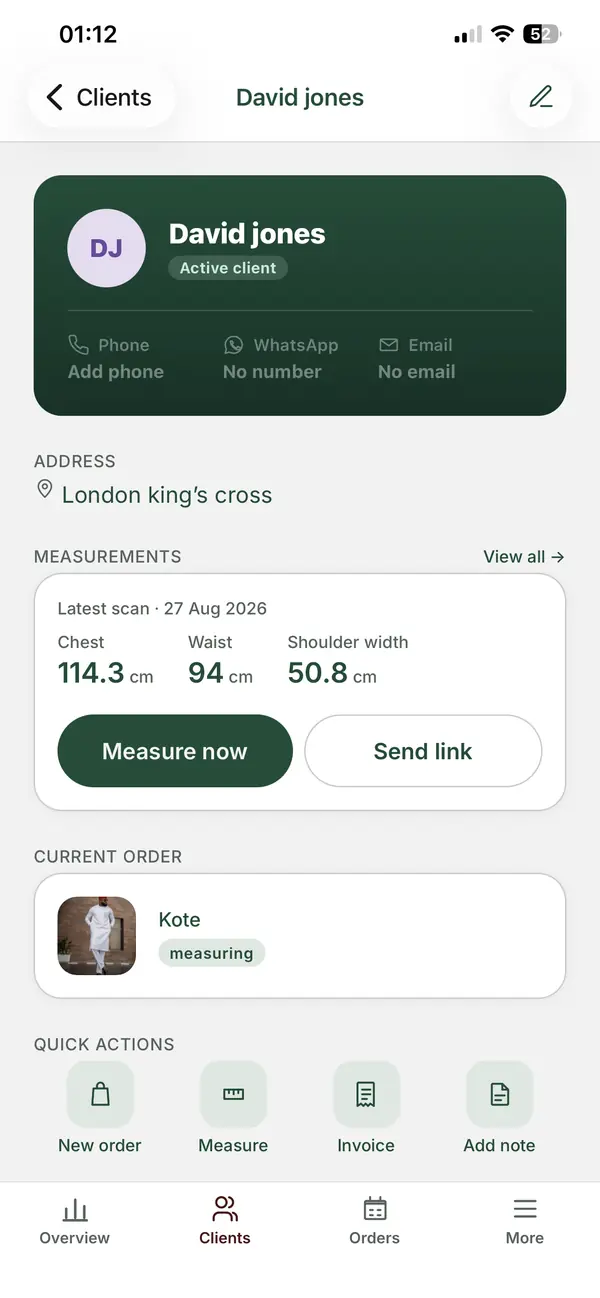
For made-to-order work, ZeDaq.ai also keeps a client CRM, measurements, orders and a delivery calendar in the ZeDaq Business app. Paid plans start with Micro at $14 a month, and every paid plan has a 3-day free trial with no card required.
Try ZeDaq.ai free for 3 days
FAQs
Do I need inventory software to start?
No. A shared spreadsheet works well while you have a few dozen styles. Move to software when updates become hard to keep up with.
What is a good reorder point?
Base it on how fast the item sells and how long it takes to produce more. If a style sells two a week and takes two weeks to make, reorder before you drop below four.
How should I track fabric as well as finished pieces?
Keep a second sheet for fabric, listing the type, color and yards on hand. Deduct fabric when a garment is cut, not when it sells.
Should returned items go straight back into stock?
Only after you check them for wear, marks or damage. Record the return in your sheet the same day.
Try ZeDaq.ai free
Virtual try-on and Find my size for your store, plus client, order and invoicing tools for tailors, in one subscription.

