How to Start a Modest Fashion Brand Online
By the ZeDaq.ai team · · 4 min read
On this page
To start a modest fashion brand online, choose a specific customer and product, sort out fabric and production, set clear fit rules, and open a store that explains length, coverage and sizing well. Modest customers often cannot find coverage and fit together in one place, which gives a focused new brand room to stand out.
This guide covers the steps in order. It sits within our wider guide to virtual try-on for African fashion brands, which also covers modest styles. We cite no market statistics here, since we haven't verified any.
What does "modest fashion" mean for your brand?
Modest fashion covers clothing that offers more coverage, such as abayas, long skirts, loose tunics, kaftans and hijabs. Customers define modesty in different ways, based on faith, culture and personal taste.
Decide what you mean before you design anything. Write one sentence, such as "loose-cut workwear in breathable fabrics for women who cover their arms and legs".
Who is your customer?
Pick one group first. Examples include office workers, brides and wedding guests, students, or women shopping for Eid. Each wants different fabrics and price points.
Talk to ten people in that group. Ask what they struggle to find, and which fits disappoint them.
How do you choose products and fabric?
Start with a small range of pieces you can make well:
- Pick two to four core styles, such as an abaya, a maxi dress and a wrap skirt.
- Choose fabrics that suit your climate and are not see-through. Test them against a window.
- Order swatches and wash them before committing.
- Make a sample and wear it for a full day.
Describe fabrics clearly on your store. Opaque, breathable and non-clingy are the words modest shoppers look for.
How do you set up sizing and fit?
Sizing is where many new modest brands lose customers, because length and sleeve measurements matter as much as bust and waist. Give both.
- Length. State shoulder-to-hem length for each size.
- Sleeve. State sleeve length.
- Ease. Say whether the cut is loose, relaxed or fitted.
- Model details. State height and the size the model wears.
Our guide to how an abaya should fit goes deeper on length and drape, and size recommendation for modest fashion stores covers charts for loose cuts.
What should your store show?
Shoppers want to see the garment worn, check coverage and understand fit. Your store should have clear photos, a detailed size chart and honest fabric notes. Our guide to modest fashion product photography covers the photo side.
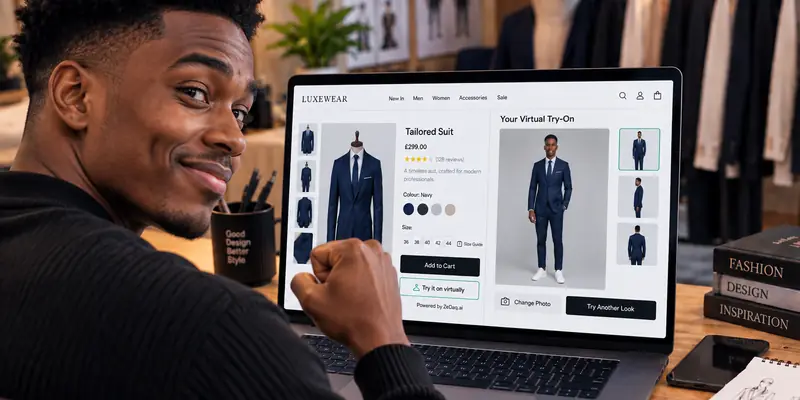
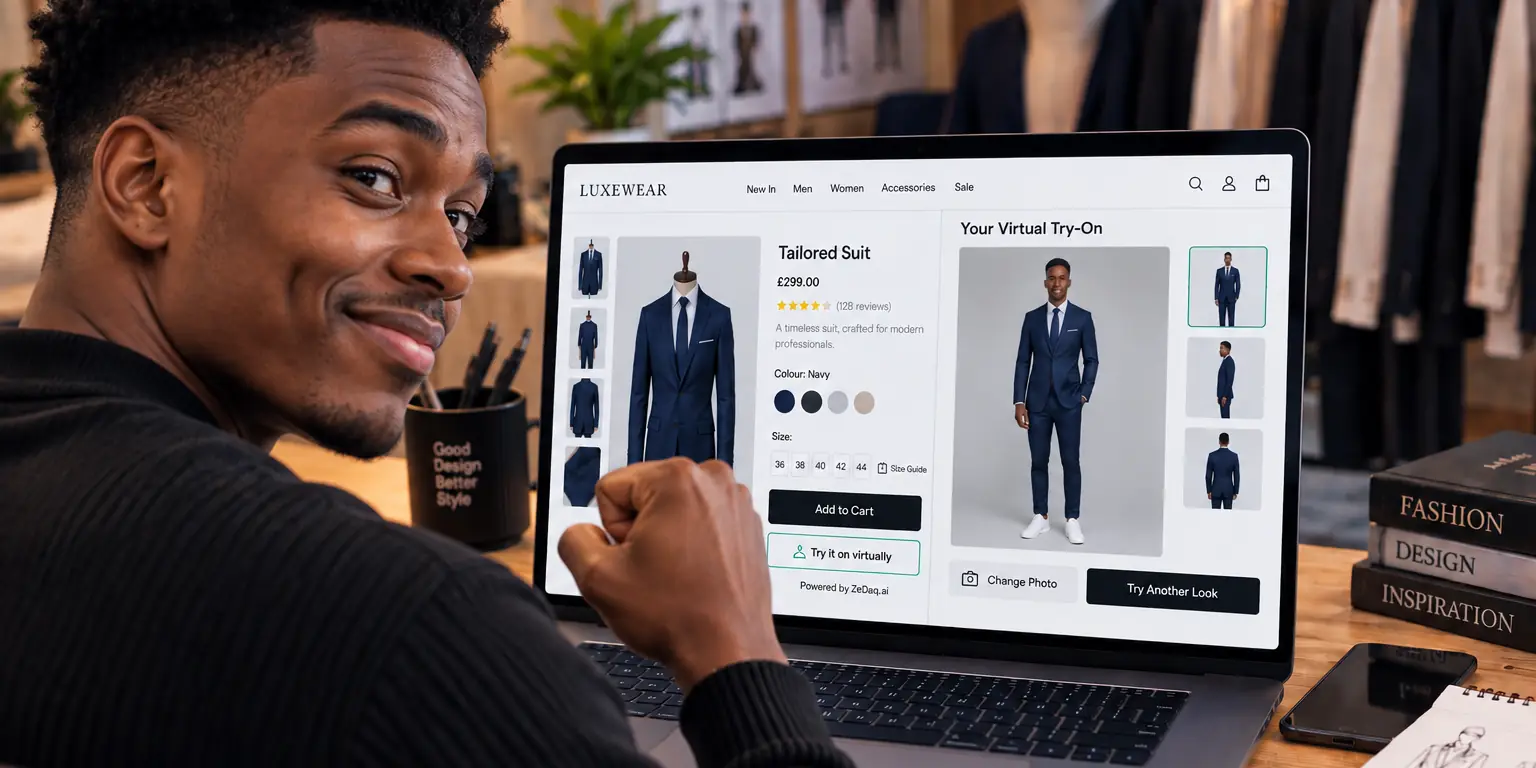
To help with fit, ZeDaq.ai adds "Try it on" and "Find my size" to Shopify stores through its app, and to other sites with a script-tag widget. The shopper uploads one photo and sees your real garment on their body. Because try-on works on body photos, test it with your own pieces before you promote it; our guide on hijabs and headscarves in try-on explains the limits.
How do you launch?
- Open a store on a platform you can manage yourself.
- Write your size guide and returns policy before you list products.
- Launch with a small, finished range rather than a large unfinished one.
- Share behind-the-scenes content so people see who makes the clothes.
For general brand-building steps shared with other regional labels, read how to start an African fashion brand online. To compare tools for fit, see virtual fitting rooms for clothing websites.
How should you price and test your first range?
Add up the cost of fabric, labor, trims, packaging and shipping for each piece. Then decide your margin. Price from your real costs, not from what other brands charge.
Before you launch widely, test with a small group:
- Ask friends and early followers to buy or try a sample.
- Collect feedback on length, sleeve and fabric.
- Fix recurring fit problems in your pattern.
- Update your size chart to match what you learn.
Record every return reason from the first orders. Those notes tell you which measurements to show more clearly.
What mistakes do new modest brands make?
- Launching too many styles at once. A small range is easier to make well.
- Skipping fit notes. Shoppers need ease, length and sleeve details.
- Using see-through fabric without saying so. State opacity plainly.
- Copying another brand's size chart. Measure your own garments.
- Ignoring returns. Write a clear policy before you sell.
Test sizing help on your new store
FAQs
How much money do I need to start?
It depends on your production method and range size. Price out samples, fabric and photography before you decide.
Do I need to make the clothes myself?
No. You can work with a tailor or a small workshop. Visit them and inspect samples before you order.
Which platform should I use?
Choose one you can manage yourself. ZeDaq.ai works with Shopify through its app and with other sites through a widget.
Should I offer made-to-measure?
It can suit modest fashion, since length and sleeve needs vary. Be clear about lead times.
Try ZeDaq.ai free
Virtual try-on and Find my size for your store, plus client, order and invoicing tools for tailors, in one subscription.