How to Start an African Fashion Brand Online
By the ZeDaq.ai team · · 4 min read
On this page
To start an African fashion brand online, define who you design for, make a small first collection, set up clear sizing, open an online store and share your work where your customers already spend time. Start small, learn from the first orders, then grow.
This guide walks through those steps in order. Fit is where many new brands struggle, so virtual try-on for African fashion brands is worth reading early.
Who are you designing for?
Write down your customer in a few sentences. Where do they live? What events do they dress for? What do they spend on a dress or a set?
Brands often serve one of these groups first:
- Local customers who can visit a fitting or collect an order.
- Diaspora customers abroad who want cultural pieces for weddings and family events.
- Global shoppers drawn to African prints and cuts.
Pick one group to start. Pricing, sizing and delivery all depend on the answer.
What should your first collection include?
Keep the first range small. A handful of strong pieces is easier to photograph, price and fulfill than a long catalog.
Choose pieces that:
- Show your signature style, such as a print, a cut or an embroidery detail.
- Suit many body shapes, so sizing is easier to manage.
- Can be made reliably. Pick a workshop or tailor who can repeat the quality.
Decide early whether each piece is ready-to-wear, made to order, or both. Made-to-order work lets you avoid unsold stock, but it changes production time and returns.
How do you handle sizing from day one?
Sizing is the biggest practical hurdle for an online clothing brand. Shoppers can't try things on, so your page must do it for them.
Start with a size chart in body measurements, not garment widths. Add a fit note for each piece. Print and fabric affect how a garment hangs, which is why fit and sizing tips for African print fashion are worth reading before you publish a chart.
If you make to measure, build a simple way to collect shopper measurements. How to handle sizing when selling made-to-measure clothing online explains the process.
How do you set up the online store?
You need somewhere shoppers can see products, pay and ask questions. A hosted store builder is the fastest route for most new brands. Our guide to building a Shopify store for an African fashion brand covers the setup.
A good store has:
- Clear photos from several angles, with a close-up of the fabric.
- A size chart and fit notes on every product.
- Delivery times and shipping costs stated plainly.
- A returns and alterations policy in simple language.
- Contact options shoppers actually use, such as WhatsApp or email.
Launch with fewer pages and improve them. A finished, accurate store beats a perfect one that never opens.
How can technology help shoppers choose a size and see the garment?
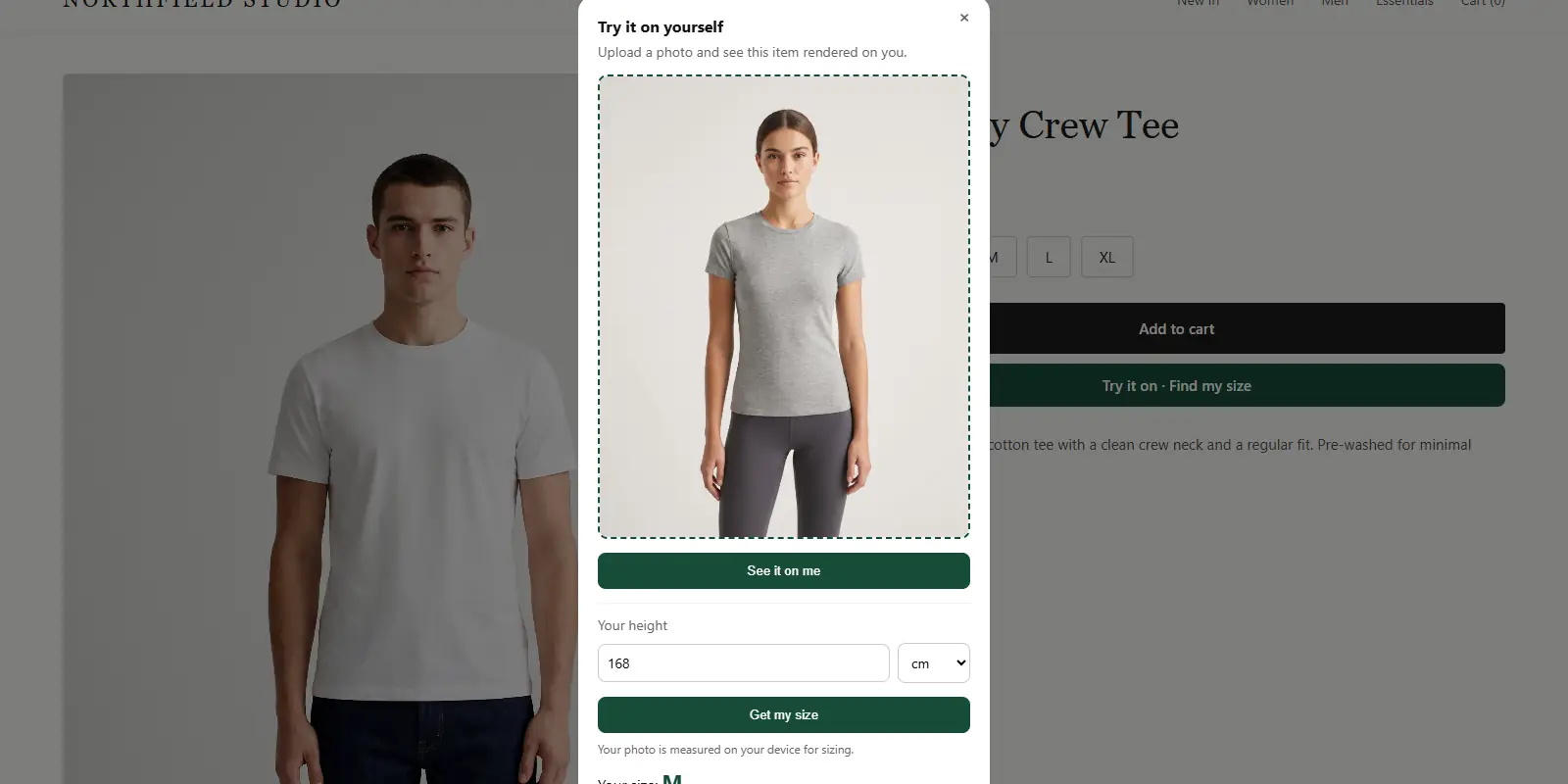
New brands lose sales when shoppers aren't sure. ZeDaq.ai addresses this with virtual try-on: the shopper uploads one photo and sees your real garment on their body.
Its size recommendation uses a 30-second body scan, which is one photo plus height. The measurements are matched to your own size chart, with a generic UK/US/EU/AU chart as a fallback.
You can add it through the Shopify app, a REST API, or a script-tag widget for WooCommerce, Wix, Squarespace, BigCommerce and custom sites. The Free plan costs $0 and includes 3 try-ons and 3 measurements a month, which is enough to test with a few products.
Try your own garment on a photo
Try it on yourself
Live renderUpload a photo, pick a piece, see it rendered on you.
Pick something to try on
How do you price and cost your pieces?
List every cost: fabric, trims, labor, packaging, shipping, payment fees and your time. Add a margin that lets you run sales and absorb mistakes.
Check your price against similar brands, but don't copy them. Customers will pay for quality, a story and a good fit.
Keep records from the first sale. Record each order, deposit and expense in one place, so you know whether the brand is making money.
How do you find your first customers?
Share the making of your pieces on Instagram, TikTok and WhatsApp. Show real people wearing them, with permission.
Work with a few creators or friends whose style matches your brand. Send them a piece and ask for honest feedback.
If you plan to sell abroad, read selling African clothing online in the UK for what changes when your customers live in another country.
Collect email addresses and contact numbers from day one. A direct line to buyers is worth more than any follower count.
Add try-on and size help to your first collection
FAQs
Do you need a physical shop to start?
No. You can start with an online store and a workshop or tailor. A shop can come later if your sales justify it.
Should you sell ready-to-wear or made to order?
Either can work. Ready-to-wear needs stock and a good size range. Made to order needs accurate measurements and clear lead times.
How many pieces should you launch with?
Start with a small range you can photograph and fulfill well. You can add pieces once you see which ones sell.
How do you reduce sizing mistakes?
Publish a body-measurement chart, add fit notes and offer a size recommendation. Reply quickly to sizing questions.
Try ZeDaq.ai free
Virtual try-on and Find my size for your store, plus client, order and invoicing tools for tailors, in one subscription.

