How to Register a Fashion Business in Ghana
By the ZeDaq.ai team · · 4 min read
On this page
- What business structures can you choose in Ghana?
- How do you register your business name or company?
- Do you need a TIN from the GRA?
- What should you do after registering?
- What is a simple checklist before you apply?
- How does this compare with registering in Nigeria?
- Which tools help you run the business once it is registered?
To register a fashion business in Ghana, choose a legal structure, register it with the Office of the Registrar of Companies (ORC), and get a Tax Identification Number (TIN) from the Ghana Revenue Authority (GRA). Which steps you follow depends on whether you trade alone, with partners, or through a company.
This guide is for tailors and designers who are ready to make their label official. Once you are registered, tools built for tailors and fashion designers can help you keep clients, orders and invoices in one place.
This is general information, not legal or tax advice. Check each step with the official bodies linked below.
What business structures can you choose in Ghana?
The ORC website lists the types of registration it handles. For a fashion business, three are the most relevant:
- Business name (sole proprietorship). You trade on your own under a business name.
- Incorporated private partnership. Two or more people trade together.
- Company limited by shares. The business is a separate legal entity owned by shareholders.
The ORC also lists companies limited by guarantee and other registrations, but these are less common for a fashion label.
A sole proprietorship is the lightest option for a one-person tailoring shop. A company suits a label that plans to take on investors or hire a larger team.
How do you register your business name or company?
Registration happens through the Registrar-General's Department in Accra and its online services. The ORC site links to an e-portal and a fees page, so check both for current forms and costs.
Follow this order:
- Pick your structure. Decide between a business name, partnership or company.
- Choose a name. Pick a name that is clear and not in use by another business. Search the name with the ORC before you print labels or order signage.
- Gather your documents. Have your identification and details for any partners or directors ready.
- Submit your application. Use the ORC's services and pay the fees listed on its fees page.
- Keep your certificate. Store it safely as proof that you are registered.
Do you need a TIN from the GRA?
Yes, you should plan on it. The GRA says a TIN is a unique number issued to taxpayers and potential taxpayers, and that it is an offence to not have a TIN as a taxpayer.
The rules differ by type of taxpayer:
- Individuals: The GRA states that the PIN on your Ghana Card is now your TIN.
- Companies and organizations: They continue to register for GRA-generated TINs, which you can request at a GRA Taxpayer Service Centre.
If you trade as a sole proprietor, use your Ghana Card PIN. If you form a company, register an organizational TIN.
What should you do after registering?
Registration is the start of your paperwork, not the end. A few habits keep a small fashion business in good standing.
- Renew on time. The ORC homepage includes a guide for annual renewal through the USSD code *222#.
- Separate your money. Open a business account and keep personal spending out of it.
- Record every job. Note each client, deposit, balance and delivery date.
Good records matter at tax time and help you price jobs fairly. If you are still deciding how to start, read our guide to starting a tailoring business in Ghana.
What is a simple checklist before you apply?
Run through this list before you start any forms:
- You have decided between a business name, partnership and company.
- You have a name in mind and a backup in case it is taken.
- Everyone involved has valid identification.
- You know whether you are registering a TIN as an individual or as an organization.
- You have checked the ORC fees page for the current costs.
Having these ready saves return trips to the office.
How does this compare with registering in Nigeria?
The steps are similar in shape: choose a structure, register the name, then handle tax. The bodies and forms are different in each country. If you also sell to Nigerian clients, see how to register a fashion business in Nigeria.
Do not copy requirements from one country to the other. Each registry sets its own rules.
Which tools help you run the business once it is registered?
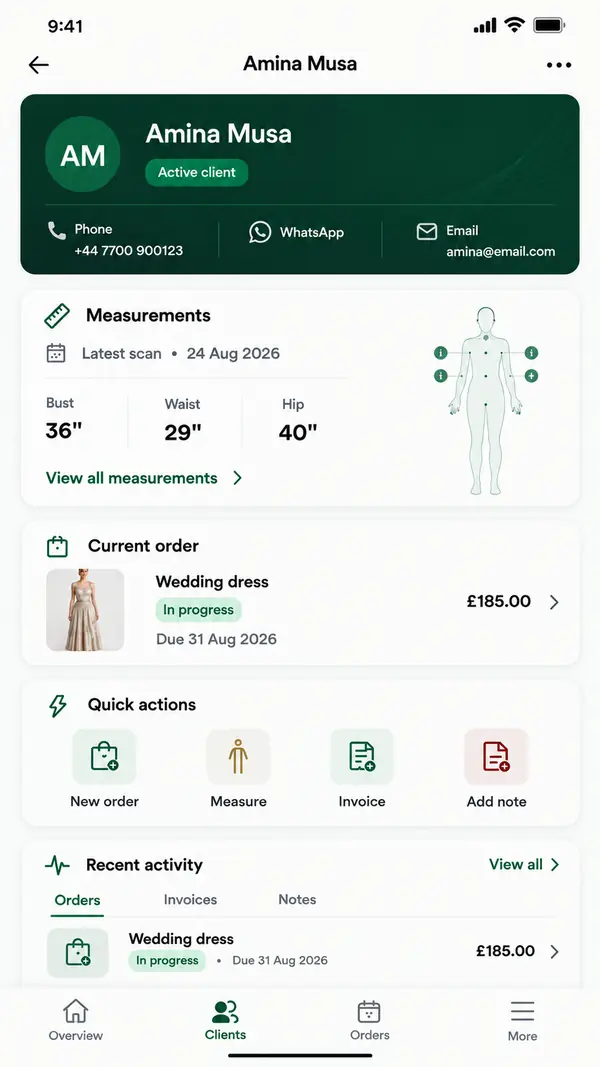
A registered business still needs organized day-to-day work. ZeDaq.ai offers tools for tailors, including a client CRM, measurements through a link the client opens on their phone, orders with a delivery calendar, and invoicing in multiple currencies.
To compare your options before you commit, read our overview of the best software for tailors.
Run your registered fashion business from one place
FAQs
Can I register a fashion business in Ghana online?
The ORC website links to an e-portal and lists its online services. Check the portal for what can be done online and what needs a visit to the Registrar-General's Department.
Do I need a TIN if I am a sole proprietor?
The GRA says individuals use the PIN on their Ghana Card as their TIN. Confirm the current rules on the GRA site.
Is a business name the same as a company?
No. A business name is a sole proprietorship, while a company limited by shares is a separate legal entity. The ORC lists them as different registrations.
Can a foreigner register a business in Ghana?
The GRA says non-citizens and expatriates should apply for a non-citizen Ghana Card through the National Identification Authority. Ask the ORC about any other requirements for your situation.
Try ZeDaq.ai free
Virtual try-on and Find my size for your store, plus client, order and invoicing tools for tailors, in one subscription.