
How to Manage Diaspora Clients Ordering From Abroad
By the ZeDaq.ai team · · 4 min read
On this page
- What makes diaspora clients different?
- How do you take measurements from abroad?
- How should you set timelines and deadlines?
- How do you handle payment and currency?
- How do you keep clients updated?
- How do you build trust before the first order?
- What should you do about time zones?
- How do you manage groups and difficult moments?
- What goes in a simple order checklist?
To manage diaspora clients who order from abroad, take their measurements remotely, agree timelines and prices in writing, invoice in a currency they use, and send progress photos. Distance removes fittings, so your process has to replace them.
This guide is for tailors and designers. If you want one place to keep clients, measurements, orders and invoices, the ZeDaq.ai tools for tailors cover that workflow.
What makes diaspora clients different?
They cannot visit you for a fitting. They often order for a fixed event, such as a wedding, so a delay hurts more. They also think in other currencies, other time zones and other sizing systems.
Plan for three gaps: measurements, trust and logistics. Each one needs a clear step.
How do you take measurements from abroad?
Don't ask clients to measure themselves from a photo of a tape measure. Send a link they open on their phone instead.
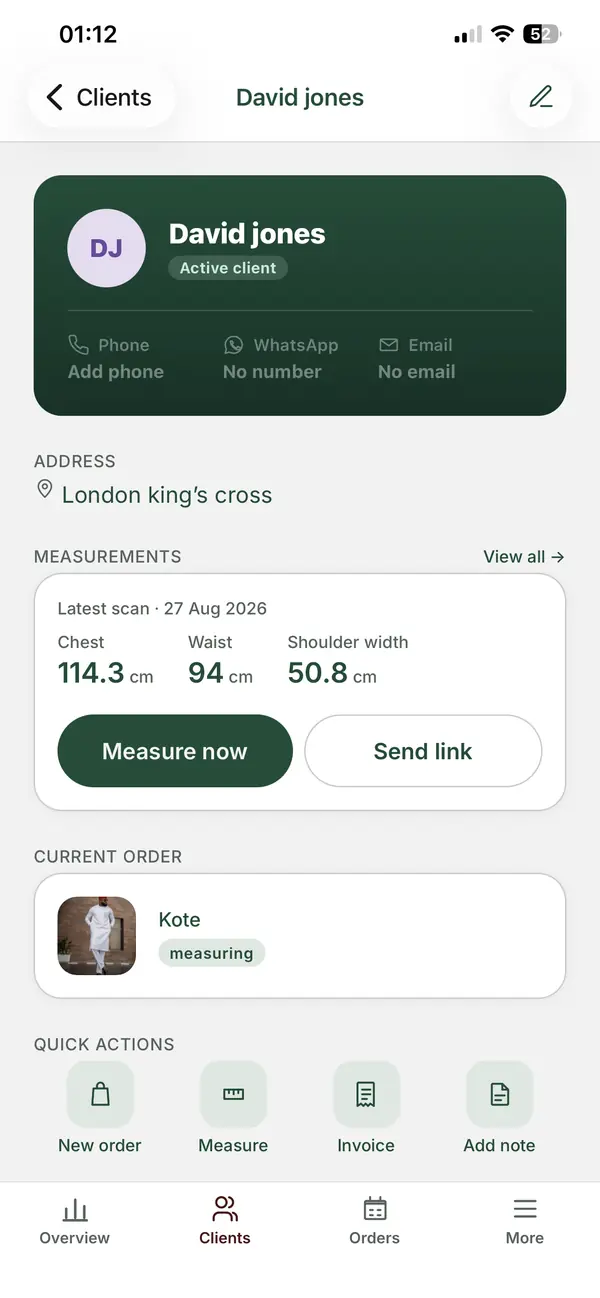
With ZeDaq.ai, you send a measurements link and the client fills in their details on their own phone. The numbers land in your client record.
Then follow these steps:
- Send the link and a short video or note on how to measure.
- Ask them to wear thin, close-fitting clothes.
- Ask for a second measurement a few days later if the event is far away.
- Confirm the numbers by message before you cut.
- Save everything in the client's record.
For clients who want to see a garment on a body before ordering, a store-side fit tool can help, but your own measurements remain the base for custom work.
How should you set timelines and deadlines?
Give two dates: when you finish, and when it must ship. Add time for the courier. For event orders, work backward from the event date and leave a buffer.
Put these in writing:
- The finish date and the latest date for changes.
- Who pays for shipping and returns.
- What happens if the client gains or loses weight.
The ZeDaq.ai orders and delivery calendar helps you see all deadlines in one view, so you do not overbook a busy week.
How do you handle payment and currency?
Quote in one currency and stick to it. A client in London may prefer GBP, one in Houston USD, and a client at home NGN.
ZeDaq.ai invoicing works in multiple currencies, including NGN, GBP and USD. The guide to multi-currency invoicing for tailors goes through it in more detail.
A common structure is a deposit before cutting, then the balance before shipping. State this on the first invoice.
How do you keep clients updated?
Silence worries people who are far away. Send a short update at each stage:
- Fabric chosen or received.
- Cutting done.
- First fitting photo, if useful.
- Finished garment, with photos in daylight.
Photos reduce disputes because the client sees progress. Keep copies in the client's record, so you can answer questions later.
How do you build trust before the first order?
A client who has never met you will want proof that you deliver. Reassurance comes from small, visible details.
- Show finished work with clear photos, including close-ups of seams and finishing.
- Explain your process on one page: measure, deposit, make, update, ship.
- Reply quickly to the first message, even if only to say when you will answer fully.
- Share your policy on changes and alterations before the client pays.
Clients abroad often come through family referrals. A good first order usually leads to the next ones.
What should you do about time zones?
Agree on set hours when you answer messages. Tell the client your local time and say plainly when you are away.
A short written summary after each call avoids confusion. Include the decisions made, the next step and the date.
How do you manage groups and difficult moments?
Family orders add complexity, since several people order for the same event. The article on managing wedding and aso ebi group orders covers shared deadlines and payments.
Difficult moments will happen. Use the same calm process each time, as described in handling difficult tailoring clients.
After delivery, ask happy clients for a review. The guide on asking tailoring clients for reviews has wording that works.
Keep remote clients organized
What goes in a simple order checklist?
Use this list for every remote order:
- Client details and event date saved.
- Measurements received and confirmed.
- Design, fabric and extras agreed in writing.
- Deposit received.
- Finish date and ship date set.
- Currency and balance stated on the invoice.
- Delivery address and phone number checked.
If anything is missing, ask before you cut fabric. It is easier to fix a gap on day one than after the outfit is made.
FAQs
Can clients measure themselves accurately?
Usually, with clear instructions and a second measurement to compare. Always confirm unusual numbers before you cut.
Should I take a deposit from clients abroad?
Yes, most tailors do. A deposit covers fabric and confirms the order, and the balance is due before shipping.
Which currency should I invoice in?
Choose the one your client finds easiest to pay, then keep it for the whole order. Stating the amount on the invoice avoids confusion.
What if the garment does not fit on arrival?
Agree your alteration policy upfront, including who pays for shipping. Ask for photos or fresh measurements before you advise on changes.
Try ZeDaq.ai free
Virtual try-on and Find my size for your store, plus client, order and invoicing tools for tailors, in one subscription.

