How Much Do Tailors Charge in the UK?
By the ZeDaq.ai team · · 4 min read
On this page
- What do tailors charge for common garments?
- How do prices differ by UK city?
- What makes a UK tailor's price go up?
- What about alterations?
- How should you price your own tailoring work?
- What is a worked example of building a quote?
- What should a written quote include?
- How can tailors keep prices consistent?
UK tailors charge from under £100 for a simple custom shirt to well over a thousand pounds for a three-piece suit or bridal gown, and prices run higher in London. The figures below come from one published price guide, so use them as a rough benchmark, not a fixed rate.
This guide is for tailors and dressmakers setting prices, and for clients wondering what is fair. If you run a tailoring business, our tailor software helps you manage clients, measurements, orders and invoices in one place.
What do tailors charge for common garments?
The marketplace Airtasker publishes UK tailoring price ranges in its tailoring cost guide, last updated June 2026 on the page. We checked it in November 2026.
| Job | Price range (GBP) |
|---|---|
| Custom shirt or simple top | £70 to £180 |
| Tailored trousers or skirt | £90 to £220 |
| Custom dress or jumpsuit | £150 to £400 |
| Two-piece suit or blazer | £300 to £800 |
| Three-piece suit or structured coat | £500 to £1,200+ |
| Bridalwear, eveningwear or formalwear | £600 to £2,000+ |
Source: Airtasker UK. The page doesn't explain its method or sample size, and its headline figures are not consistent with each other, so treat the table as indicative only.
How do prices differ by UK city?
The same guide lists city ranges for tailoring work. London is the highest, at £250 to £800, and other cities sit lower:
| City | Range (GBP) |
|---|---|
| London | £250 to £800 |
| Edinburgh | £190 to £650 |
| Birmingham, Manchester, Bristol, Glasgow | £180 to £600 |
| Leeds, Nottingham, Cardiff | £170 to £550 |
| Liverpool, Sheffield | £160 to £500 |
Source: Airtasker UK, checked November 2026.
What makes a UK tailor's price go up?
Several factors drive a quote:
- Bespoke or made-to-measure: a fully bespoke garment is cut from scratch, and takes more fittings than a made-to-measure one.
- Fabric: wool, silk and imported cloth cost more than basic cotton or polyester.
- Construction: lining, canvassing, hand finishing and structured shapes add hours.
- Fittings: each extra fitting adds time.
- Rush orders: short deadlines usually cost extra.
- Location and overheads: rent and local wages influence rates.
Ask whether fabric is included, since some quotes list labor only.
What about alterations?
The Airtasker page doesn't give alteration prices, so we don't state any here. Alterations are generally quoted per job. If you charge for alterations, our guide on benchmarking alteration prices against typical UK rates covers that in more detail.
How should you price your own tailoring work?
Don't copy a table. Work out your own cost first:
- Estimate your hours for each stage: measuring, pattern, cutting, sewing, fittings and finishing.
- Multiply by an hourly rate that covers your living costs.
- Add fabric, notions, packaging and any shipping.
- Add overheads and a margin for unplanned fixes.
Then compare with local competitors and adjust. Clear, fixed quotes build trust with clients. Our Nigeria guide on how much tailors charge in Nigeria shows the same method with local figures, and the Ghana version, how much tailors charge in Ghana, does the same for Accra.
What is a worked example of building a quote?
Imagine a client asks for a custom dress in a mid-priced fabric. You track your own numbers rather than copying a table:
- Time: list each stage and the hours it takes you, from the first measuring session to the final press.
- Labor: multiply those hours by your chosen hourly rate.
- Materials: add fabric, lining, zip, thread and packaging at your supplier's price.
- Extras: add any rush fee, extra fitting or delivery cost.
- Margin: add a buffer for remakes and admin time.
Compare the total with the dress range in the table above. If you land far below it, check you have not left out hours. If you land well above it, explain what justifies the difference, such as fabric, hand finishing or a tight deadline.
What should a written quote include?
A clear quote prevents disputes. Include:
- A description of the garment and the fabric.
- What the price covers: labor, fabric or both.
- The number of fittings included.
- The deposit and when the balance is due.
- The delivery date and what happens if the client changes the design.
Keep a copy with the client's record, so you can refer back to it later.
How can tailors keep prices consistent?
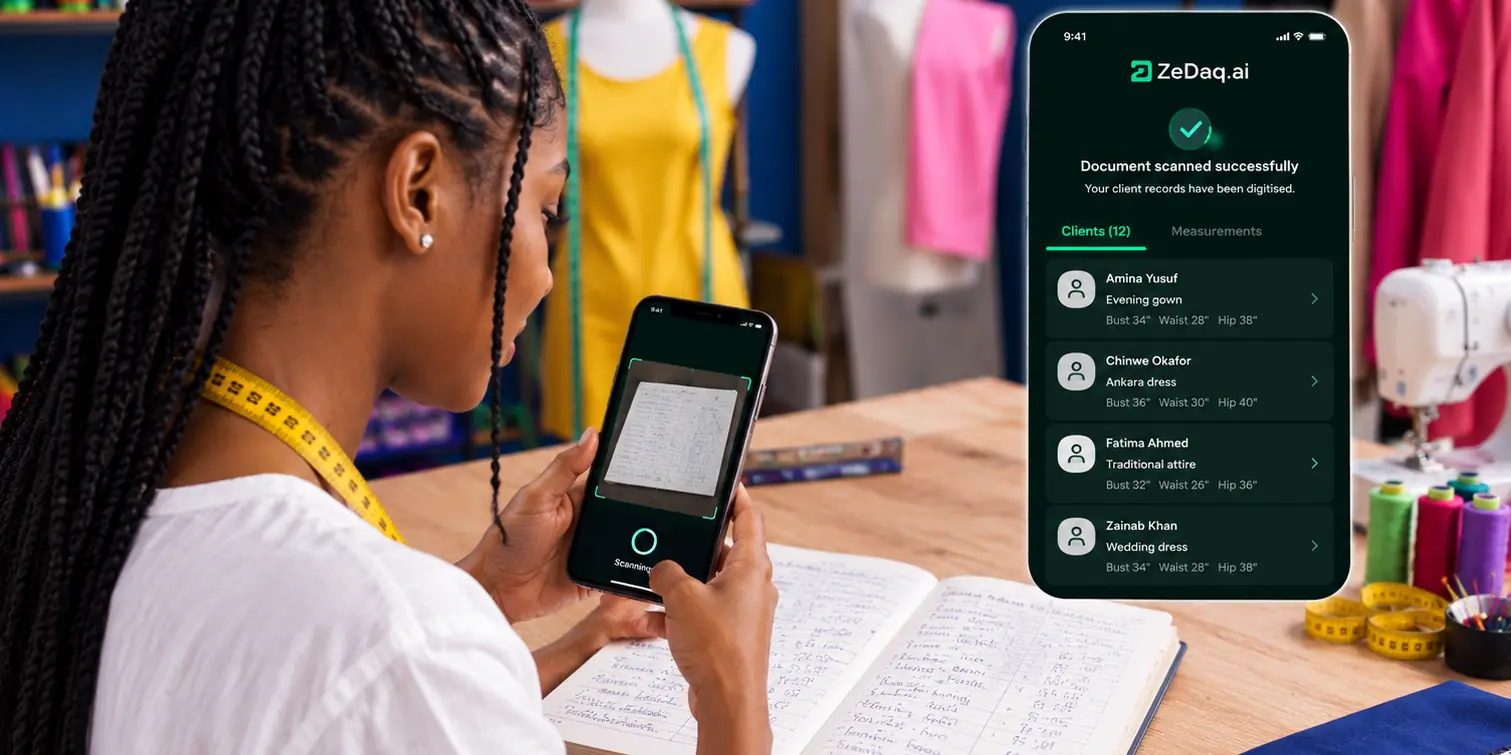
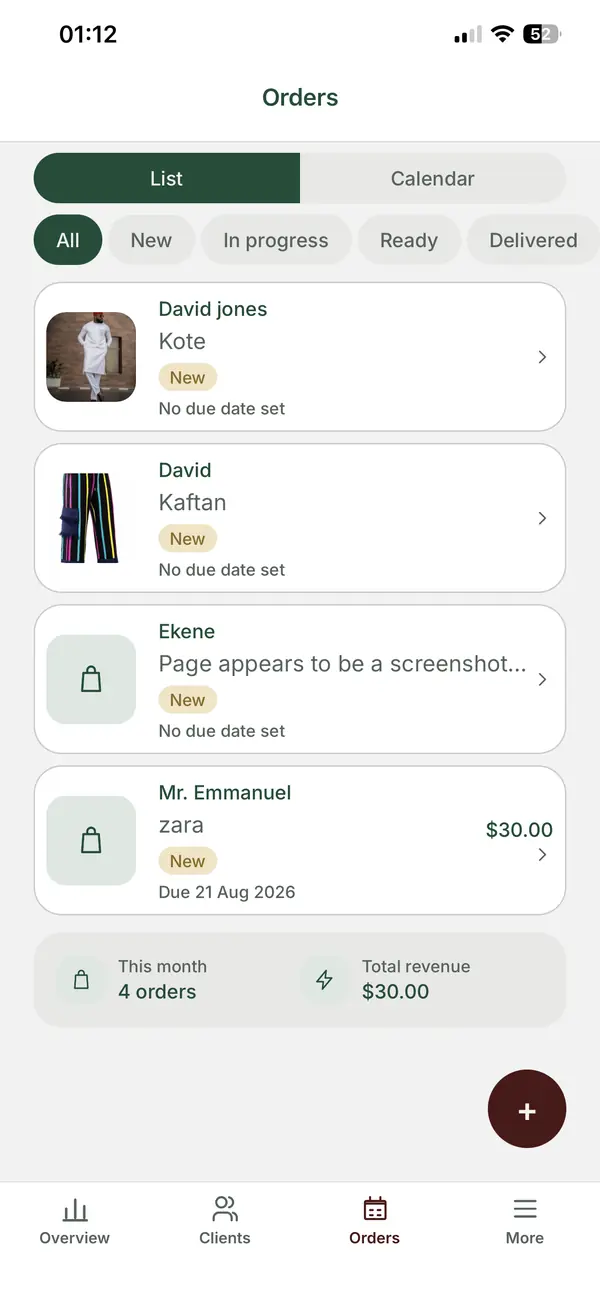
Record each job's measurements, fabric and hours so the next quote is easier. ZeDaq.ai's tailor tools include a client CRM, measurements through a link the client opens on their phone, orders and a delivery calendar, and invoicing in multiple currencies including GBP. There is also the ZeDaq Business mobile app for iOS and Android.
For events with many orders at once, see how tailors can manage group orders.
Quote, measure and invoice in one place
FAQs
Is bespoke the same as made-to-measure?
No. Bespoke usually means a pattern cut for one client, while made-to-measure adjusts an existing pattern. Ask your tailor how they define each.
Do UK tailors charge for fittings?
Many include a set number of fittings in the price. Ask before you commit.
Is the fabric included in the price?
Sometimes. Always ask if the quote covers fabric, labor or both.
Why do London prices run higher?
Higher rent and wages push rates up, and the Airtasker guide shows London at the top of its city ranges.
Try ZeDaq.ai free
Virtual try-on and Find my size for your store, plus client, order and invoicing tools for tailors, in one subscription.

