Selling Ready-to-Wear Agbada Online
By the ZeDaq.ai team · · 4 min read
On this page
- What are you selling when you sell an agbada set?
- Why is ready-to-wear agbada harder to size than a shirt?
- What size chart do you need?
- How do you help buyers choose between sizes?
- How do you sell to diaspora buyers?
- Should you offer alterations?
- How do you move from made-to-order to stock sizes?
- What should your return and exchange policy say?
- How should you photograph agbada?
To sell ready-to-wear agbada online, publish a real size chart for every piece in the set, show how the garment is worn, and give buyers a clear way to check fit. Agbada is a large, layered outfit, so a vague label such as "large" invites wrong-size orders.
This guide is for brand owners moving from made-to-order into stock sizes. It builds on our guide to virtual try-on for African fashion brands, which covers the trust problem behind every online sale of traditional wear.
What are you selling when you sell an agbada set?
An agbada is a wide, flowing outer robe worn over a matching top and trousers. Many sets also come with a cap.
List each piece in the set separately: the agbada, the inner top (often called buba or a similar name, depending on the style) and the trousers (sokoto). Say whether the cap is included.
Why is ready-to-wear agbada harder to size than a shirt?
Agbada is cut wide, so the chest measurement alone does not tell the buyer how it will look. Length, sleeve width and the inner top matter too.
A buyer may fit the agbada easily but find the trousers too short or the inner top too tight. That is why you need measurements for each piece.
What size chart do you need?
Build your chart from body measurements, not garment flat widths, and tell buyers what you measure. Our sibling guide on ready-made cultural wear sizing goes deeper on measurements.
Include these columns:
- Chest for the inner top and agbada.
- Shoulder width.
- Sleeve length.
- Agbada length (back neck to hem).
- Trouser waist and length.
- Height range the size is cut for.
Say whether the chart shows body measurements or garment measurements. If it shows garment measurements, add the room for ease. Check your own chart instead of copying another brand's.
How do you help buyers choose between sizes?
Add a fit note per product, such as how roomy the agbada is and whether it is cut for a tall frame. Add a "between sizes" rule: for example, size up for the agbada and alter the trousers.
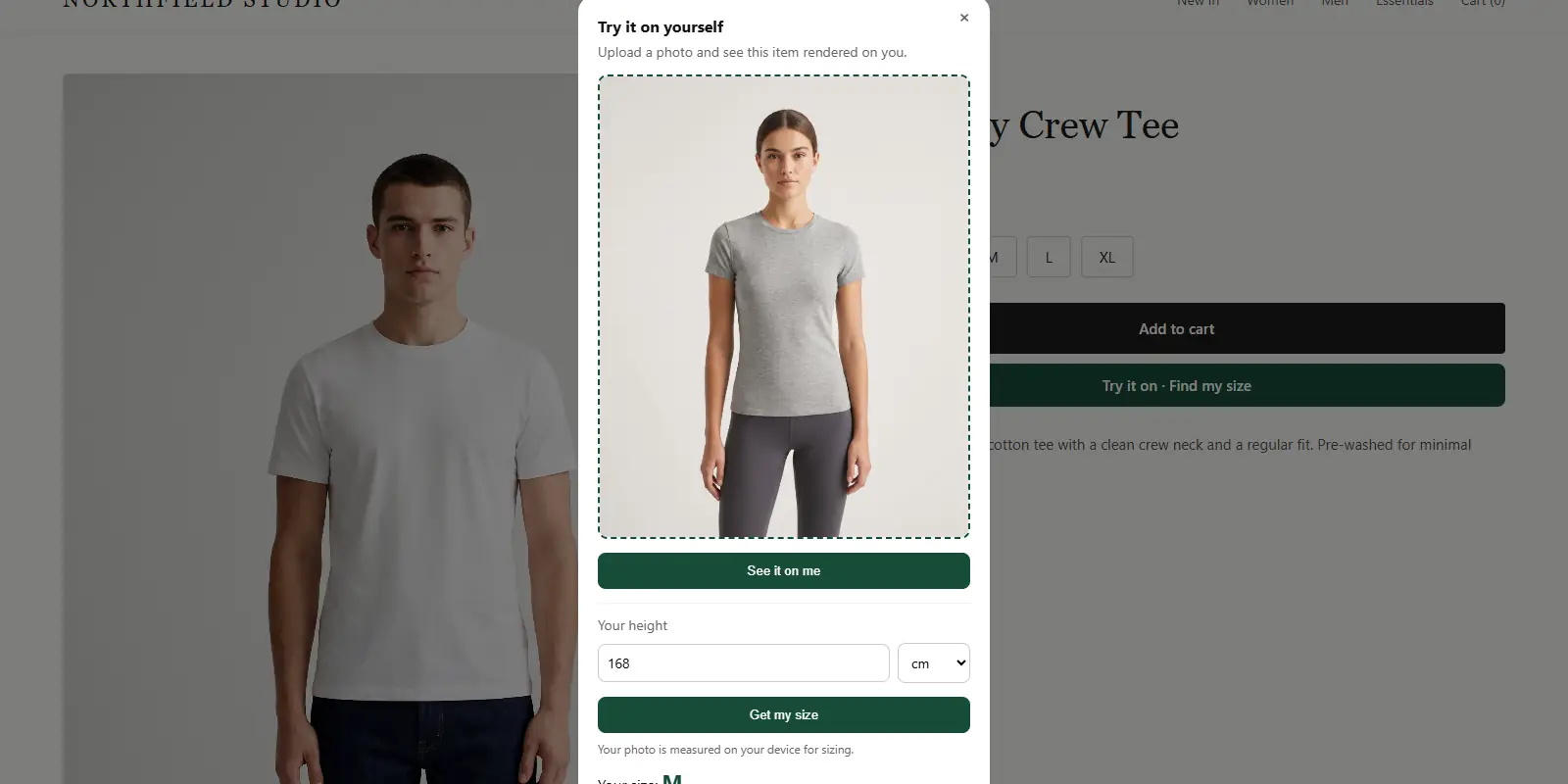
If you use ZeDaq.ai, merchants enter their own size guide in the Dashboard under Size charts, or in the Shopify app. The buyer uploads one photo plus height for a 30-second scan, and it recommends your labels, sizing up to the largest relevant measurement. Use the chart for the garment type closest to each piece, and test it on your own range first.
How do you sell to diaspora buyers?
Buyers in the UK and US often think in UK or US sizes, not your local labels. Show a conversion line on the page and make it clear which system your chart uses. Our guide on selling agbada to diaspora customers covers measurements and timelines.
For a related style, see selling senator wear online.
Also tell buyers about shipping time before an event, and who pays for return shipping. Do not promise delivery dates a courier controls.
Should you offer alterations?
Yes, if you can. Ready-to-wear sizing will never fit everybody, so offer a path for hems and sleeve changes. State which alterations you offer, the cost and the turnaround.
If you also take made-to-measure orders, make the difference obvious on the page. Our guide to made-to-measure sizing online explains how to set expectations for both.
How do you move from made-to-order to stock sizes?
Many agbada makers start by cutting to order. Moving to stock sizes changes your workflow, so plan it in steps:
- Pick two or three best-selling styles to start.
- Cut a sample set in each size and check it on real people.
- Record the final body measurements for each size.
- Write the chart from those records, not from guesswork.
- Track which sizes sell and which come back for alteration.
Our guide on adding ready-to-wear to a made-to-measure business goes deeper on this move.
What should your return and exchange policy say?
Agbada is bulky and expensive to ship, so be clear about returns. State the time window, the condition required and who pays shipping.
An exchange for a different size is often better for you than a refund. Offer it first.
How should you photograph agbada?
- Front view with the agbada open and closed.
- Back view to show the length.
- A shot of each piece laid flat.
- A close-up of embroidery and fabric.
- The model's height and the size worn in the caption.
Keep orders, measurements and invoices in one place
FAQs
Can I sell agbada in S, M and L?
Yes, but add real body measurements for each size. Letter sizes alone do not tell buyers enough.
Should the cap be sold separately?
Either works. State clearly whether it is included.
How do I handle buyers whose sizes fall between two labels?
Tell them which way to go and offer alterations. Sizing up is usually easier to fix than sizing down.
Do I need photos of every piece?
Yes. Show each piece so buyers know what they receive.
Try ZeDaq.ai free
Virtual try-on and Find my size for your store, plus client, order and invoicing tools for tailors, in one subscription.

