Writing a Size Guide Nigerian Shoppers Will Actually Read
By the ZeDaq.ai team · · 4 min read
On this page
- Why do shoppers skip size guides?
- What should a size guide include?
- How do you explain measuring in plain words?
- How do you make the guide work on Instagram and WhatsApp?
- Where should the guide sit on a product page?
- How do you test whether people read it?
- Can a size guide recommend a size for the shopper?
A size guide Nigerian shoppers will actually read is short, visual and built for the phone. It fits on one screen, shows three or four measurements per size, explains how to measure in plain words, and is easy to forward on WhatsApp.
Many brands have a size guide that nobody opens. It sits at the bottom of a product page as a long table, or it doesn't exist outside the website at all. Meanwhile, most questions arrive in Instagram DMs. This guide shows how to write one guide that works on your site, in your highlights and in chat. It builds on our main guide to try-on and sizing for African brands.
Why do shoppers skip size guides?
Usually because the guide asks too much of them. Common problems include:
- A table with ten columns that needs sideways scrolling on a phone.
- Garment measurements when the shopper only knows their body measurements.
- No explanation of how to measure.
- The guide lives only on the website, while the customer is shopping on Instagram.
Fix these four and more people will read it.
What should a size guide include?
Keep it to what helps someone choose. For most Nigerian womenswear, that means:
| Section | What to include | Keep it short by |
|---|---|---|
| Size table | Bust, waist, hip per size | Showing one garment type per table |
| Units | Centimeters and inches | Two columns, or a toggle on your site |
| How to measure | Three simple steps per measurement | Using one drawing with labeled lines |
| Fit note | How this style fits | One sentence per product |
| Help line | Where to ask | Your WhatsApp Business link |
For menswear, swap bust for chest and add shoulder width for senator and agbada styles.
How do you explain measuring in plain words?
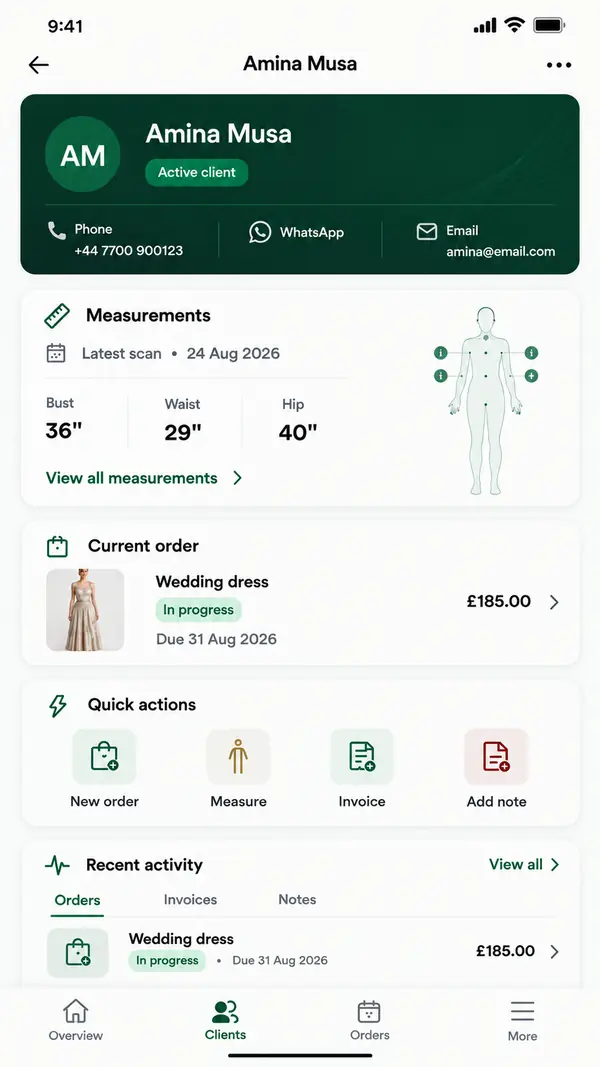
Write as if the shopper has a tape measure but no one to help. Keep each instruction to one line.
Bust
Measure around the fullest part of your chest, keeping the tape level under your arms.
Waist
Measure around the narrowest part of your body, usually just above your belly button.
Hips
Stand with your feet together and measure around the fullest part of your hips and bottom.
Add one tip: "Wear the bra or shapewear you plan to wear with the outfit." This matters for fitted Owambe and Aso-ebi styles.
If a customer doesn't have a tape measure, or can't measure alone, a phone link can do it instead. Our guide to measuring customers with a phone link explains how that works for made-to-order brands.
How do you make the guide work on Instagram and WhatsApp?
Your website guide is the master copy. Then make two short versions.
For Instagram
- Turn each garment type's table into a clean image that fits a phone screen.
- Save it to a "Size guide" highlight on your profile.
- Add "Size guide in highlights" to product captions.
For WhatsApp
- Save a short text version as a quick reply in WhatsApp Business.
- Attach the same image you used on Instagram.
- End with one question, such as "Which measurement are you not sure about?"
When every channel shows the same numbers, customers stop getting different answers from different staff.
Where should the guide sit on a product page?
Put a "Size guide" link directly next to the size selector. That is where the decision happens. A guide in the footer or on a separate page gets missed.
Below the link, add the product's fit note in one line, such as "Fitted at the waist, choose by hip measurement." If your range mixes woven and stretch fabrics, say which this one is. Our guide to sizing stretch and non-stretch Ankara and Adire covers how to write those notes.
How do you test whether people read it?
You don't need analytics software. Use what you already have:
- Count how many DMs ask "what size should I take?" for a week.
- Update the guide and highlights.
- Count the same questions again for the next week.
- Ask a few customers directly whether the guide was clear.
If questions keep coming for one product, its fit note probably needs work.
For a general framework on size guide content, see size guides that actually reduce returns.
Can a size guide recommend a size for the shopper?
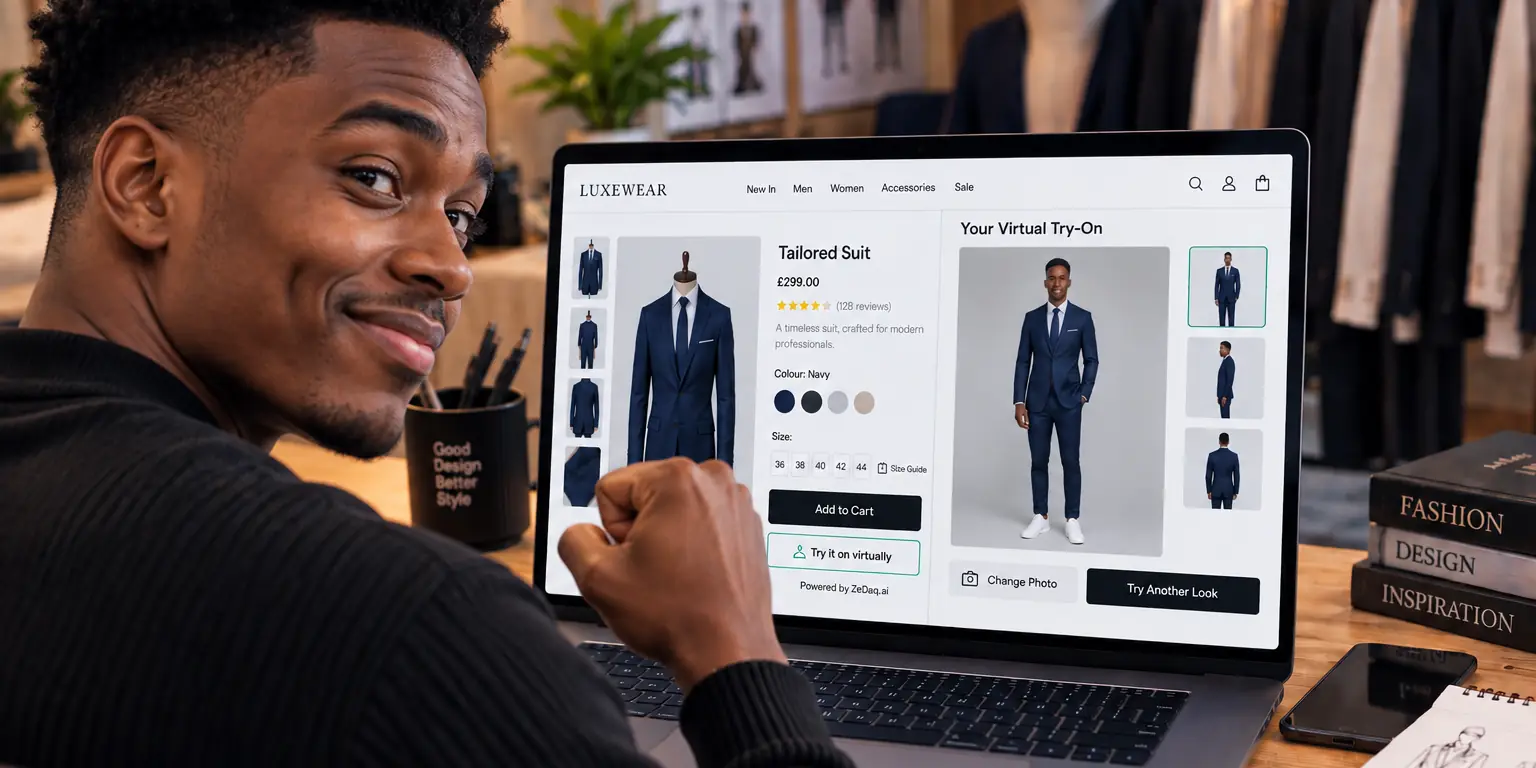
A static guide can't, but a size tool on the page can. With ZeDaq.ai, the shopper taps "Find my size", uploads one photo and enters their height. The scan matches their measurements to the size chart you entered for that garment type and shows your label. Your written guide still matters, because it's the chart the scan uses.
Try ZeDaq.ai free for 3 days
FAQs
Should my size guide be in Pidgin or a local language?
Plain English works for most shoppers. If many of your customers prefer Yoruba, Igbo, Hausa or Pidgin, a short version in that language can help.
How often should I update the guide?
Whenever you change a pattern, a fabric supplier or your size range. Check it at least before each major season, such as the December wedding period.
Should I show garment measurements as well?
Only if shoppers ask for them, for example on oversized pieces. Body measurements are easier for most people to compare.
What if a shopper is between two sizes?
Tell them which measurement decides fit for that style. For fitted pieces, suggest the larger size so a tailor can take it in.
Try ZeDaq.ai free
Virtual try-on and Find my size for your store, plus client, order and invoicing tools for tailors, in one subscription.

