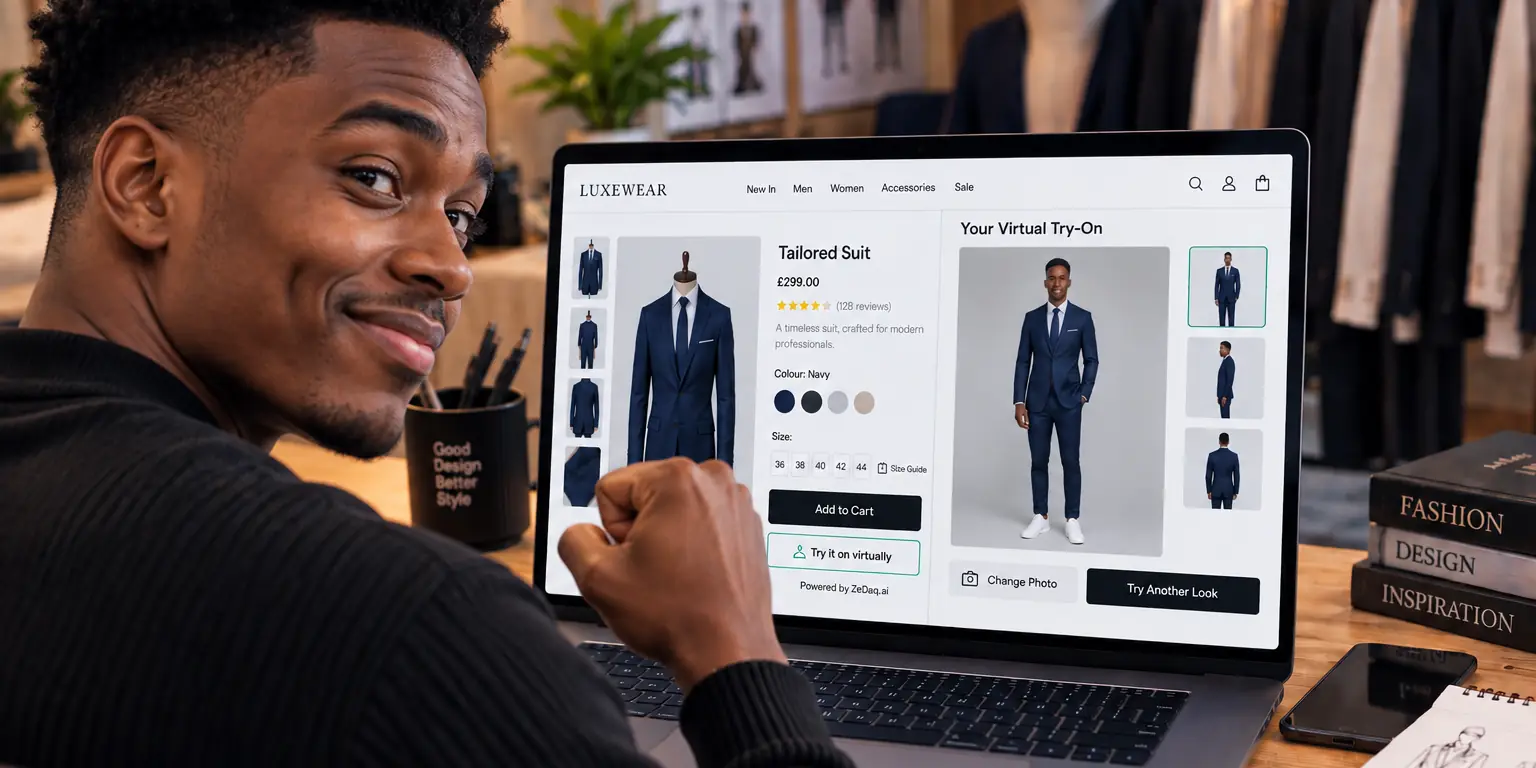
Why Bust, Waist and Hip Ratios Matter More Than Size Labels
By the ZeDaq.ai team · · 5 min read
On this page
Bust, waist and hip ratios matter more than size labels because a label assumes one body shape, while your customers come in many. Two women who both "wear a 12" can have very different gaps between waist and hips, so the same dress fits one and pulls on the other.
For Nigerian brands, this shows up every Owambe season. A customer in Lagos orders a fitted Ankara gown in her usual size, and it closes at the waist but strains across the hips. The label was right. The ratio was not. This guide explains why, and how to build it into your sizing. It is part of our wider look at virtual try-on for African fashion brands.
What is a bust, waist and hip ratio?
It is the relationship between three body measurements, not the measurements alone. You compare them to each other:
- Waist to hip: how much bigger the hips are than the waist.
- Bust to waist: how much bigger the bust is than the waist.
- Bust to hip: whether the upper or lower body is wider.
A size label hides all of this. "Medium" or "UK 12" tells a shopper roughly how big a garment is overall. It says nothing about where that size is distributed.
See how a body scan reads your own shape
Try it on yourself
Live renderUpload a photo, pick a piece, see it rendered on you.
Pick something to try on
Why does one size label fit two bodies so differently?
Most size charts grow every measurement by the same step from size to size. That works if every customer has the same shape. They don't.
Take three customers who all measure the same at the waist:
| Customer | Bust | Waist | Hip | Shape in words |
|---|---|---|---|---|
| Adaeze | 96 cm | 78 cm | 104 cm | Balanced, moderate curve |
| Funmi | 92 cm | 78 cm | 116 cm | Much fuller hips than waist |
| Halima | 106 cm | 78 cm | 100 cm | Fuller bust than hips |
Example measurements for illustration, not a standard chart.
If your size 12 dress is cut for Adaeze, Funmi will feel it at the hips and Halima at the bust. All three ordered "their size." Only one got a good fit.
Why is this a bigger issue for Nigerian customers?
Many Nigerian women have a defined waist with fuller hips, and a lot of local styles are cut to show that shape. Fitted mermaid skirts, peplum tops and corset-style bodices leave little room for error.
There is also a mismatch with imported charts. Many brands copy a UK or US chart because shoppers know those labels. Those charts were built around their own population averages, which may not match your customer base in Abuja or Port Harcourt.
When a customer says your sizes "run small," the cause is often a ratio problem, not a size problem. Our piece on the "sizes run small" complaint looks at that feedback in more detail.
Which garments are most sensitive to ratio?
Not every piece needs this level of care. Use the table below to decide where to focus.
| Garment | Most sensitive ratio | Why |
|---|---|---|
| Fitted gown or mermaid skirt | Waist to hip | Tight from waist to knee, no ease to hide gaps |
| Corset or boned bodice | Bust to waist | Fixed structure that can't stretch |
| Pencil skirt | Waist to hip | Close fit at both points |
| Kaftan or boubou | Bust to hip (barely) | Loose cut, very forgiving |
| Wrap dress | Bust to waist | Wrap adjusts the waist, bust must still fit |
| Agbada or senator top | Chest only | Mainly fitted at shoulder and chest |
Loose styles like kaftans forgive almost any ratio. Fitted Aso-ebi styles forgive almost none.
How can you size for ratios instead of labels?
You don't need a new size system. You need your chart and product pages to carry more information.
Step 1: List each measurement separately
Show bust, waist and hip as separate rows in your chart, in centimeters and inches. Never show only a label.
Step 2: Tell shoppers which measurement to trust
For each product, add one line such as "Choose by hip measurement for this skirt." This tells a curvy customer which number decides her size.
Step 3: Offer a curve variant on your best sellers
If many buyers fall outside your standard ratio, cut a "curve" pattern with more hip room at the same waist. Start with one or two best sellers before you change the whole range.
Step 4: Leave seam allowance on fitted pieces
A generous side seam lets a local tailor let out the hip after delivery. Say so in the description, so customers know they have an option.
Step 5: Use the largest relevant measurement
When a shopper falls between sizes, recommend the size that fits her largest relevant measurement. A garment that is easy to take in is better than one that won't close.
How do size recommendation tools handle ratios?
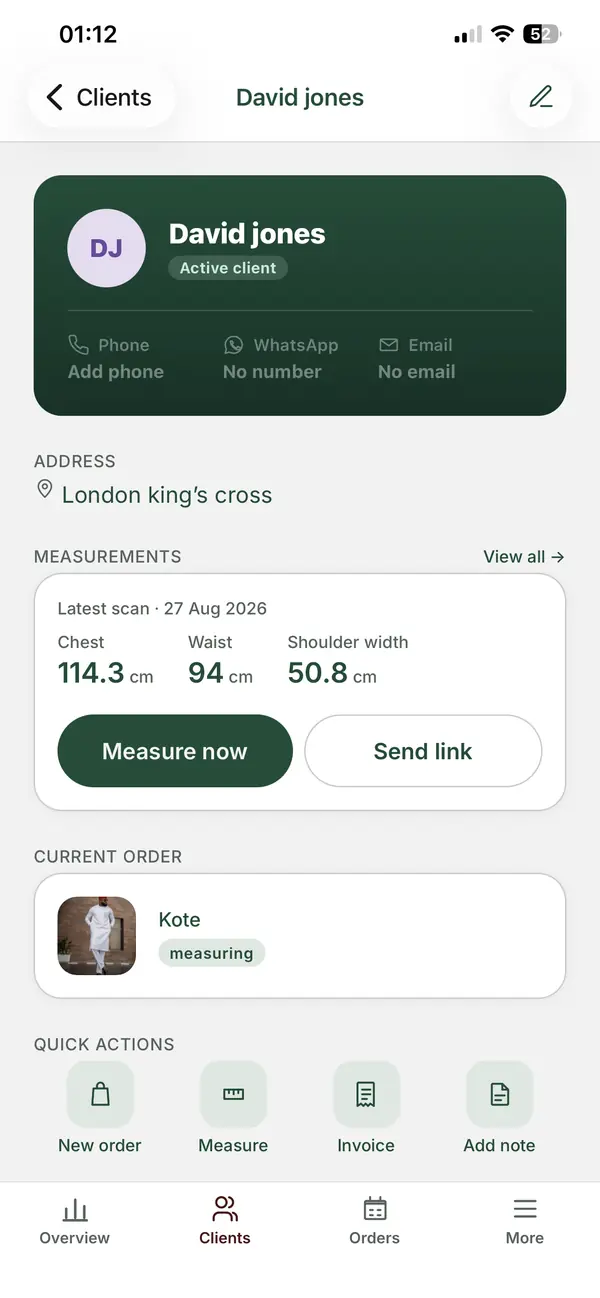
A good size tool compares each of the shopper's measurements to your chart, rather than picking one number. ZeDaq.ai does this with a short body scan: the shopper uploads one photo and enters her height. The scan estimates her measurements and matches them to your own size chart for that garment type.
If her hips call for a bigger size than her waist, the recommendation sizes up to the larger one. That way, a Funmi-shaped customer is not sent a dress that only fits her waist. For more on the method, see our guide to AI size recommendation for fashion stores.
Fixing ratio problems also cuts down on exchanges and back-and-forth on WhatsApp. Our guide to reducing wrong-size orders covers the rest of that process.
See how a scan reads bust, waist and hips
FAQs
Is a waist to hip ratio the same as a body shape type?
Not exactly. Shape names like "pear" or "hourglass" are rough labels. A ratio uses actual measurements, so it is more precise for sizing.
Should I stop using letter or number sizes?
No. Shoppers still look for familiar labels. Keep them, but always show the bust, waist and hip measurements behind each label.
What if a customer's bust and hips point to different sizes?
Recommend the larger size, then suggest a tailor takes in the smaller area. Separates, such as a top and skirt sold apart, avoid the problem entirely.
Do men's garments have the same ratio issue?
Less so, but chest to waist still matters in fitted shirts and senator styles. A broad chest with a slim waist often needs a tailored cut.
Try ZeDaq.ai free
Virtual try-on and Find my size for your store, plus client, order and invoicing tools for tailors, in one subscription.

